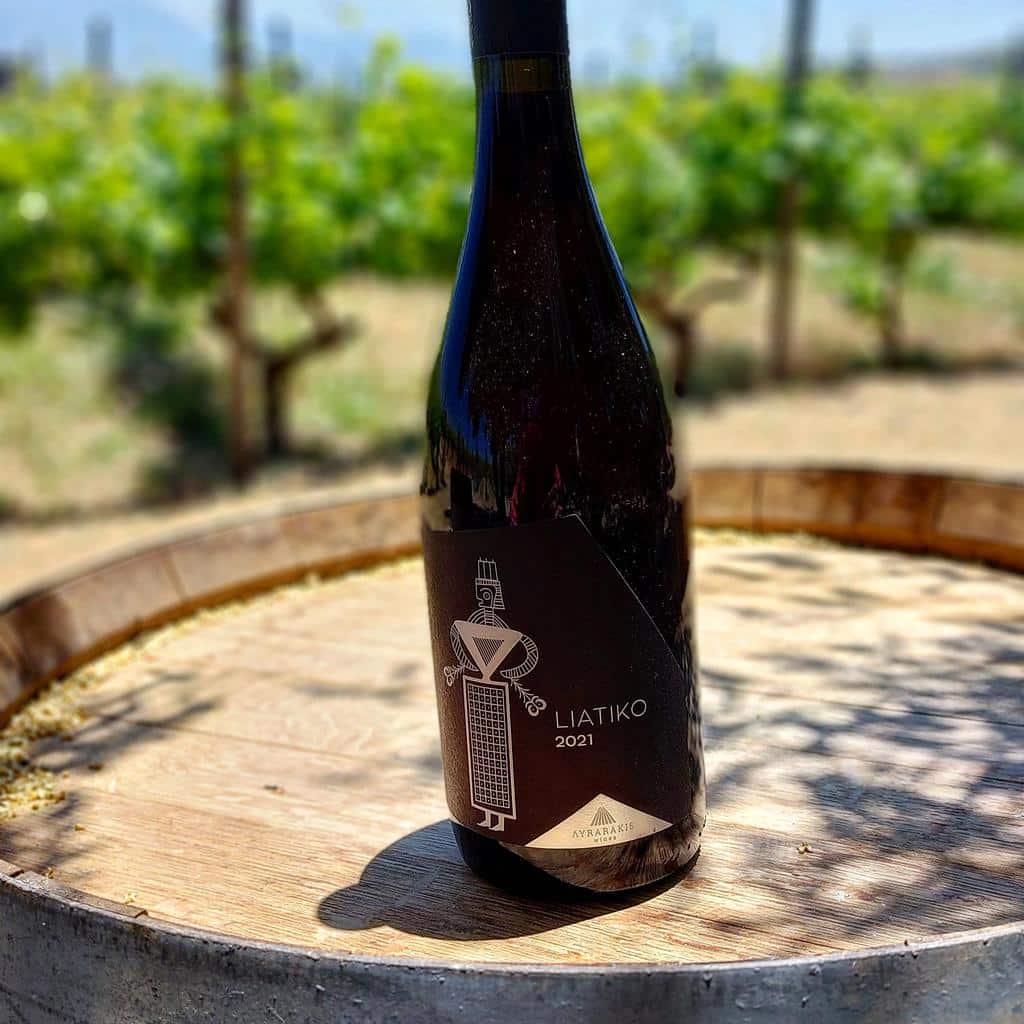
Table of Contents
The mere mention of Crete evokes the scent of wild thyme, the salty tang of the Aegean breeze, and the sight of silver-green olive groves interspersed with ancient, twisted vines. This is not just a wine region; it is the cradle of European viticulture. For over 4,000 years, the island’s sun-drenched terroir has yielded wines that have fueled empires and inspired poets. From the clay pithoi of the Bronze Age to the sophisticated Vidiano of the 21st century, the history of Cretan wines is a narrative of resilience, trade, and an unbreakable bond with the land.


The Minoan Dawn: The Pithoi of Knossos (2700–1100 BC)
To understand the history of Cretan wines, one must look to the Bronze Age, where the Minoans transformed wild grape gathering into a sophisticated, state-sponsored industry that would define the Mediterranean for millennia. This was not merely agriculture; it was the birth of an oenological identity that integrated wine into every facet of life—from the spiritual to the structural.
The Palatial Economy and the First “Grand Crus”
In the grand architectural marvels of Knossos, Phaistos, and Zakros, wine was the lifeblood of a complex redistribution system. The Minoan palaces functioned as central hubs where harvests from surrounding villa-estates were collected, processed, and stored.
Within the “West Magazines” of Knossos, archaeologists have uncovered vast rows of colossal clay pithoi—storage jars that stood as high as a man. These vessels were more than just containers; they were early temperature-control units. Buried partially in the cool earth floors of the palace basements, they kept the wine stable during the fierce Cretan summers. Each pithos could hold hundreds of liters, marked with Linear A and Linear B inscriptions that acted as early inventory ledgers, detailing the origin, quality, and destination of the vintage.
Technological Mastery: The Vathypetro Innovation
The true sophistication of the Minoans is best exemplified at the Vathypetro villa near Archanes. Dating back to approximately 1580 BC, this site houses a stone wine press (lenos) that is a marvel of ancient engineering. Unlike primitive methods of simply stomping grapes in a bag, the Vathypetro press utilized a specialized drainage system.
The grapes were trodden in a raised stone basin, and the must (the unfermented juice) flowed through a spout into a lower ceramic vessel. This allowed for the immediate separation of the “free-run” juice—the highest quality must—from the skins and seeds. This technical precision suggests that the Minoans were already experimenting with different styles of wine, possibly distinguishing between light, elegant whites and more robust, tannin-heavy reds for long-term storage and export.
Ritual, Religion, and the Sacred Vine
In Minoan Crete, the vine was a bridge between the mortal and the divine. Wine was a central element in “theophanic” rituals, where it was used to induce a state of ecstasy or communion with the Earth Goddess.
-
Sacred Libations: Elaborate pouring vessels known as rhyta—often crafted from steatite or precious metals in the shape of bull heads—were used to pour wine onto the earth as a sacrifice.
-
The Wine-God Precursor: Many scholars believe that the roots of Dionysus, the Greek god of wine, are found here. References in Linear B tablets to di-wo-nu-so suggest that the cult of the vine was well-established on Crete long before it reached the Greek mainland.
-
The Symposium Prototype: Frescoes, such as the famous “Campstool Fresco” at Knossos, depict seated figures holding two-handled drinking cups (the Kupellon). These scenes represent the earliest European precursors to the symposium—a formal gathering where wine served as the social lubricant for political and philosophical discourse.
Maritime Dominance: The First International Brand
The Minoans were the “Sea Kings” of the ancient world, and wine was their most valuable cargo. Utilizing advanced ship-building techniques, they transported Cretan wine across the “Wine-Dark Sea” to the courts of the Egyptian Pharaohs and the Levant.
In Egyptian tombs, such as that of Rekhmire, paintings depict “Keftiu” (Cretans) bearing gifts of wine in distinctively shaped vessels. This export trade was so dominant that the Minoan style of viticulture—trellising vines and using specific pruning methods—was adopted by other cultures throughout the Aegean. The history of Cretan wines in this era is not just a local story; it is the story of how the Minoans taught the ancient world how to grow, make, and appreciate the fruit of the vine.
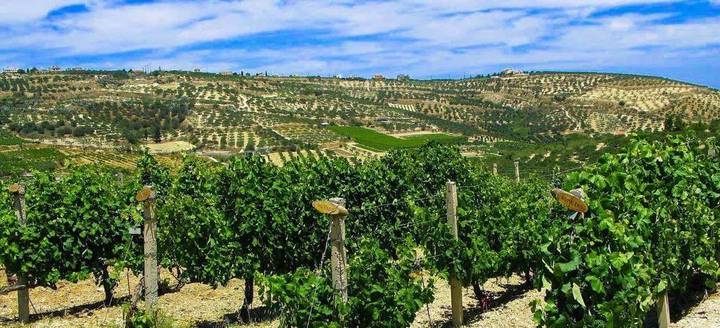
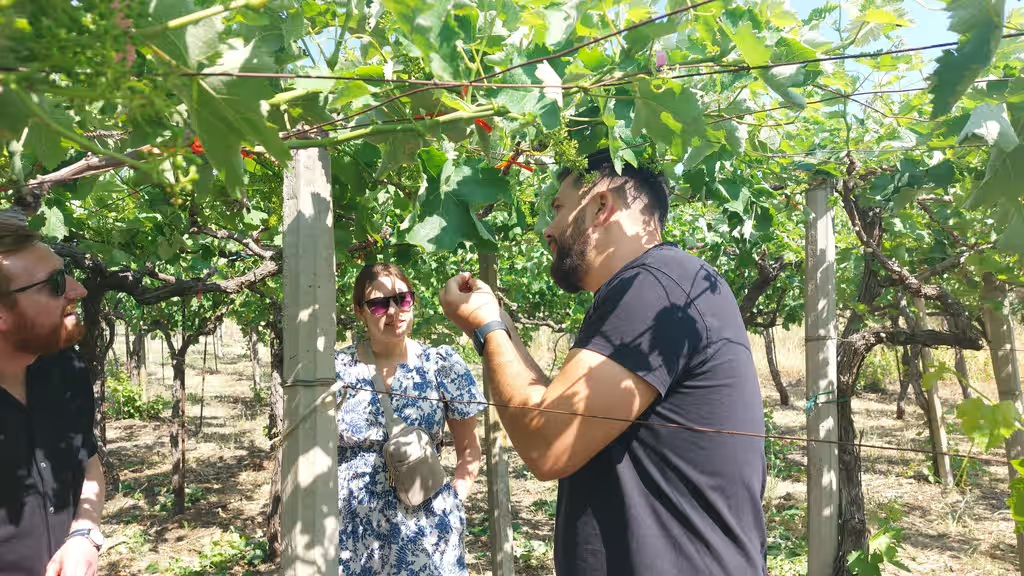
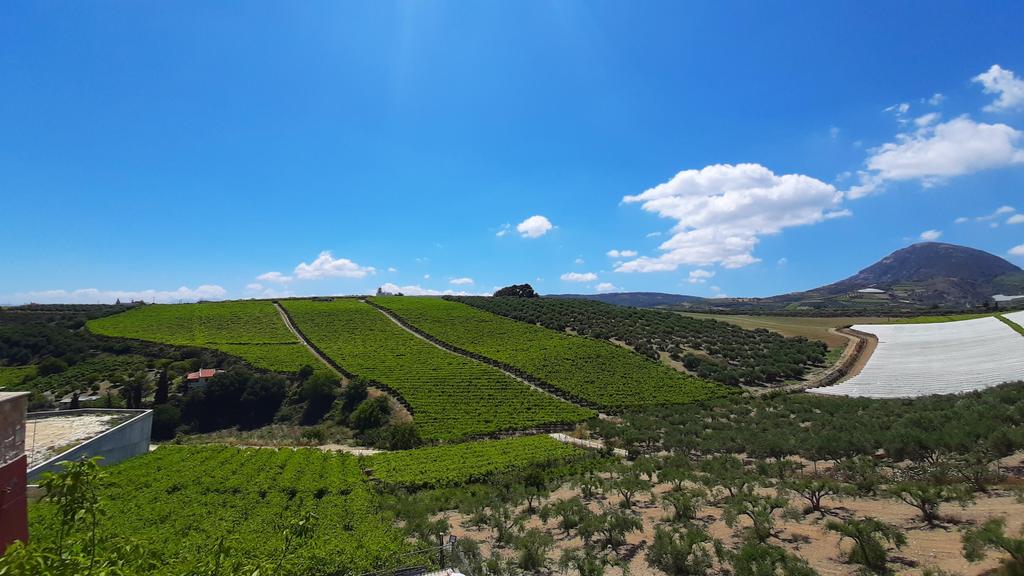
Archanes and Vathypetro vineyards regions, where oldest minoan wine press was discovered
Greco-Roman Mastery: The Industrialization of the Amphora (1100 BC–400 AD)
Following the decline of the Minoan palatial system, the history of Cretan wines entered a transformative phase of expansion and standardization. While the Mycenaean and Geometric periods maintained local traditions, it was the integration of Crete into the Roman Empire in 67 BC that catalyzed a transition from artisanal craft to a massive, export-driven industry. Under Roman administration, Crete was not merely an island of vineyards; it was a strategic “wine province” designed to quench the thirst of the Roman world.
The Rise of the Latifundia and Gortynian Commerce
The Romans restructured the Cretan landscape to maximize agricultural output. Small, fragmented landholdings were consolidated into large commercial estates known as latifundia. The city of Gortyn, serving as the capital of the Roman province of Creta et Cyrenaica, became the administrative heart of this trade.
Archaeological surveys in the Messara Plain and the northern coastline reveal a dense network of Roman villas equipped with industrial-scale production facilities. These estates featured massive treading floors and sophisticated lever-presses that could process thousands of tons of grapes in a single harvest. The efficiency of Roman viticulture allowed Crete to move beyond luxury trade and into the realm of high-volume supply for the Roman legions and the urban masses of Italy.
Passum: The Nectar of the Sun
The most famous contribution of this era to the history of Cretan wines was the perfection of Passum (or Creticum). This was a luscious, straw-colored sweet wine produced through a specialized technique of “raisining.” Vintners would leave the grapes on the vine until they were overripe or spread them out on mats to dry in the fierce Cretan sun, concentrating the sugars and acidity.
Passum was highly prized for its complexity and its ability to withstand long sea voyages without spoiling. It became the preferred drink of the Roman aristocracy and was frequently cited by medical writers like Galen and Dioscorides for its supposed healing properties, particularly for digestive ailments. So famous was this wine that it was often imitated; however, the specific terroir of Crete—its unique combination of limestone and heat—ensured that “Creticum” remained the gold standard of the Mediterranean.
The Amphora Revolution: AC1 and AC4
To facilitate the transport of millions of liters of wine, the Romans revolutionized ceramic production on the island. The history of Cretan wines is literally etched into the clay of the AC1 and AC4 type amphorae.
These vessels were specifically designed for the maritime “Interstate Highway” of the Roman Empire. The AC4, a slender, elegant amphora with a pointed base (designed to be stacked in multiple layers in the holds of grain and wine ships), became the signature of Cretan exports. Modern excavations have recovered these Cretan amphorae in the ruins of Pompeii, the military camps of the Danube, and even the bustling markets of Roman London. The presence of these vessels across such a vast geography proves that by the 2nd century AD, Crete was one of the three most important wine suppliers to the City of Rome itself.
Epigraphic Evidence and Cultural Impact
The importance of wine during this period is further evidenced by Roman-era inscriptions found across the island. Legal codes and tax records frequently mention “vineyard rights,” and the god Dionysus-Bacchus dominated the local iconography. In the Roman villas of Knossos, exquisite floor mosaics depict the god of wine surrounded by satyrs and maenads, celebrating the harvest. This was an era where the vine was not just a crop, but the primary economic engine that integrated Crete into the globalized world of the Pax Romana.
The Byzantine Guard and the Rise of Malvasia (400–1204 AD)
The transition from Roman to Byzantine rule in the 5th century AD did not merely change the political administration of Crete; it sanctified the vineyard. During this nearly eight-century span, the history of Cretan wines became inextricably linked with the Orthodox Church and the spiritual life of the Empire. As the Mediterranean shifted from a Roman lake to a contested frontier, Crete stood as a fortified bastion of Byzantine agricultural knowledge, preserving ancient viticultural wisdom within the safety of its monastic walls.
The Monastery as Oenological Repository
Under the Byzantine “Thematic” system, monasteries became the primary landholders and guardians of the vine. For the monks of the Great Lavra and the early foundations of the White Mountains, viticulture was a form of prayer and a vital economic necessity.
These religious centers functioned as the research and development laboratories of the Middle Ages. The monks meticulously selected the best-performing clones of indigenous varieties, such as the early ancestors of Liatiko and Athiri, and developed advanced terracing techniques (pezoules) to prevent soil erosion on Crete’s steep slopes. They also refined the use of “must-boiling” and fortification techniques, which were necessary to stabilize wine for long-distance transport to the burgeoning markets of Constantinople.
The “Malvasia” Phenomenon: A Cretan Birthright
It was during the mid-Byzantine period that the most famous name in the history of Cretan wines—Malvasia—began its ascent. While the name is geographically tied to the Peloponnesian fortress of Monemvasia, historical records and architectural evidence from the Heraklion and Malevizi regions prove that the vast majority of the grapes were cultivated in the fertile “Handakas” (modern-day Heraklion) hinterland.
The Byzantines perfected the art of creating high-alcohol, aromatic sweet wines that were essentially immune to spoilage. This was achieved by harvesting grapes at peak ripeness and drying them on mats—a refinement of the Roman Passum—to concentrate the sugars. This “Malmsey” (as it would later be known) became the most prestigious diplomatic gift of the Byzantine Emperors, sent to foreign kings and caliphs as a symbol of the Empire’s sophistication and liquid wealth.
The Arab Occupation: Survival of the Spirit (824–961 AD)
A critical, often overlooked chapter in the history of Cretan wines is the period of the Saracen Emirate of Crete. During the Arab occupation, the public consumption of wine was technically prohibited under Islamic law. However, the occupiers were pragmatic rulers who realized that the “infidel” population’s wine production was a lucrative source of tax revenue (jizya).
The vineyards retreated from the exposed coastal plains to the high-altitude, rugged interior of the island. In these secluded mountain enclaves, the local population maintained their vines as an act of cultural and religious resistance. It was during this period of isolation that the genetic diversity of Crete’s indigenous grapes was shielded from the standardization of mainland markets, effectively creating a biological “time capsule” of ancient varieties that would later fuel the island’s future renaissances.
Reconquest and the Flourishing of the 10th Century
Following the reconquest of Crete by Nikephoros Phokas in 961 AD, the island’s wine industry underwent a massive expansion. The Byzantine state incentivized the replanting of the coastal plains to supply the growing demand of the imperial capital. By the end of the 12th century, Crete was once again the premier vineyard of the East, producing sophisticated vintages that were exported via the Venetian and Genoese merchants who were beginning to dominate Mediterranean trade routes. This era laid the logistical and oenological foundation for the “Golden Age” of commerce that would define the subsequent Venetian era.
The Venetian Stato da Mar: The Golden Age of Candia (1204–1669)
The acquisition of Crete by the Republic of Venice following the Fourth Crusade marked the beginning of a nearly 500-year “Golden Age” for the history of Cretan wines. Under the banner of the Lion of Saint Mark, Crete was transformed into the most vital agricultural colony of the Stato da Mar (Venice’s maritime empire). During this era, wine transitioned from a local staple and a Byzantine luxury into a global powerhouse commodity that dictated Mediterranean trade routes and fueled the treasuries of the Serene Republic.
The Malvasia Monopoly: Liquid Gold of the Levant
The Venetian period is synonymous with the global domination of Malvasia di Candia. While the variety had roots in the Byzantine era, the Venetians applied a rigorous commercial framework to its production and export. The fertile plains of Malevizi, just west of the capital city of Candia (modern-day Heraklion), became the epicenter of this production.
Venetian merchants recognized that the European palate was increasingly seeking high-alcohol, stable, and sweet “dessert” wines. By perfecting the sun-drying process and implementing strict quality controls, they created a product that could survive years of storage in a ship’s hold. This wine, known in the British Isles as Malmsey, became the most prestigious import in the courts of Edward IV and Henry VIII. It was a status symbol of the highest order; to serve Malvasia from Candia was to display the pinnacle of wealth and international sophistication.
The Port of Candia: The Wine Hub of Europe
By the 15th and 16th centuries, the port of Candia had become the busiest wine-loading station in the world. Historical records from the Venetian archives indicate that at its peak, the island exported between 60,000 and 100,000 barrels of wine annually.
The Venetians introduced the role of the négociant—middlemen who coordinated between the local Greek kalliergites (farmers) and the international shipping fleets. This period also saw the development of the “Great Wine Stores” of Candia—massive, vaulted stone warehouses located near the harbor, some of which still stand today. These facilities allowed for the bulk aging and blending of wines, ensuring a consistent “brand profile” that was recognized from London to Constantinople.
Legislative Protection and the First “Appellations”
In a move that pre-dates the French AOC system by centuries, the Venetian Senate enacted strict legislation to protect the reputation of Cretan wine. They issued decrees forbidding the blending of “true” Malvasia with inferior local musts and imposed heavy fines on merchants who attempted to pass off mainland wines as “Creticum.”
The government also regulated the production of barrels, ensuring that only high-quality oak and chestnut were used to prevent spoilage. This level of state intervention was unprecedented in the history of Cretan wines and established the island as a precursor to modern regulated viticulture. The wealth generated from these exports was so vast that it funded the construction of the massive Venetian walls of Heraklion—the most formidable defensive system in the Mediterranean at the time.
Social Fusion and the Vineyard Landscape
The Venetian era was also a period of cultural synthesis. The Feudatarii (Venetian lords) and the local Greek nobility often collaborated on agricultural innovations. This led to the creation of the Metochi—fortified farmhouse estates that served as both residences and production centers.
The landscape was radically altered: coastal marshes were drained, and hillsides were systematically terraced to accommodate the burgeoning vineyards. This era solidified the placement of the “classic” Cretan vineyards that remain in production today, such as those in the Peza and Archanes regions. The Venetian influence left an indelible mark on the island’s oenological lexicon, with many technical terms regarding cellar management and viticulture still bearing Italian linguistic roots in the local Cretan dialect.
Ottoman Rule and the Krasochoria Resistance (1669–1898)
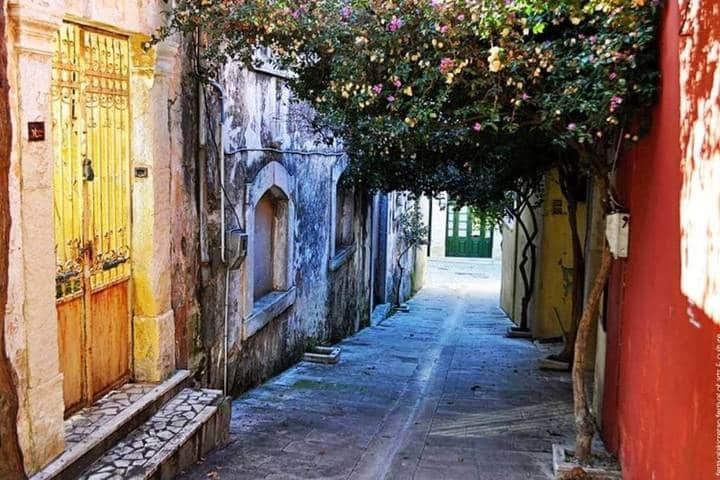
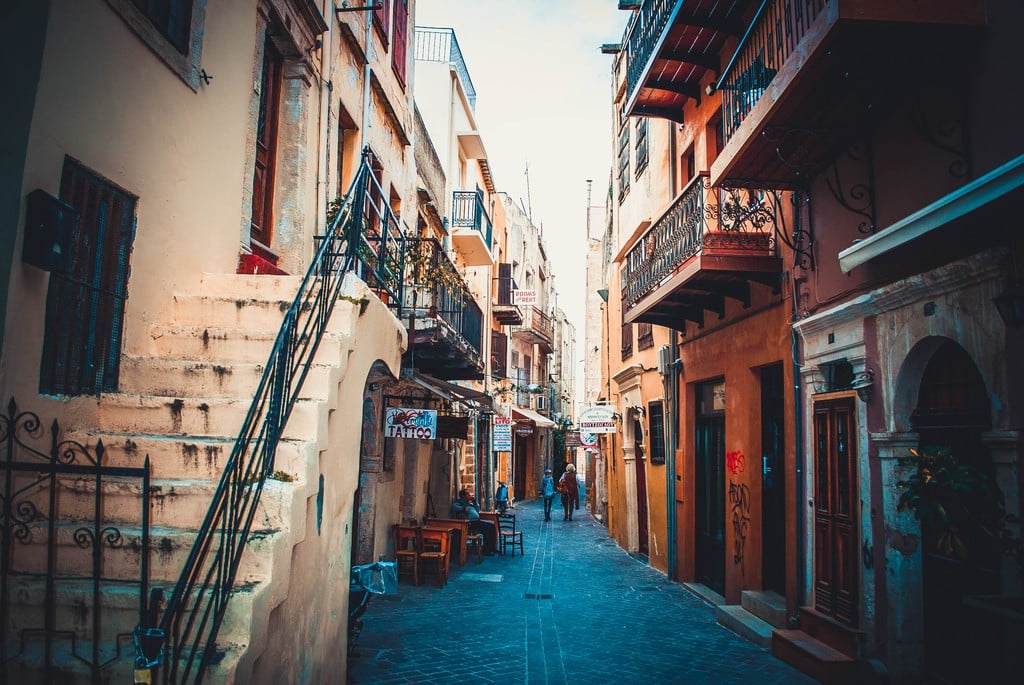
Archanes town
The fall of Candia in 1669, following one of the longest sieges in human history, marked a somber turning point in the history of Cretan wines. As the island transitioned from Venetian to Ottoman control, the sprawling, export-oriented “wine machine” of the Renaissance was dismantled. However, what followed was not the death of Cretan viticulture, but its retreat into a resilient, domestic form of survival that ultimately preserved the island’s most precious genetic assets.
The Pragmatism of the “Millet” and the Wine Tax
While the Ottoman Empire was governed by Islamic law, which strictly forbade the consumption of alcohol, the administration of Crete was characterized by a distinct fiscal pragmatism. The Sultans recognized that the “infidel” (Christian) population’s vineyards were a significant source of potential revenue.
Consequently, the Ottoman authorities allowed viticulture to continue under a heavy and complex system of taxation. Producers were subjected to the mushteriye—a tax on the production and sale of wine—and the haratz, a poll tax on non-Muslim landowners. This economic pressure forced a shift in production; the high-volume, luxury exports to Europe vanished, replaced by wine made for local consumption and for trade with other Christian regions of the Empire. The vineyard became a symbol of the Romyos (Greek) identity, a liquid link to a pre-Ottoman past that the Church helped maintain through its continued oversight of monastic lands.
The High-Altitude Retreat: Defining the “Krasochoria”
One of the most significant geographic shifts in the history of Cretan wines occurred during this era. To escape the direct scrutiny of Ottoman tax collectors and the repurposing of fertile coastal plains for Ottoman-preferred crops like olives and grains, vineyards migrated upward.
Farmers established the Krasochoria (literally “Wine Villages”) in the rugged foothills of the Psiloritis and the Lefka Ori (White Mountains). These high-altitude vineyards, often sitting between 600 and 900 meters, benefited from a unique microclimate—cooler nights and intense UV exposure—which slowed the ripening process. This environmental stress inadvertently preserved the complexity of varieties like Vidiano and Mandilaria. Because these areas were remote and difficult to access, they became “biological islands” where ancient vines were shielded from the standardizing pressures of international trade.
The Rise of Tsikoudia (Raki): A Culture of Resourcefulness
With the collapse of the international wine market, Cretan farmers had to maximize every ounce of their harvest. This necessity birthed the widespread cultural dominance of Tsikoudia (often called Raki on the island). While distillation had existed in the Byzantine era, it was under Ottoman rule that it became a cornerstone of Cretan social life.
Distilling the stafyla (the skins and stalks left over after wine pressing) allowed farmers to create a high-proof spirit that was easy to store, transport, and hide from authorities. It required less sophisticated equipment than aging fine wine and became the ultimate symbol of Cretan hospitality. This period of “peasant viticulture” ensured that even when the wine industry was at its lowest commercial ebb, the cultural knowledge of vine management remained a living tradition passed down from father to son.
Phylloxera and the End of an Era
Toward the end of the 19th century, as the Ottoman grip on the island weakened, a new threat emerged that would change the history of Cretan wines forever: the arrival of Phylloxera vastatrix. While the aphid devastated European vineyards decades earlier, it reached Crete’s isolated valleys later. Combined with the social upheaval of the Cretan Revolts, this biological plague forced the abandonment of many ancient, ungrafted vineyards. Yet, it was precisely the isolation of the Krasochoria that allowed small pockets of indigenous vines to survive, providing the “mother wood” that would eventually fuel the modern renaissance after the island’s liberation and eventual union with Greece.
The Modern Renaissance: From Post-War Survival to a Global Elite (1945–Present)
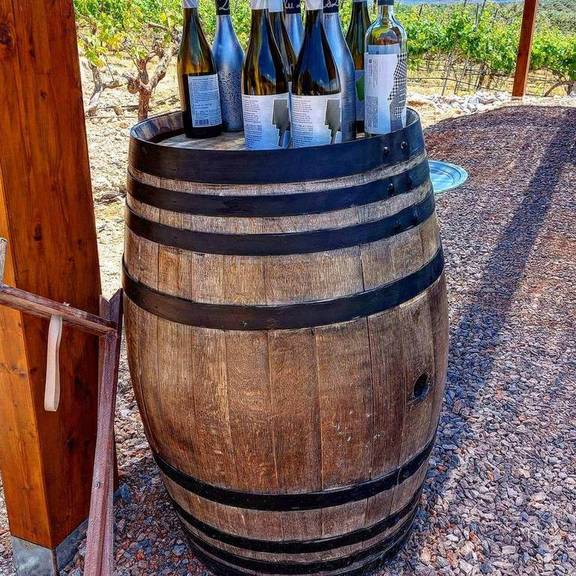
Wine tasting area of Lyrarakis winery, central crete
The contemporary history of Cretan wines is a narrative of profound transformation, shifting from the shadows of post-war recovery to the global spotlight of high-end oenology. Following the devastation of World War II, the island’s viticultural landscape was a fractured mosaic of subsistence farming. However, the late 20th century ignited a “Cretan Renaissance”—a deliberate return to the island’s roots, powered by a new generation of winemakers who possess international education and a fierce pride in their ancestral terroir. It is a period where science and tradition have finally shaken hands, proving that Crete is not just a “holiday island” for wine, but a world-class producer of unique, character-driven vintages.
The Post-War Era: The Age of Cooperatives (1945–1970s)
In the decades immediately following the second Great War, Crete’s wine industry focused on volume and survival. The Marshall Plan and subsequent Greek agricultural initiatives encouraged the formation of large-scale regional cooperatives. During this time, wine was largely treated as a bulk commodity. The focus was on “international” suitability and high yields to supply the growing domestic market and European blending requirements. While this era lacked the prestige of the Venetian “Golden Age,” it established the critical infrastructure—large-scale pressing facilities and transportation networks—that would later support the quality revolution.
The Private Estate Revolution (1970s–1990s)
The 1970s marked a pivotal shift in the history of Cretan wines as visionary families began to break away from the cooperative model. Estates such as Douloufakis, Lyrarakis, and Michalakis invested in modern oenological equipment, including temperature-controlled stainless steel tanks and French oak barriques. This was the era of the “Technical Awakening,” where the first private labels began to appear, challenging the perception that Cretan wine was only for local tavernas. These pioneers began to implement precise canopy management and soil analysis, proving that the island’s limestone and schist-rich soils were capable of producing “Grand Cru” quality fruit.
The Great Rescue: Saving the “Diva” Vidiano
Perhaps the most dramatic chapter in this renaissance is the salvation of the Vidiano grape. By the late 1980s, this ancient white variety was nearly extinct, relegated to a few abandoned rows in the hills of Rethymno. Winemakers like Manolis Lyrarakis recognized its potential and began a meticulous program of replanting and clonal selection.
Today, Vidiano is hailed as the “Diva of Crete” and one of the most exciting white grapes in the Mediterranean. It produces wines with a unique, creamy texture, vibrant acidity, and complex aromas of apricot, chamomile, and mineral salts. Its success paved the way for the “rescue” of other indigenous stars, including Thrapsathiri, Plyto, and Dafni—the latter of which was named for the laurel (laurus nobilis) scent it emits, a profile directly mentioned in ancient texts.
The Architecture of Quality: The PDO and PGI Systems
To formalize this quality surge, the modern Cretan wine industry organized itself into a series of Protected Designation of Origin (PDO) and Protected Geographical Indication (PGI) zones. These classifications were designed to protect the regional characteristics that have existed since the Venetian era.
-
PDO Archanes & Peza: The heart of red wine production, focusing on the powerful and aromatic blend of Kotsifali and Mandilaria.
-
PDO Dafnes: Specialized in the Liatiko grape, producing both high-alcohol dry reds and luscious sun-dried sweet wines that echo the Roman Passum.
-
PDO Sitia: The easternmost bastion, where high-altitude vineyards produce structured, mineral-driven whites.
-
PDO Malvasia Handakas-Candia: A modern restoration of the Venetian-era sweet wine, strictly regulated to ensure it meets the historical standards of the original “Malmsey.”
Climate Resilience and the High-Altitude Future
As the global wine industry faces the challenges of climate change, the history of Cretan wines is entering its most innovative phase yet. Winemakers are moving even higher into the mountains, planting vineyards at altitudes of 1,000 meters or more to preserve acidity and freshness. The focus has shifted toward “Minimal Intervention” and organic farming, utilizing the island’s natural biodiversity—wild herbs, local bees, and mountain water—to create wines that are true expressions of the land. By looking back at the drought-resistant techniques of the Minoans and combining them with modern soil analysis, Crete has positioned itself as a leader in Mediterranean sustainable viticulture. The island has come full circle: the ancient “liquid gold” that once traveled in Minoan amphorae is once again being sought after by the world’s most discerning sommeliers, marking a triumphant return to the global stage.
Future Frontiers: Challenges and the 2050 Vision
As the history of Cretan wines moves into its fifth millennium, the island stands at a critical crossroads. While the current renaissance has restored Crete’s prestige, the next chapter will be defined by its ability to navigate a rapidly changing global climate and an increasingly competitive international market. The “Wine Wanderer” perspective suggests that the very factors that allowed Cretan wine to survive the Ottoman era—isolation, high altitude, and indigenous resilience—will be the keys to its future survival.
The Climate Crucible: Heat and Hydration
The most immediate challenge facing the Cretan vineyard is the rising mercury of the Mediterranean. As a southern bastion of European viticulture, Crete is on the front lines of global warming.
-
The High-Altitude Migration: The future of quality production is moving upward. We are seeing a “vertical expansion” where new vineyards are being established at 1,000 to 1,200 meters above sea level, particularly on the slopes of the White Mountains and Mount Dikti. These heights provide the necessary diurnal temperature shifts to maintain acidity in white varieties like Vidiano.
-
Water Scarcity: Managing the island’s limited water resources is becoming a technical art form. Progressive estates are moving away from intensive irrigation toward “Dry Farming” techniques, encouraging vines to dig deeper into the limestone bedrock—a practice that not only conserves water but also increases the mineral expression and terroir thumbprint of the wine.
The Genetic Shield: Indigenous Superiority
In a global market saturated with Chardonnay and Cabernet, Crete’s future competitive advantage lies in its “Genetic Goldmine.” The challenge for the next decade is the full commercialization of secondary indigenous varieties that are currently in the experimental phase.
-
The Heat-Resistant Heroes: Grapes like Dafni and Plyto are proving to be remarkably resilient to heat stress. The future will likely see these ancient vines move from “blending components” to flagship varietals.
-
Sustainability and Biodynamics: There is a growing movement toward “Regenerative Viticulture.” By eliminating synthetic pesticides and fostering the natural biodiversity of the Cretan maquis (wild herbs and shrubs) within the vineyard rows, producers are creating a self-sustaining ecosystem that is naturally more resistant to pests and disease.
Global Positioning and the “Authenticity” Market
The final challenge is one of branding. The history of Cretan wines has often been obscured by the island’s status as a “sun-and-sea” tourism destination. The future task for the Wines of Crete organization and individual estates is to decouple the wine industry from mass tourism and align it with “Luxury Oenotourism.”
-
The Experience Economy: The future Cretan winery is not just a production site but a cultural destination. Integrating the “LORE” layer—Minoan history, Venetian architecture, and the Cretan Diet (a UNESCO Intangible Cultural Heritage)—into the tasting room experience is essential for capturing the high-end traveler.
-
Digital Provenance: As wine fraud becomes a global concern, Cretan producers are beginning to explore blockchain and smart-labeling to guarantee the provenance of their PDO wines, ensuring that the “Malvasia” of the future is as protected as the “Malmsey” of the Venetian Senate.
In 2050, the history of Cretan wines will likely be viewed as the ultimate success story of Mediterranean adaptation. By utilizing 4,000 years of accumulated wisdom to solve modern environmental puzzles, Crete is positioning itself not as a relic of the past, but as a blueprint for the future of sustainable, high-altitude viticulture.