Table of Contents
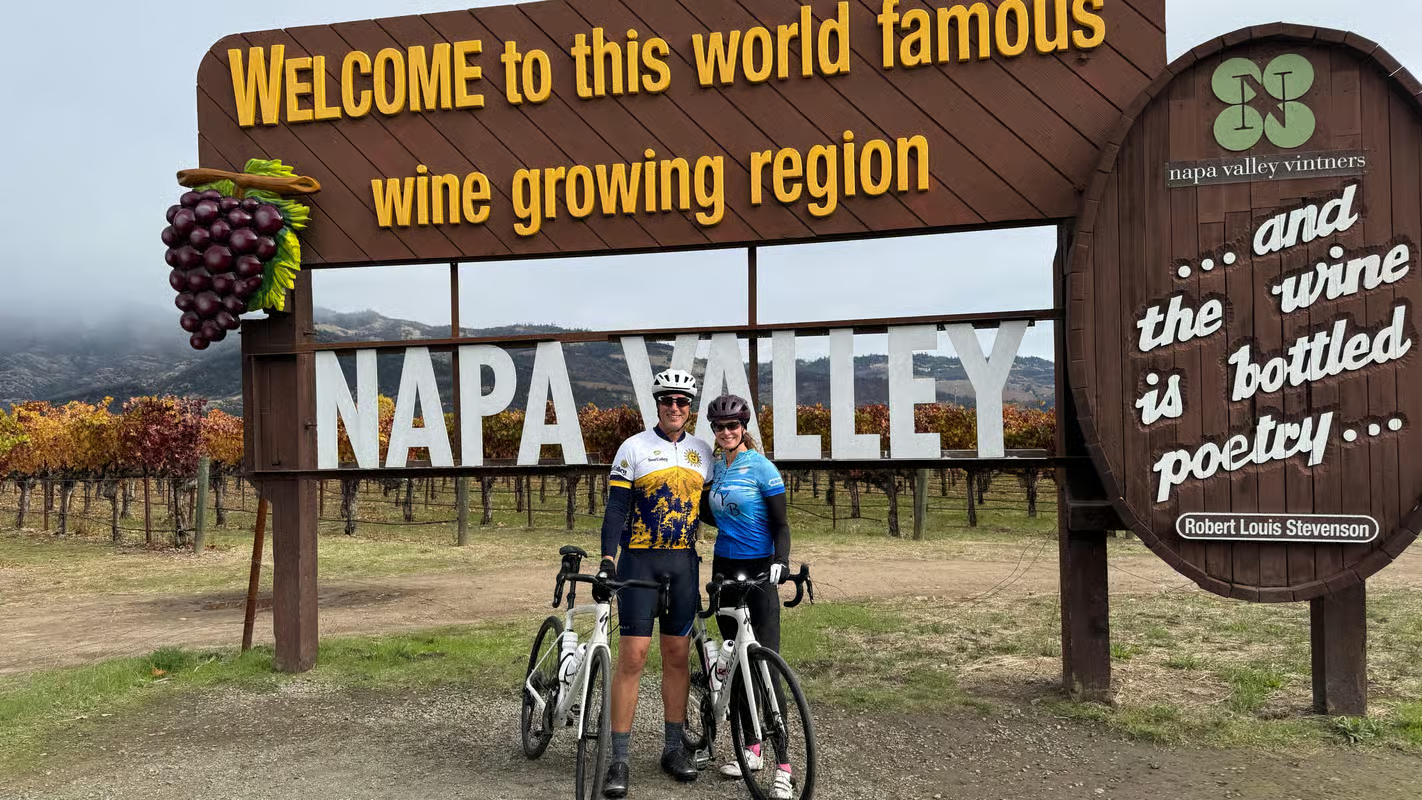
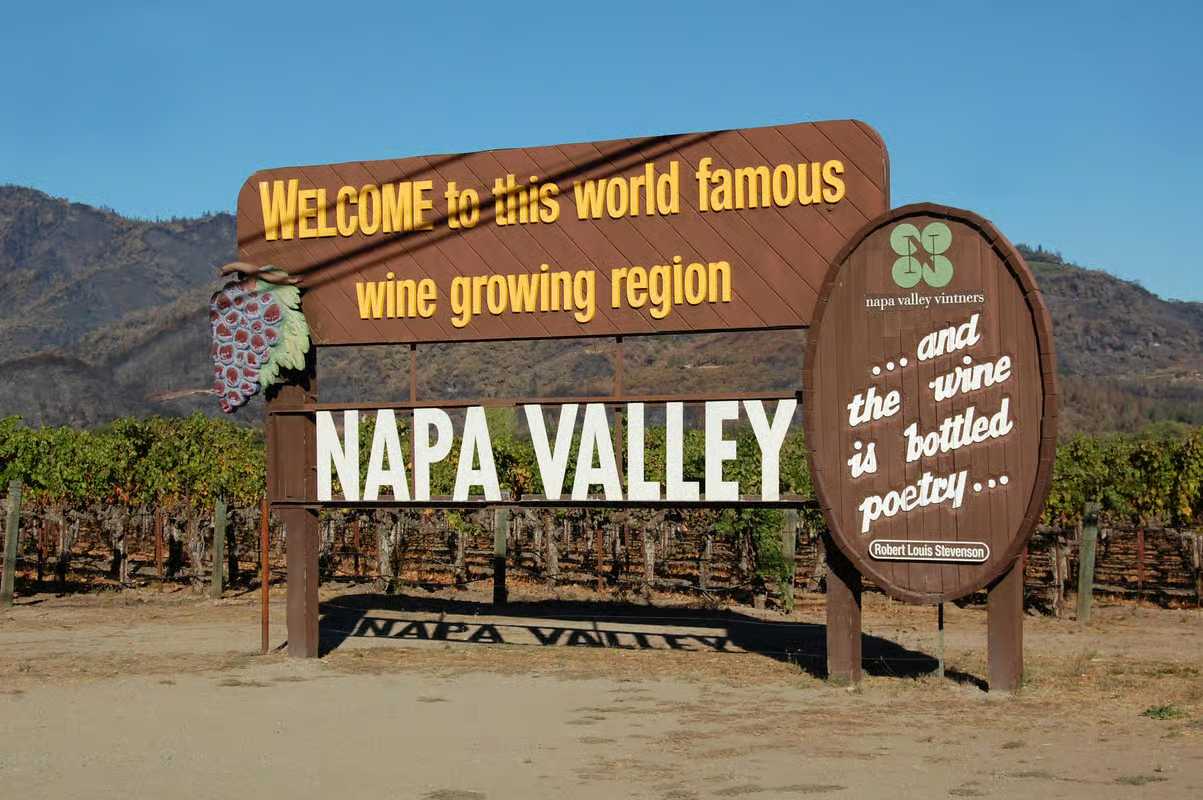
Napa Valley stands as the crown jewel of California viticulture, a golden corridor that defined the American identity on the global stage. As the most prestigious sub-region within the vast tapestry of California wine, Napa is not merely a destination but a historical phenomenon. To understand Napa is to understand the soul of the Golden State’s agricultural ambition.
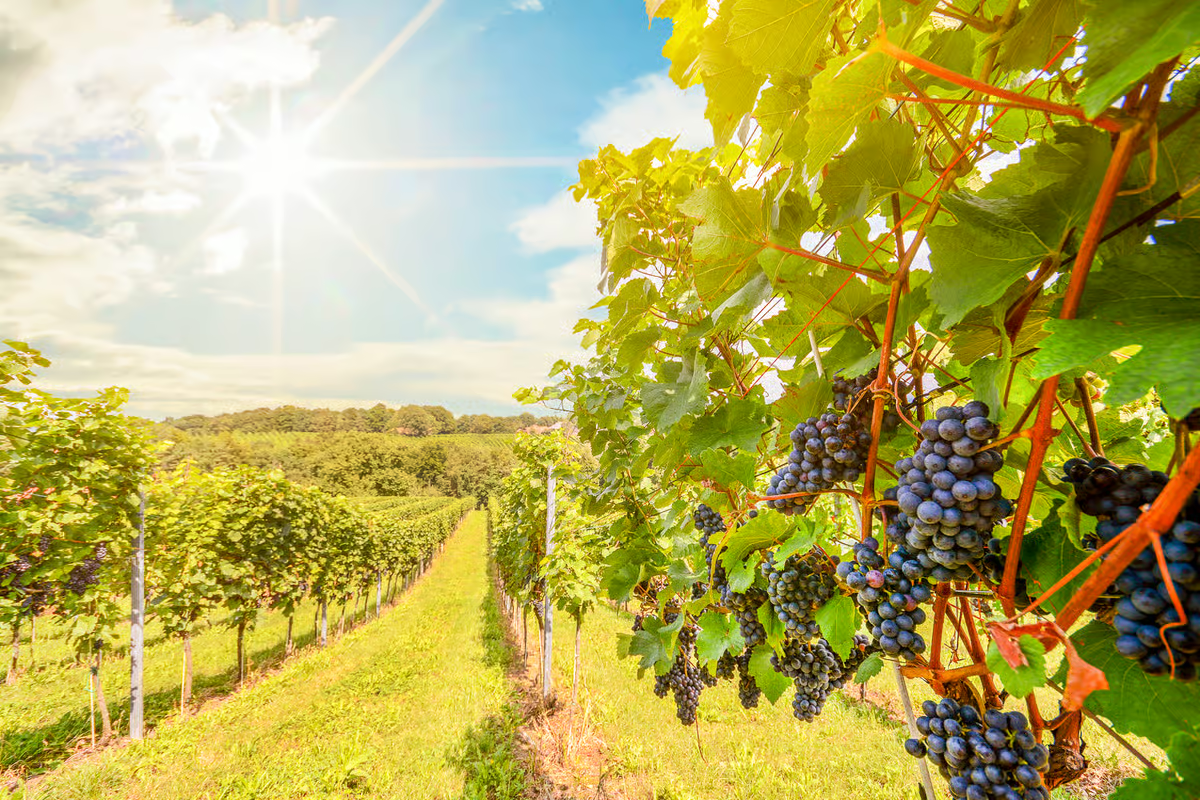
The mere mention of the valley alone evokes a sensory Masterclass: the scent of sun-warmed Alluvial Fan soil, the rhythmic “fog bridge” rolling off San Pablo Bay to cool the vines, and the deep, structured aroma of Cabernet Sauvignon aging in toasted French oak. It is a landscape defined by its geologic complexity, where the Mayacamas and Vaca mountains cradle a mosaic of volcanic and marine soils, creating a terroir that rivals the most storied growths of Europe.
STEP OUT OF THE HISTORY BOOKS
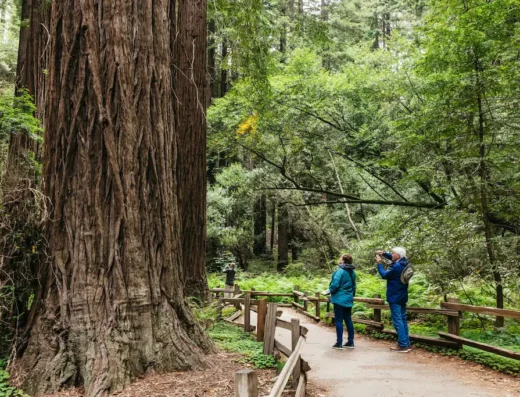
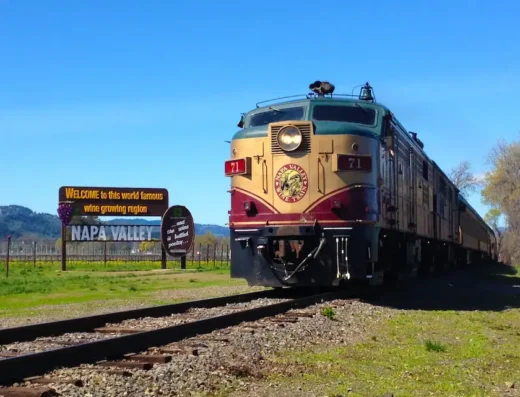
The Indigenous Roots: The Wappo Legacy and George Yount (1830–1859)
Long before the first Vitis vinifera was planted, the valley was home to the Wappo people, who named the land “Napa,” often translated as “land of plenty.” The true viticultural genesis began in 1838 with George Calvert Yount. Receiving the Caymus Rancho land grant from the Mexican government, Yount was the first to plant a small vineyard of “Mission” grapes near what is now Yountville.
While these early wines were rustic, Yount’s success proved that the valley’s Mediterranean climate—characterized by long, warm growing seasons and cooling maritime influence—was a viticultural goldmine. During this era, the valley was a wild expanse where the primary goal was subsistence, yet Yount’s pioneer spirit laid the foundation for the agricultural transition. His early success signaled to other settlers that the rich soils of the valley floor were capable of producing more than just cattle and grain.
By the late 1850s, the “Mission” grape began to lose its monopoly as experimental cuttings from Europe started to find their way into the hands of early settlers. This period marked the beginning of a technical shift, as farmers realized that the specific drainage patterns of the Napa River basin were ideal for more “noble” varieties.
The European Pioneers: Establishing the First Estates (1860–1889)
The mid-19th century saw an influx of visionary immigrants who recognized Napa’s potential to rival the great estates of Europe. In 1861, Charles Krug established the first commercial winery in Napa Valley. Krug was a mentor to many, and his success sparked a “wine fever” that attracted figures like Hamilton Walker Crabb, whose To Kalon vineyard remains one of the most famous sites for Cabernet Sauvignon in the world today.
By the 1880s, the landscape was transforming into a sophisticated network of stone cellars and manicured rows. Gustave Niebaum, a Finnish sea captain, founded Inglenook with the goal of creating wines equal to the finest Bordeaux Châteaux. He was an early adopter of rigorous quality control, ensuring that only the best fruit made it into his barrels. Simultaneously, the Beringer Brothers were excavating their famous limestone tunnels for aging, utilizing the naturally cool temperatures of the earth to refine their wines.
This era was a period of rapid technical evolution. Gravity-flow winery designs, the importation of Vitis vinifera cuttings from France and Germany, and the initial understanding of the “benchland” soils occurred during these decades. The pioneers of this time weren’t just farmers; they were architects of a new industry, building the grand stone structures that still define the valley’s skyline today.
The Dark Ages: Phylloxera, Prohibition, and Survival (1890–1943)
Napa’s ascent was nearly extinguished by a dual catastrophe. First, the Phylloxera louse devastated vineyards in the late 1890s, requiring a massive and expensive replanting effort on resistant rootstock. This biological warfare was followed by the political turmoil of Prohibition (1920–1933). Most wineries shuttered, their equipment left to rust, while a few—like Beringer and Beaulieu Vineyard (BV)—survived by producing sacramental wine for the church.
The post-Prohibition era was a slow, arduous recovery. The valley had lost its momentum, and much of the technical knowledge of the 19th century had faded. It was André Tchelistcheff, a Russian-born, French-trained enologist hired by Georges de Latour at Beaulieu Vineyard in 1938, who revolutionized the region. Known as the “Maestro,” Tchelistcheff was shocked by the state of California winemaking and set out to modernize it immediately.
Tchelistcheff introduced frost protection, cold fermentation to preserve delicate fruit aromas, and the use of small French oak barrels for aging. His work at BV set a new quality standard for California and he spent decades mentoring the next generation of winemakers, including Robert Mondavi. His influence provided the bridge between the rustic past and the scientific future of the valley.
The 1976 Judgement of Paris: Global Validation (1944–1979)
By the 1960s, a new wave of dreamers arrived, led by Robert Mondavi. In 1966, Mondavi left his family’s business at Charles Krug to establish his eponymous winery, the first major estate built since Prohibition. He became the valley’s greatest evangelist, championing “varietal labeling” and the pursuit of excellence as a global standard. Mondavi believed that Napa’s terroir was capable of greatness, and he spent his life convincing the world of the same.
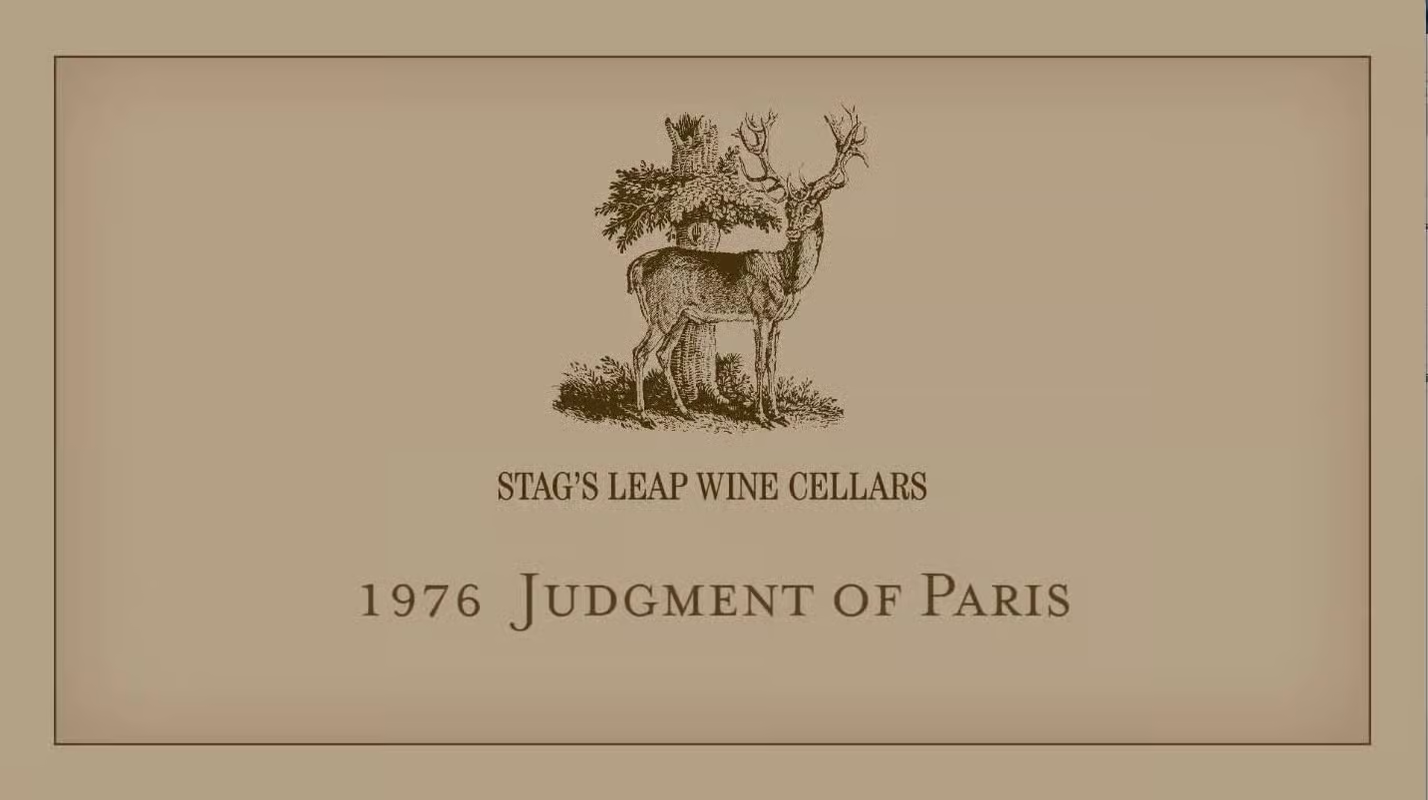
The turning point for the entire American wine industry occurred on May 24, 1976. In a blind tasting in Paris, a panel of French judges shocked the world by ranking Napa Valley wines above the top Bordeaux and Burgundies. Chateau Montelena’s Chardonnay and Stag’s Leap Wine Cellars’ Cabernet Sauvignon took first place in their respective categories.
This “Judgement of Paris” shattered the myth of European superiority and officially launched Napa into the global spotlight. It was a legal and cultural milestone that changed the trajectory of the valley forever. The victory led to an explosion of new vineyard plantings and attracted massive investment, as people realized that California was now the new frontier of luxury wine.
Stag’s Leap winery
The AVA Revolution and the Modern Renaissance (1980–Present)
Following the Paris tasting, the need for legal definitions and geographic protection became apparent. In 1981, Napa Valley was designated as California’s first American Viticultural Area (AVA). This legal milestone allowed vintners to protect the name of the region and gave consumers a guarantee of origin. Since then, the valley has been further refined into 16 distinct “sub-AVAs,” such as Oakville, Rutherford, and Stags Leap District, reflecting the diverse microclimates of the region.
Today, the focus has shifted toward a Modern Renaissance of sustainability. With the Napa Green certification and a movement toward Biodynamics, producers are grappling with the challenges of climate change and water scarcity. This era is defined by a return to the land, where winemakers focus on “minimal intervention” to let the unique characteristics of each vineyard site shine through.
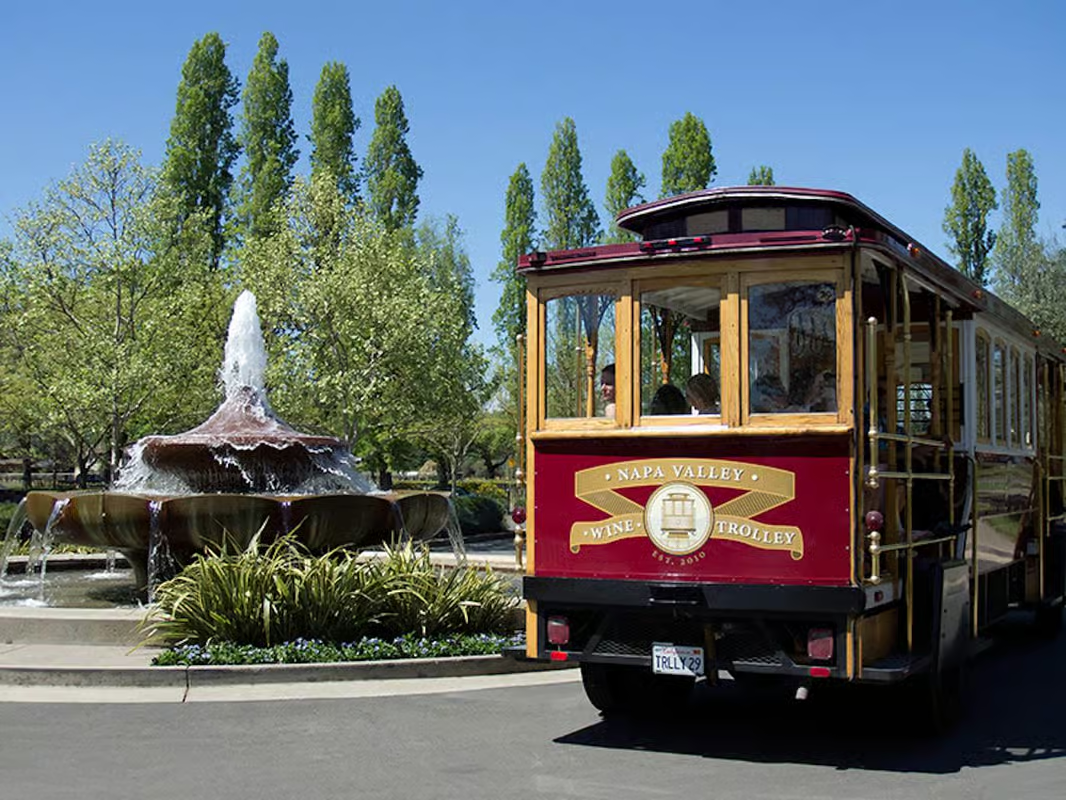
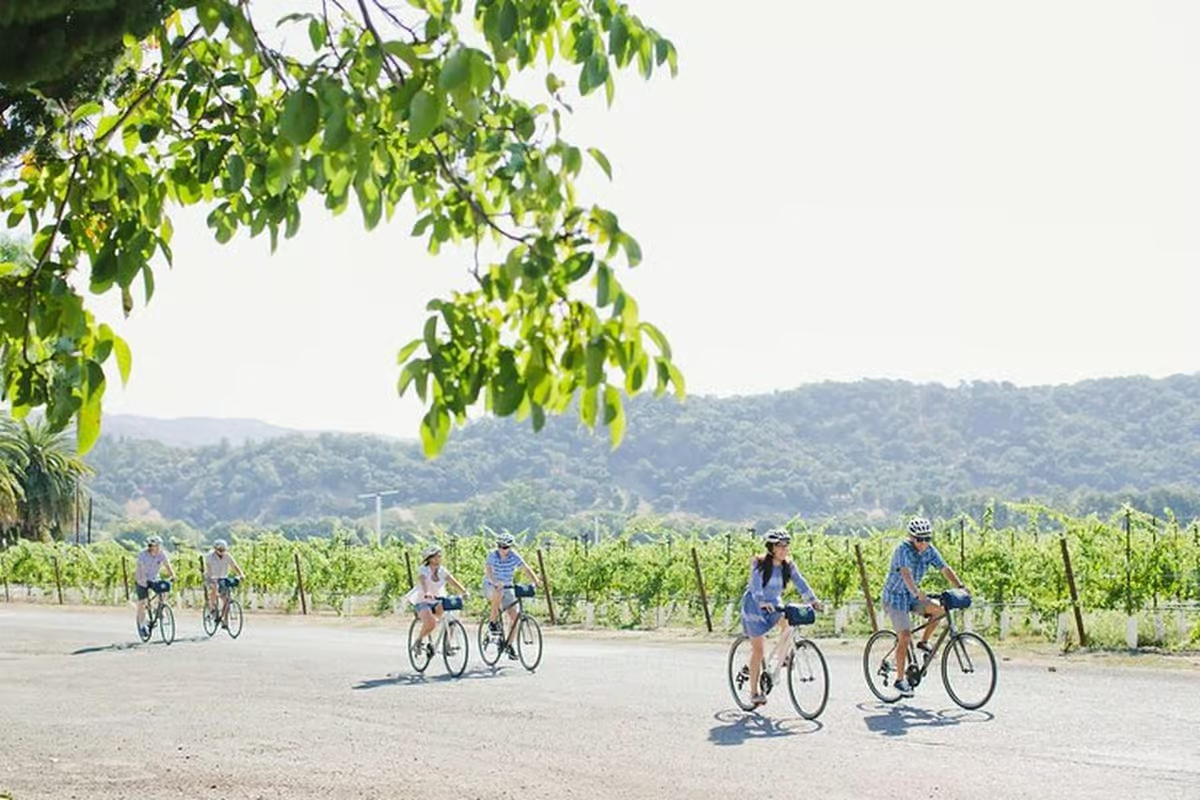
The era of the “cult wine”—typified by estates like Screaming Eagle and Harlan Estate—has cemented Napa’s status as a premier destination for high-end collectors. Simultaneously, the valley has become a leader in wine tourism, offering world-class hospitality that matches the quality of the liquid in the bottle.
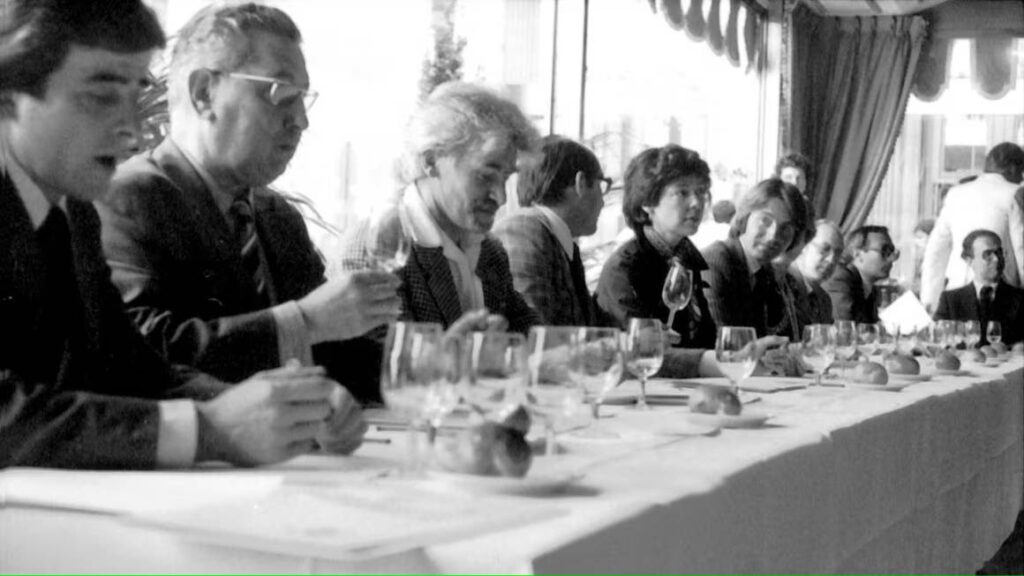
Jury of Paris judgmentk, on 24th May 1976
The Green Frontier: Sustainability, Climate, and Future Challenges
As Napa Valley enters the mid-21st century, the narrative has shifted from expansion to preservation. The Modern Renaissance is now defined by a rigorous commitment to environmental stewardship through initiatives like Napa Green, which focuses on carbon neutrality and water conservation.
The region faces significant Future Challenges, most notably the escalating threat of wildfires and the shifting viticultural boundaries caused by climate change. In response, winemakers are adopting Biodynamics and regenerative farming to build soil health and vine resilience. There is a technical evolution toward drought-resistant rootstocks and precision irrigation to combat water scarcity.
Prospective developments include the exploration of higher-elevation plantings on the Vaca and Mayacamas ridges to find cooler microclimates. While Cabernet Sauvignon remains the king, experimental blocks of heat-tolerant Mediterranean varieties are being trialed to ensure the valley’s longevity. This era is a testament to the region’s ability to adapt, ensuring that the “land of plenty” remains a living laboratory for viticultural perfection.
Conclusion: The Heritage of Resilience
Napa Valley wine history is a saga of resilience. From the rustic Mission grapes of George Yount to the global shockwaves of the Judgement of Paris and the modern fight against climate change, the region has consistently reinvented itself. As the region looks toward its future, its commitment to quality and environmental stewardship ensures that it will remain a global icon for generations of wine wanderers to come.