Table of Contents
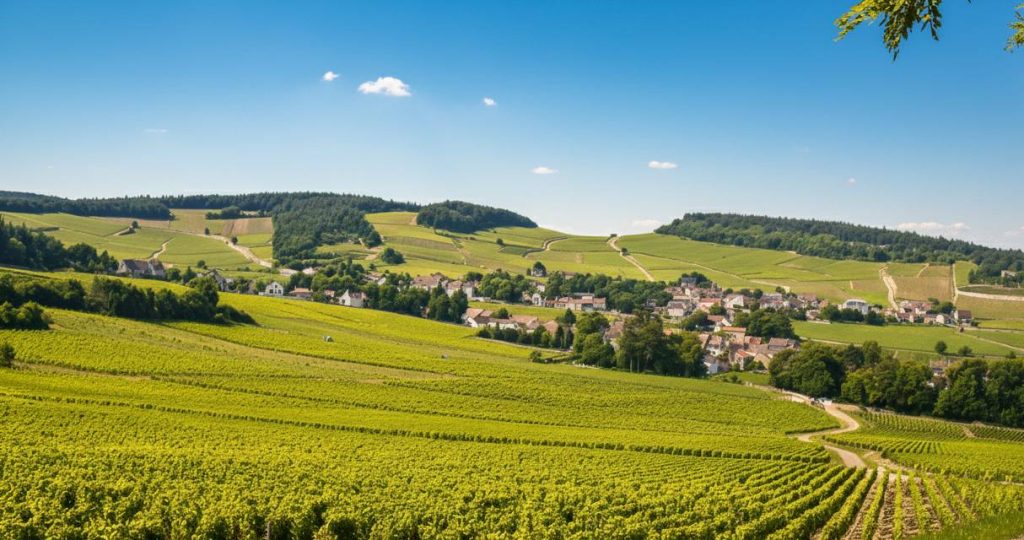
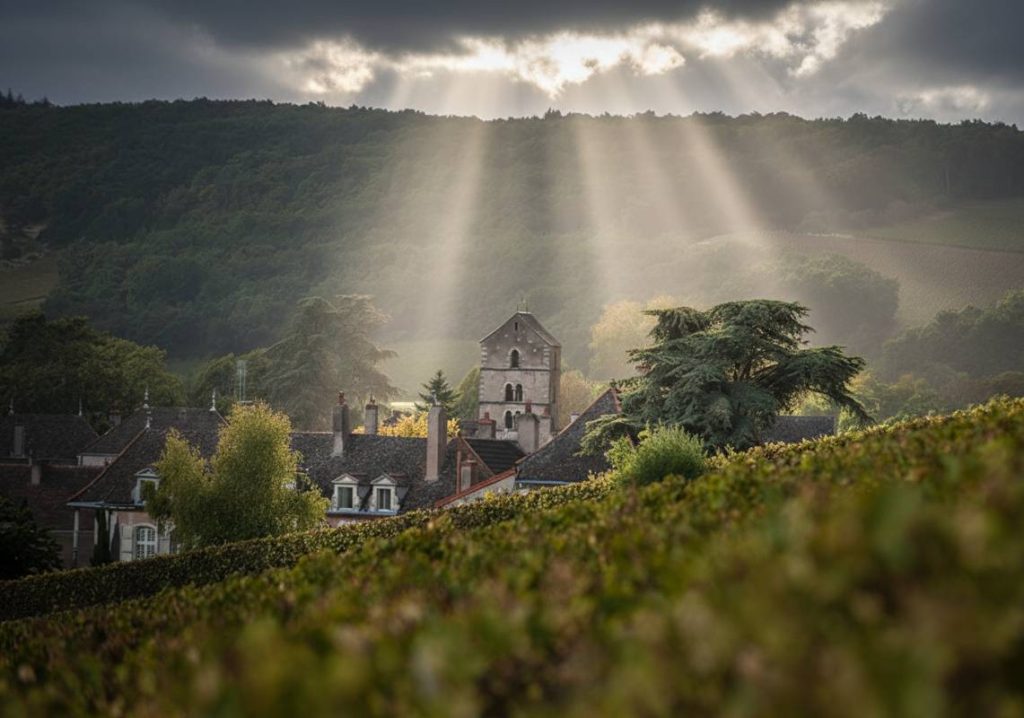
Nestled between the Côte de Beaune to the north and the Mâconnais to the south, the Côte Chalonnaise is one of Burgundy’s most dynamic and rewarding wine regions. Spanning approximately 25 kilometers, this undulating landscape of limestone-rich hills and sun-drenched valleys offers a diverse mosaic of terroirs that have been cultivated since Roman times.
Unlike its more famous northern neighbors, the Côte Chalonnaise remained a “hidden gem” for decades, but it is now recognized by connoisseurs as the premier destination for high-quality Burgundy that balances tradition with exceptional value. The region is defined by its five main village “crus”—Bouzeron, Rully, Mercurey, Givry, and Montagny—each offering a distinct personality ranging from the world’s finest Aligoté to powerful, age-worthy Pinot Noirs.
With a geology dominated by Jurassic limestone and marl, the Côte Chalonnaise produces wines with remarkable mineral precision, vibrant fruit, and a structural elegance that makes them favorites among sommeliers and collectors alike.
Dive into the Heart of Côte Chalonnaise
Regional and Sub-Regional Appellations Of Côte Chalonnaise
These represent the “base” of the hierarchy, covering the entire area or specific regional identities.
Bourgogne Côte Chalonnaise AOC
The primary sub-regional appellation, established in 1990, serves as the qualitative bridge between regional Burgundy and the village crus. Spanning 44 communes, this AOC represents the unique limestone and marl-driven terroir of the Chalonnaise hills. Because the region is a southern continuation of the Côte de Beaune, the wines share a similar structural elegance but often offer more immediate accessibility. In recent years, as temperatures have risen, this sub-region has become a “hotspot” for critics looking for freshness and precision that some northern neighbors struggle to maintain.
The vineyards are typically situated on the slopes of the hills, benefiting from excellent drainage and optimal sun exposure. Style & Aging: The red wines (Pinot Noir) are characterized by a bright ruby color and a bouquet of fresh cherry, raspberry, and hints of white pepper. On the palate, they offer fine-grained tannins and a refreshing acidity. The whites (Chardonnay) are crisp and energetic, showing notes of citrus, acacia, and a distinct mineral finish.
Aging Potential: Red and white Bourgogne Côte Chalonnaise are generally at their best between 3 and 7 years. As they age, the reds develop delicate notes of undergrowth, while the whites gain a lovely honeyed, waxy texture.
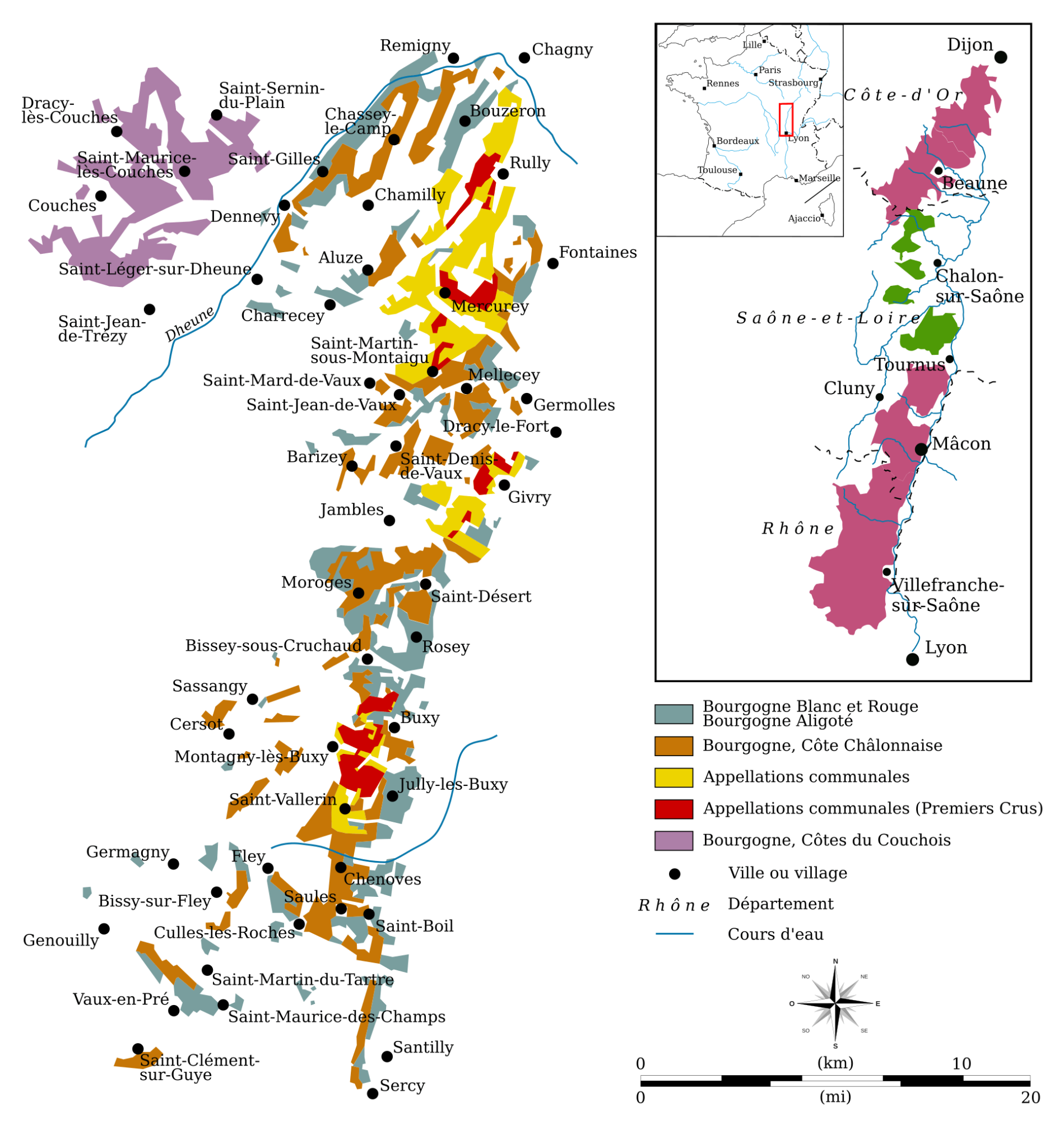
Map of Côte Chalonnaise Wine Region and Appellations.
Wikipedia DalGloboM
Crémant de Bourgogne AOC
While produced throughout Burgundy, the Côte Chalonnaise—specifically the village of Rully—is the historical cradle of this sparkling wine. The local tradition dates back to the early 19th century, leveraging the region’s ability to produce base wines with high natural acidity and moderate alcohol—perfect for the traditional method of secondary fermentation.
The presence of major “Maisons de Bulles” in the area ensures that the local Crémant rival many non-vintage Champagnes in terms of complexity and lees-aged depth. The cool microclimates found in the valleys of the Chalonnaise provide the necessary tension for world-class sparkling production.
Style & Aging: These sparkling wines are celebrated for their fine, persistent mousse. Aromas range from green apple and lemon zest to complex secondary notes of brioche, almond, and fresh butter. The “Blanc de Blancs” are sharp and elegant, while “Rosé” versions offer charming wild strawberry notes.
Aging Potential: Most are released ready to drink, but high-quality bottlings (especially those with 36+ months on lees) can be cellared for 3 to 5 years, where they gain a creamy, champagne-like richness.
Bourgogne AOC (Red and White)
This foundational AOC allows winemakers to blend fruit from across the region to create a consistent “house style.” In the Côte Chalonnaise, these wines often punch well above their weight class because they are frequently produced by the same estates that manage Premier Cru plots. The soils here, predominantly limestone and clay, impart a structural integrity to the entry-level Pinot Noir and Chardonnay that is rarely found in the flatlands of the Saône valley.
Style & Aging: The reds are light to medium-bodied with crunchy red fruit and soft tannins. The whites are fresh and floral, usually seeing little to no new oak to preserve the purity of the fruit.
Aging Potential: Drink these wines within 2 to 4 years of the vintage to capture their youthful energy and primary fruit characteristics.
Bourgogne Aligoté AOC
The “other” white grape of Burgundy finds one of its most prestigious expressions here. Unlike Chardonnay, Aligoté is prized for its high acidity and nervous energy. In the Côte Chalonnaise, it is often planted on the cooler, wind-swept plateaus where it ripens slowly, developing complex aromatics without losing its signature “zip.” It is the traditional wine of the Burgundian apéritif, but modern winemaking has elevated it to a serious gastronomic contender.
Style & Aging: Expect a wine that is electric and bone-dry. Flavors of green apple, citrus, and flint dominate the palate. It is lean, refreshing, and highly mineral.
Aging Potential: Best enjoyed young (1–3 years), though some old-vine versions can surprise with a 5-year aging window.
Bourgogne Passe-tout-grains AOC
A historical blend that combines the elegance of Pinot Noir with the rustic, spicy fruit of Gamay (minimum 1/3 Pinot Noir). This appellation is a nod to the ancient tradition of “field blends” where different varieties were harvested and fermented together. In the Côte Chalonnaise, this results in a deeply colored, joyful wine that serves as the perfect companion for charcuterie and casual bistro fare.
Style & Aging: A “vibrant” red with low tannins and high quaffability. It bursts with flavors of pomegranate, cracked black pepper, and wild berries.
Aging Potential: This wine is at its peak within 2 to 3 years. It is not intended for long-term cellaring.
Coteaux Bourguignons AOC
The most flexible regional AOC, allowing for various blends of Burgundy’s traditional grapes. This designation allows winemakers in the Côte Chalonnaise to produce modern, fruit-forward wines that emphasize drinkability over technical structure. It is an excellent entry point for consumers looking for the “Burgundy experience” without the complexity of specific village designations. Style & Aging: Light, juicy, and immensely aromatic. Red versions are often Gamay-dominant with a soft, silky mouthfeel. Aging Potential: Intended for immediate consumption; drink within 1 to 2 years.
Bourgogne Côte du Couchois AOC
Located in the rugged hills just west of the main Côte Chalonnaise ridge, the Couchois is a specialized regional designation for red wines. The higher altitude (up to 400m) and varied exposures create a cooler microclimate than the valley floor, resulting in wines with a distinct “mountain” personality and higher natural tension.
Style & Aging: Exclusively red (Pinot Noir), these wines are known for being robust, “nervous,” and structurally firm. They often display flavors of tart red berries, spice, and earth. They are honest, rustic wines that reflect the hardy nature of the Couchois landscape.
Aging Potential: Due to their firm tannins and high acidity, they require 2 to 3 years to “settle” and can age gracefully for 6 years.
The Communal (Village) Appellations
Bouzeron AOC
Bouzeron is the only village appellation in Burgundy dedicated entirely to Aligoté. This is not the common Aligoté, but the superior “Aligoté Doré” clone, which produces lower yields and more aromatic wines. The village sits in a valley where white limestone soils create a unique micro-terroir.
Style & Aging: Far more complex than regional Aligoté, Bouzeron offers a rounded texture with notes of white flowers, honey, and lemon zest. It has a distinct saline, mineral finish.
Aging Potential: 5 to 10 years; as it ages, it develops a surprisingly rich, buttery character.
Rully AOC
A major hub for both still wines and Crémant, Rully is famous for its elegant whites and accessible reds. The village features diverse exposures that allow for a wide range of styles, from the lean and mineral to the rich and opulent.
Style & Aging: Whites (Chardonnay) are buttery with notes of honeysuckle. Reds (Pinot Noir) are light, floral, and incredibly refined.
Aging Potential: 4 to 8 years for village wines; 12 years for top sites.
Mercurey AOC
The “king” of the region, Mercurey is a massive appellation that produces predominantly powerful, structured red wines. Its amphitheater of hills provides varied soils that produce some of the most concentrated Pinot Noir in southern Burgundy.
Style & Aging: Deep, dark garnet wines with intense aromas of black cherry, tobacco, and cocoa. They are “fleshy” and robust.
Aging Potential: 5 to 15 years.
Givry AOC
Known for its spicy, structured reds, Givry was historically the favorite of King Henri IV. The vineyards are sheltered from the winds, creating a warm microclimate that ensures ripe, velvety tannins.
Style & Aging: Reds are “tender” yet firm, featuring violet and blackberry notes with a peppery finish. Whites are honeyed and round.
Aging Potential: 5 to 10 years.
Montagny AOC
A white-wine-only appellation that is a bastion of pure Chardonnay. The limestone hills of Montagny produce wines with incredible tension and a distinct “gunflint” minerality.
Style & Aging: Fresh, taut, and energetic with aromas of green apple and citrus.
Aging Potential: 5 to 10 years.
The Premier Cru Tier
The Premier Cru tier represents the absolute pinnacle of the Côte Chalonnaise. While the region lacks “Grand Cru” status, the top 140+ Climats (individual plots) offer quality that often rivals the legendary vineyards of the Côte d’Or.
Rully Premier Cru
Rully’s 23 Premier Crus are located on the most favorable mid-slope positions where the limestone content is highest. Plots like Meix Cadot, Les Margotes, and Grésigny are legendary among collectors for their ability to balance Burgundian opulence with refreshing acidity.
Technical Detail: These wines typically undergo more sophisticated aging in French oak (20–30% new), which adds layers of toasted brioche, vanilla, and hazelnut to the natural floral profile of the Chardonnay. The red Premier Crus from Rully are known for their “silky” persistence and more concentrated fruit than the village level. They represent the peak of elegance in the sub-region.
Aging Potential: These are built for the cellar. The whites reach their peak between 5 and 10 years, gaining a magnificent creamy depth. The reds are best from 6 to 12 years.
Mercurey Premier Cru
With 31 Premier Crus, Mercurey is a powerhouse of high-tier production. Famous Climats such as Clos du Roy, Clos des Myglands, and Les Champs Martin are synonymous with power and longevity. These vineyards sit on sun-drenched, south-facing slopes with iron-rich soils that impart a deep, “bloody” or earthy complexity to the Pinot Noir.
Technical Detail: Mercurey Premier Crus are the most “masculine” wines of the region. They feature high anthocyanin levels, resulting in dark, intense colors and a tannic structure that demands time. On the nose, they offer “forest floor,” truffle, and kirsch-soaked cherries. They are widely considered the best “investment” wines in the region due to their ability to age like Grand Crus from the Côte de Nuits.
Aging Potential: Rarely ready before 5 years; these wines hit their stride at 8 to 15 years, with exceptional vintages lasting 20+ years.
Givry Premier Cru
Givry boasts 38 Premier Crus, concentrated in a sheltered “golden circle” of vineyards around the village. Notable plots like Clos du Cras Long, Clos de la Servoisine, and À l’Empreinte produce wines of incredible aromatic intensity. The soils are a mix of Oxfordian limestone and clay, which provides a unique “spicy” edge to the fruit.
Technical Detail: Givry Premier Crus are defined by their “greedy” (gourmand) nature. They have a more refined, velvety mouthfeel than Mercurey but more density than Rully. The tannins are often described as “noble,” providing structure without being aggressive. They offer a sophisticated transition from primary fruit to tertiary notes of licorice and smoke. The concentration found in these plots often rivals that of the famous villages further north.
Aging Potential: Most Givry Premier Crus are best between 6 and 12 years, though the best red examples can maintain their vibrancy for 15 years.
Montagny Premier Cru
Montagny is unique because a very high percentage of its vineyard area is classified as Premier Cru (49 sites). Key Climats such as Les Coères, La Grande Roche, and Vignes Derrière represent the essence of “limestone-born” Chardonnay.
Technical Detail: These wines are the most “chiselled” whites of the region. They are rarely over-oaked, as winemakers prefer to showcase the intense saline and flinty minerality of the soil. They are characterized by a “vertical” structure—high acidity that drives the wine long across the palate. They are often compared to the high-end whites of Chablis or Puligny-Montrachet but at a fraction of the cost. They are essentially the benchmark for high-tension Chardonnay in southern Burgundy.
Aging Potential: 5 to 10 years; they develop a wonderful nutty, honeyed complexity while retaining their piercing mineral core.
Côte Chalonnaise wine appelations in a nutshell
1 Regional and Sub-Regional Appellations
These represent the “base” of the hierarchy, covering the entire area or specific regional identities.
-
1.1 Bourgogne Côte Chalonnaise AOC: The primary sub-regional appellation established in 1990, covering red, white, and rosé wines across 44 communes.
-
1.2 Crémant de Bourgogne AOC: While produced throughout Burgundy, the Côte Chalonnaise (specifically Rully) is considered its historical cradle.
-
1.3 Other Regional Appellations: General AOCs often used in the region include:
-
Bourgogne AOC (Red and White).
-
Bourgogne Aligoté AOC.
-
Bourgogne Passe-tout-grains AOC.
-
Coteaux Bourguignons AOC.
-
-
1.4 Bourgogne Côte du Couchois AOC: A specific regional designation located just west of the main Côte Chalonnaise.
2 The Communal (Village) Appellations
From north to south, these five villages are the primary recognized “cru” areas of the Côte Chalonnaise.
-
2.1 Bouzeron AOC: The only village appellation in Burgundy dedicated exclusively to the Aligoté grape.
-
2.2 Rully AOC: Known for high-quality Chardonnay and as a center for Crémant production; includes 23 Premier Cru vineyards.
-
2.3 Mercurey AOC: The largest and most famous appellation of the region, producing primarily red wine from Pinot Noir; includes over 30 Premier Cru vineyards.
-
2.4 Givry AOC: Focused on structured red wines that were historically preferred by King Henri IV; includes approximately 26 Premier Cru vineyards.
-
2.5 Montagny AOC: Produces white wines exclusively from Chardonnay; it has the highest number of Premier Cru designations in the sub-region (49 sites).
3 The Premier Cru Tier
While there are no Grand Cru vineyards in the Côte Chalonnaise, the region contains over 140 individual Climats (plots) classified as Premier Cru within the village appellations.
-
3.1 Rully Premier Cru: (e.g., Meix Cadot, Les Margotes).
-
3.2 Mercurey Premier Cru: (e.g., Clos des Myglands, Clos du Roy).
-
3.3 Givry Premier Cru: (e.g., Clos du Cras Long, Clos de la Servoisine).
-
3.4 Montagny Premier Cru: (e.g., Les Coères, La Grande Roche).