Table of Contents
Champagne is far more than a single wine style; it is a mosaic of distinct terroirs, traditions, and administrative classifications that define one of the most protected wine regions in the world. Here is a Champagne appellations Guide. To truly understand Champagne, one must look past the brand names and examine the geographical “DNA” of the land. The region is divided into several major growing areas, each with its own geological identity—ranging from the pure, prehistoric Belemnite chalk of the Côte des Blancs to the Kimmeridgian marls of the Aube.
This Champagne Appellations guide is designed to navigate the intricate hierarchy of the region. While the Champagne AOC is the primary driver of the local economy, the region also boasts rare still wine appellations like Coteaux Champenois and the highly localized Rosé des Riceys. In the following sections, we break down the four major sub-regions—Montagne de Reims, Vallée de la Marne, Côte des Blancs, and Côte des Bar—to explore how the intersection of grape variety (Pinot Noir, Chardonnay, and Pinot Meunier) and soil composition dictates the ultimate style and longevity of the wine. Whether you are a collector looking for “vins de garde” or an enthusiast seeking the fresh charm of the valley, this structural analysis provides the technical foundation for mastering the Champagne appellations.He
The Montagne de Reims and its Slopes
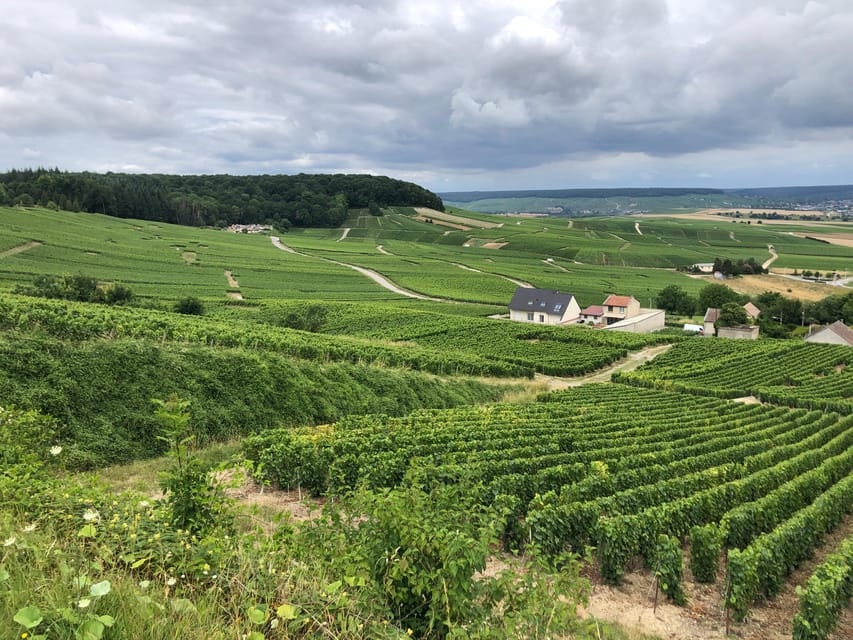
The Montagne de Reims is arguably the most complex and prestigious “backbone” of the Champagne region. Geographically, it is a vast plateau covered with thick forests, where the vineyards are planted on the slopes surrounding the woods. This region is unique because it features vineyards facing almost every direction—north, south, and east—creating a diverse range of microclimates.
The soils here are dominated by deep-seated chalk, providing the perfect drainage and mineral supply for the vines. This area is the spiritual home of Pinot Noir, which finds its most powerful and structured expression on these slopes. The wines from the Montagne de Reims are known for their “shoulders”—a metaphor for their breadth, weight, and architectural strength. They provide the necessary backbone for the greatest prestige cuvées, offering a density and “vinosity” that few other regions can replicate. The interaction between the cooling forest influence and the reflective heat of the chalk creates a tension in the wines that is both cerebral and hedonistic.
Wine Style & Aging Potential: The style is defined by power, red fruit density (wild raspberry, cherry), and a profound mineral tension. Because of the high acidity and phenolic structure of the Pinot Noir here, these wines possess incredible longevity. Top-tier offerings from the Grande Montagne can easily age for 15 to 30 years, evolving into complex notes of leather, dried fruits, and toasted brioche.
The Grande Montagne de Reims
The “Grande Montagne” refers to the heart of the plateau, including legendary Grand Cru villages like Ambonnay, Bouzy, and Verzenay. This sub-region represents the pinnacle of Pinot Noir excellence. The exposure varies significantly: Verzenay and Verzy face north/northeast, yielding wines of strict precision and high acidity, while Bouzy and Ambonnay face south, producing the most opulent, solar, and powerful base wines in the entire region.
The density of the chalk here is high, often appearing just inches below the topsoil, which imparts a distinctive saline finish to the wines. This is the area where the “noble” character of Champagne is most evident, producing wines with a serious, structured profile that demands time to fully reveal its secrets.
Wine Style & Aging Potential: Expect a robust, muscular profile with immense depth. The aging potential is massive; these are “vins de garde.” In their youth, they are tight and energetic, but after 10+ years, they develop extraordinary secondary aromas of truffle and honeyed spice.
Champagne AOC
Under the Champagne AOC in the Grande Montagne, the focus is almost entirely on the supremacy of Pinot Noir. These wines are characterized by their structural integrity and “vinous” character—they feel like great Burgundy with bubbles.
The blending often includes a small percentage of Chardonnay to add a lift of elegance, but the Pinot Noir provides the dark fruit core and the weight on the mid-palate. Growers in this area often use oak fermentation to match the intensity of the fruit, resulting in a rich, multi-layered experience.
Wine Style & Aging Potential: Powerful, structured, and earthy. Aging potential is 10–20 years for vintage-dated bottles, which develop a rich, creamy texture and notes of roasted nuts over time.
Coteaux Champenois AOC
This still wine appellation finds its greatest expression in the Grande Montagne, particularly the red wines of Bouzy and Ambonnay. These are rare, non-sparkling wines that showcase the purity of the terroir without the influence of secondary fermentation. Producing high-quality red wine in a northern climate requires exceptional site selection and low yields, making these some of the most sought-after still wines in France.
Wine Style & Aging Potential: The reds are light to medium-bodied with high acidity and crunchy red fruit. They are best enjoyed within 5–10 years, though the finest vintages can last longer, gaining a delicate forest-floor and mushroom complexity.
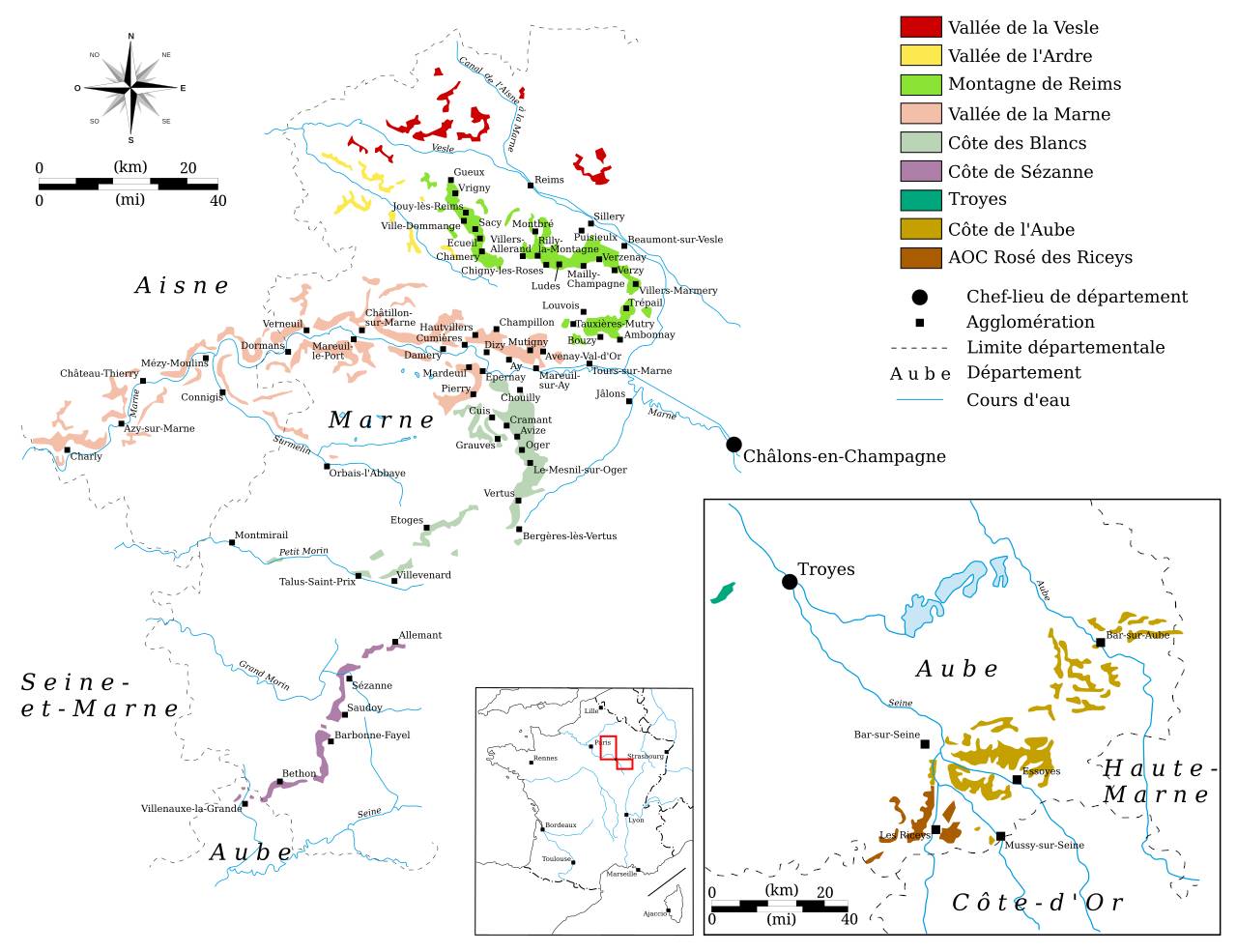
Vineyards and Appellations of Champagne
Wikipedia DalGobboM
The Massif de Saint-Thierry
Located northwest of Reims, the Massif de Saint-Thierry is a cluster of villages where the landscape transitions into more rolling hills and sandy-clay soils. While Pinot Noir is present, Pinot Meunier plays a more significant role here than in the Grande Montagne.
The wines are often described as “charming” and “approachable,” offering a softer entry point into the world of Reims-area Champagne. The sandy topsoils allow for a different heat retention profile, leading to fruit that is expressive and aromatic from a young age. This sub-region is an “insider secret” for those looking for high-quality, artisanal growers who prioritize fruit purity over sheer power.
Wine Style & Aging Potential: Supple and fruity with notes of white peach and apricot. These wines are generally intended for earlier consumption (3–7 years) compared to their neighbors to the south, though they maintain a lovely freshness.
Champagne AOC
The Champagne AOC wines here emphasize roundness. The sandier soils contribute to a lighter structure, making these wines excellent for aperitifs. They lack the aggressive “grip” of the chalkier sectors, offering a more fluid and harmonious palate. This makes them highly versatile for food pairings, particularly with delicate seafood or light starters.
Wine Style & Aging Potential: Round and aromatic. Aging potential is moderate, typically peaking around 5-8 years for non-vintage blends.
The Vesle Valley
Following the course of the Vesle river, this sub-region bridges the gap between the Montagne de Reims and the Vallée de la Marne. The soils are a mix of alluvium and chalk. This is a versatile area where all three major grape varieties—Pinot Noir, Pinot Meunier, and Chardonnay—coexist effectively, often leading to very balanced, “complete” blends.
The presence of the river helps to regulate temperatures, protecting against the extreme frosts that can plague the deeper valleys. Wines from the Vesle Valley are often prized by the large Champagne houses for their ability to provide “utility” and balance to a multi-vintage blend.
Wine Style & Aging Potential: Balanced and fresh. These wines have a classic Champagne profile with a mix of citrus and red berry notes. Aging potential is generally 5–12 years.
Champagne AOC
The AOC wines from the Vesle Valley are valued for their reliability and consistency. They provide a high-quality “middle ground” in blends, offering both the acidity of the north and the fruitiness of the valley. In the hands of dedicated growers, these wines can show surprising complexity, with a distinct “pastry” and “brioche” character that develops early in the bottle.
Wine Style & Aging Potential: Clean, crisp, and reliable. Aging potential is 4–8 years for most commercial releases.
The Vallée de la Marne and the Coteaux Sud d'Épernay
The Vallée de la Marne is the largest sub-region of Champagne, stretching from just outside Épernay all the way west toward Paris. This region is the kingdom of Pinot Meunier. Because the valley floor is prone to frost, the late-budding Meunier is the only variety that can reliably thrive here. The soils are much heavier than in the Côte des Blancs, consisting of clay, marl, and sand.
This results in wines that are incredibly aromatic, fruit-forward, and fleshy. The Marne river itself moderates the temperature, allowing for a long ripening season that emphasizes the “gourmand” side of Champagne—wines that feel generous and fleshy. As you move along the river, the terroir shifts from the chalk-dominant slopes near Épernay to the heavy clay deposits of the west, providing a fascinating spectrum of flavors that range from mineral and bright to earthy and robust.
Wine Style & Aging Potential: The style is dominated by orchard fruits (apple, pear) and floral notes. While Meunier-heavy wines were once thought to be “short-lived,” modern viticulture has proven that Vallée de la Marne wines can age beautifully, developing exotic spice and mushroom notes over 10–15 years.
The Grande Vallée de la Marne
Centered around the town of Aÿ (a Grand Cru), this sub-region is where the Marne Valley meets the Montagne de Reims. The slopes are steep and face due south, capturing maximum sunlight. Unlike the rest of the valley, the soils here have a very high chalk content. This creates a “super-terroir” that combines the power of Pinot Noir with a unique, sun-drenched ripeness. The wines from the Grande Vallée are often considered the most “vinous” of all Champagne, possessing a weight and intensity that bridges the gap between sparkling wine and fine Burgundy.
Wine Style & Aging Potential: Exotic, powerful, and broad. These are some of the most hedonistic wines in Champagne. Aging potential is high; Aÿ-based cuvées can easily age for 20 years, becoming rich and velvety with age.
Champagne AOC
3In the Grande Vallée, the Champagne AOC focuses on high-percentage Pinot Noir blends. These wines are famous for their notes of baked apple, spice, and a distinctive “iron” minerality. The south-facing exposure ensures that the fruit reaches full physiological ripeness, allowing for lower dosage (sugar addition) and a more transparent expression of the terroir.
Wine Style & Aging Potential: Rich and vinous. Vintage versions can age for 15+ years, developing notes of coffee, cacao, and honey.
Coteaux Champenois AOC
The Grande Vallée, specifically Aÿ and Mareuil-sur-Aÿ, is the historic home of the most famous still red wines in Champagne. These wines were the favorites of French kings long before bubbles were introduced. They are characterized by a deep color and a structural complexity that rivals many Pinot Noirs from the Côte de Nuits.
Wine Style & Aging Potential: Concentrated and silky reds with darker fruit profiles (blackberry). They can age for 10–15 years, evolving like fine Burgundy with added savory notes.
The Vallée de la Marne (West)
As you move west toward the department of Aisne, the valley widens and the soils become heavier with clay and silt. This is where Pinot Meunier truly shines, providing the juicy, fruity heart of many famous non-vintage blends. The climate is slightly more continental here, and the wines reflect a rustic, honest charm. This sub-region is currently undergoing a renaissance, with young growers focusing on single-plot Meunier to show that the grape can produce serious, terroir-driven wine.
Wine Style & Aging Potential: Fruity and immediate. Best consumed within 3–5 years to enjoy the primary fruit vibrancy.
Champagne AOC
The AOC wines here are the “comfort food” of Champagne. They are soft, round, and highly aromatic, often smelling of fresh bread and yellow plums. The heavy clay soils impart a certain “roundness” and “fat” to the mid-palate that makes these wines incredibly satisfying to drink upon release.
Wine Style & Aging Potential: Soft and approachable. Aging potential is 3–6 years; they are designed for pleasure rather than long-term cellaring.
The Coteaux Sud d'Épernay
This small but vital area sits between the Côte des Blancs and the Vallée de la Marne. It serves as a transitional zone where the chalk of the south meets the clay of the valley. It is an “insider’s” favorite, known for producing wines with surprising complexity and a distinct flinty minerality. The diverse geological makeup—including pockets of flint (silex)—gives these wines a unique “sparky” or “smoky” personality that is distinct from any other sub-region.
Wine Style & Aging Potential: Zesty and mineral. These wines have a “bright” personality and can age surprisingly well for 10+ years.
Champagne AOC
The AOC wines from the Coteaux Sud often feature a high proportion of Chardonnay, giving them a sleek, linear quality but with more “flesh” than those from the Côte des Blancs. They offer a beautiful balance between the citrus-driven acidity of the chalk and the fruitiness of the valley.
Wine Style & Aging Potential: Bright citrus and stone fruit. Aging potential is 5–10 years, gaining honeyed complexity.
The Côte des Blancs and the Côte de Sézanne
The Côte des Blancs is the holy grail for Chardonnay lovers. Stretching south from Épernay, this east-facing slope is composed of almost pure “Belemnite” chalk. This unique geological feature is what gives Champagne its world-renowned acidity and chalky “dust” minerality. The name “Côte des Blancs” comes from the fact that 95% of the vines planted here are Chardonnay. The wines produced here are the definition of elegance, finesse, and purity.
They are often bottled as “Blanc de Blancs,” and their ability to translate the white rock of the earth into liquid form is unmatched. Further south, the Côte de Sézanne offers a more tropical, riper alternative, showing the versatility of the Chardonnay grape when it moves onto slightly heavier soils.
Wine Style & Aging Potential: High-toned, linear, and piercing. Common notes include lemon zest, white flowers, and crushed sea shells. These wines have the highest aging potential in Champagne; the intense acidity acts as a natural preservative, allowing Blanc de Blancs to age for 30–50 years in exceptional cases.
The Côte des Blancs
This is the heart of the sub-region, containing the legendary Grand Cru villages of Cramant, Avize, Oger, and Le Mesnil-sur-Oger. Each village has a specific “voice”: Cramant is creamy, Avize is exotic and powerful, while Le Mesnil is famous for its razor-sharp acidity and legendary longevity. The purity of the chalk here is unmatched, creating wines that are often described as “vertical” because of their upward-driving acidity.
Wine Style & Aging Potential: Precise and aristocratic. Aging potential is 15–40 years for top vintage cuvées, which develop notes of brioche, butter, and hazelnuts.
Champagne AOC
The Champagne AOC here is dominated by Blanc de Blancs. These wines are prized for their “aperitif” style in their youth and their “gourmet” complexity as they age. Because they are 100% Chardonnay, they lack the red fruit “weight” of other regions, focusing instead on citrus, floral, and mineral layers.
Wine Style & Aging Potential: Crisp and mineral. Aging potential is 10–20 years for standard vintage releases.
Coteaux Champenois AOC
While rare, some still white wines are produced here. They are the ultimate expression of “naked” Chardonnay from chalky soils, characterized by extreme tension and citrus purity. These wines are often fermented in oak to provide a textural counterpoint to the high natural acidity.
Wine Style & Aging Potential: Lean and very high in acidity. Best aged 3–8 years to allow the acid to integrate and the citrus flavors to broaden.
The Côte de Sézanne
Located further south, the Côte de Sézanne is an extension of the Côte des Blancs, but with a warmer microclimate and soils that contain more clay and silt mixed with the chalk. The Chardonnay here is noticeably different—it is riper, more tropical, and less “austere” than its northern counterparts. This makes the wines very popular with consumers who find the classic Côte des Blancs style a bit too sharp.
Wine Style & Aging Potential: Exotic and fruity (pineapple, mango). These are more immediate wines, typically peaking at 5–10 years.
Champagne AOC
AOC wines from Sézanne are beloved for their generosity. They provide a wonderful sense of “weight” without being heavy, making them excellent food-pairing Champagnes for richer poultry dishes or creamy cheeses.
Wine Style & Aging Potential: Ripe and floral. Aging potential is 5–8 years.
The Vitryat and Montgueux
The Vitryat (around Vitry-le-François) and the isolated hill of Montgueux are the outliers of the Chardonnay world. Montgueux, in particular, is often called the “Montrachet of Champagne” because of the incredible richness and ripeness its south-facing chalk slopes provide. The Vitryat is a newer area of interest, providing Chardonnay with a distinct “stony” and “herbal” quality.
Wine Style & Aging Potential: Rich, voluminous, and toasty. These wines develop quickly and are beautifully expressive within 5–12 years.
Champagne AOC
The AOC wines here are unique for their “sunny” disposition. They offer a density of fruit that is rare in the cooler parts of the region, often showing notes of candied lemon and toasted brioche early in their life.
Wine Style & Aging Potential: Full-bodied and aromatic. Aging potential is 5–10 years
The Côte des Bar (The Aube)
The Côte des Bar, located in the Aube department, was once the “forgotten” child of Champagne but is now the hottest region for artisanal and grower producers. Geographically, it is closer to Chablis than to Reims. Geologically, it is different from the rest of Champagne; the soils are Kimmeridgian marl, the same soil found in Chablis and Sancerre. This gives the Pinot Noir grown here a rounder, softer, and more “floral” character compared to the Montagne de Reims. The climate is slightly warmer, leading to consistent ripeness. The Aube is characterized by a “rebel” spirit, where many producers practice organic and biodynamic viticulture, focusing on the specific identity of individual parcels.
Wine Style & Aging Potential: Forward, fruity, and mineral. These wines have a distinctive “wildflower” and “ripe strawberry” profile. While they are approachable young, the high-quality grower Champagnes from this region can age beautifully for 10–15 years, gaining complex “marine” minerality.
The Bar-sur-Aube District
The northern part of the Aube, Bar-sur-Aube, features steep slopes and a cooler climate than its southern neighbor. The wines here maintain a high level of freshness and a delicate aromatic profile. This district is known for its elegance and its ability to produce Pinot Noir that feels “light on its feet.”
Wine Style & Aging Potential: Elegant and floral. Aging potential is 5–12 years.
Champagne AOC
AOC wines from Bar-sur-Aube are known for their finesse. They often serve as the elegant “lift” in many major house blends. They are characterized by a “crunchy” red fruit quality and a clean, refreshing finish.
Wine Style & Aging Potential: Crisp and light-framed. Aging potential is 4–8 years.
The Bar-sur-Seine District
Further south, the Bar-sur-Seine district is warmer and produces Pinot Noir of significant substance and fruit density. This is the heart of the “New Wave” of Champagne, where producers focus on single-vineyard expressions and extended lees aging to bring out the depth of the Kimmeridgian soils.
Wine Style & Aging Potential: Fleshy and powerful. Aging potential is 8–15 years.
Champagne AOC
The AOC wines here are increasingly famous for their “terroir-forward” style, showing less cellar influence and more fruit purity. These wines often have a distinct “savory” or “salty” finish that reflects the ancient oyster shells found in the marl soil.
Wine Style & Aging Potential: Juicy and mineral. Aging potential is 6–10 years.
Rosé des Riceys AOC
This is one of the most exclusive and rarest appellations in France. It is a still rosé wine made only in the best years from Pinot Noir in the village of Les Riceys. It is famous for its “Goût de Riceys”—a unique nuttiness and floral intensity that comes from a specific semi-carbonic maceration process.
Wine Style & Aging Potential: Deep, complex rosé with notes of dried fruit, nuts, and spice. Unlike most rosés, this can age for 10–20 years, becoming more like a light red wine over time.
Champagne wine appellations in a nutshell
In 1927, the first official decree delimited the production zone, strictly defining which villages had the right to use the name. This was further refined in 1935 with the establishment of the Appellation d’Origine Contrôlée (AOC)
1 The Montagne de Reims and its Slopes
1.1 The Grande Montagne de Reims
1.1.1 Champagne AOC
1.1.2 Coteaux Champenois AOC
1.2 The Massif de Saint-Thierry
1.2.1 Champagne AOC
1.3 The Vesle Valley
1.3.1 Champagne AOC
2 The Vallée de la Marne and the Coteaux Sud d’Épernay
2.1 The Grande Vallée de la Marne
2.1.1 Champagne AOC
2.1.2 Coteaux Champenois AOC
2.2 The Vallée de la Marne (West)
2.2.1 Champagne AOC
2.3 The Coteaux Sud d’Épernay
2.3.1 Champagne AOC
3 The Côte des Blancs and the Côte de Sézanne
3.1 The Côte des Blancs
3.1.1 Champagne AOC
3.1.2 Coteaux Champenois AOC
3.2 The Côte de Sézanne
3.2.1 Champagne AOC
3.3 The Vitryat and Montgueux
3.3.1 Champagne AOC
4 The Côte des Bar (The Aube)
4.1 The Bar-sur-Aube District
4.1.1 Champagne AOC
4.2 The Bar-sur-Seine District
4.2.1 Champagne AOC
4.2.2 Rosé des Riceys AOC