Table of Contents
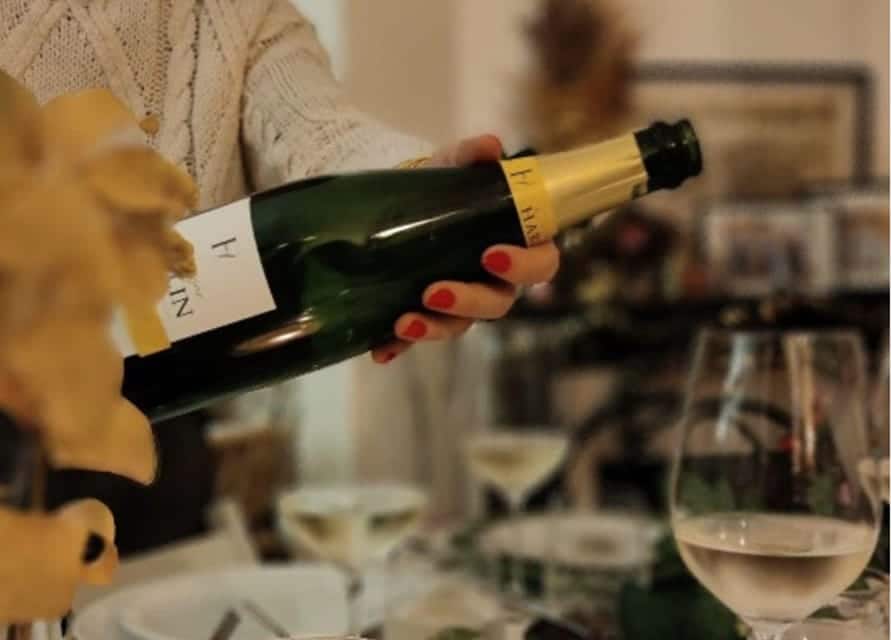
To speak of Champagne is to invoke a sensory masterclass: the olfactory dance of toasted brioche and citrus zest, the sight of a persistent perlage rising through a crystal flute, and the unmistakable structural elegance provided by Chardonnay, Pinot Noir, and Pinot Meunier. Yet, this global icon of luxury was not a sudden discovery but a masterpiece forged through centuries of hardship, geological fortuity, and the sheer brilliance of a few transformative figures.
The history of this region is a narrative of resilience—from the silent, humid depths of the Crayères to the war-torn vineyards of the Marne—where the region’s soul has matured for over two millennia. This guide serves as the definitive chronicle of that journey, tracing the evolution of a terroir that transformed a “devil’s wine” into the ultimate symbol of human celebration and prestige.
Step Into the Cellars of Kings

Ancient Foundations: The Roman Legacy in Chalk (50 BC – 496 AD)
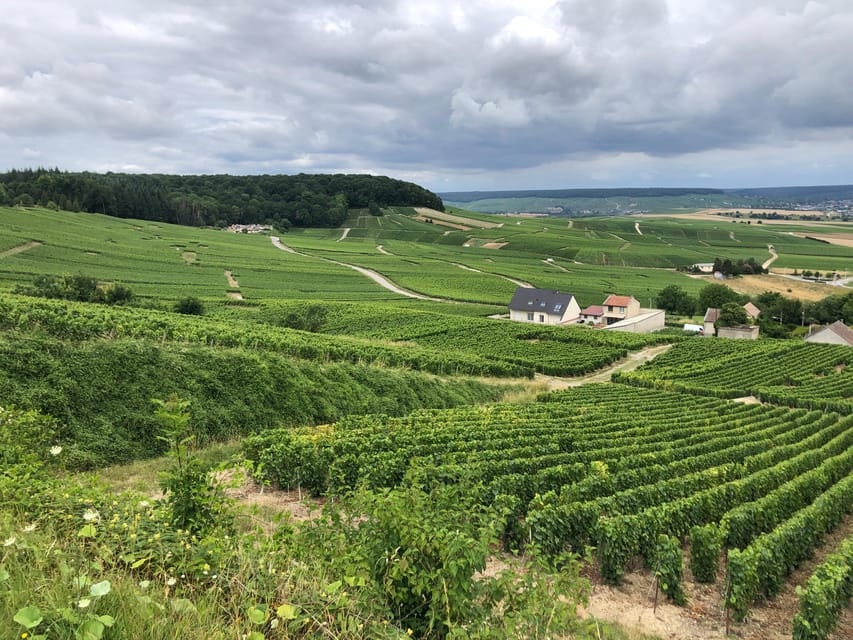
The definitive history of this region begins with a geological miracle. During the Cretaceous period, a receding sea left behind massive deposits of sub-surface chalk, a porous limestone that defines the local Terroir. When the Roman Empire expanded into northern Gaul, they recognized the immense viticultural potential of the steep, sun-drenched slopes of the region. However, their most enduring contribution was not above ground, but subterranean. To build the grand city of Durocortorum (modern-day Reims), Roman engineers excavated massive, bell-shaped pits into the white earth.
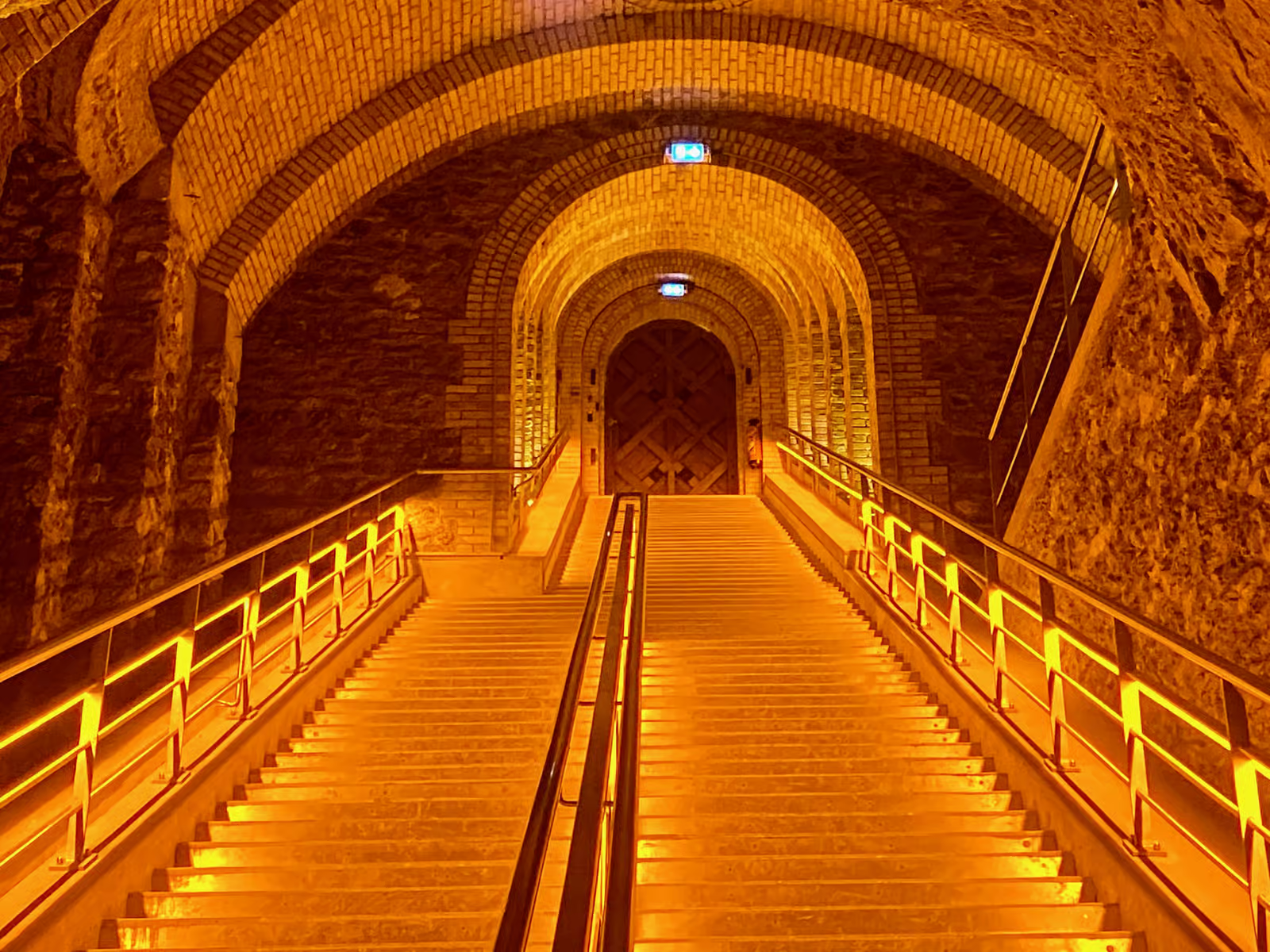
These excavations, known as Crayères, inadvertently created the world’s most sophisticated natural wine cellars. Extending nearly 100 feet underground, they maintain a constant, year-round temperature of 10°C to 12°C with perfect humidity—ideal conditions for the slow maturation of wine. During this era, the wines were not sparkling; they were pale, high-acid, still reds often compared to the lighter styles of Burgundy. The Romans established the first formal vineyard boundaries, utilizing the steep, south-facing slopes to capture the fleeting northern sun, laying the technical foundation for a viticultural industry that would survive the fall of the Empire and the subsequent centuries of tribal migration.
The Royal Anointing: Monastic Influence and the Divine Right (496 – 1650)
The region’s ascent to cultural dominance was cemented by a fusion of Political Turmoil and religious ceremony. On Christmas Day in 496 AD, Clovis, King of the Franks, was baptized in Reims, establishing a tradition that would link the region to the French Crown for a millennium. For centuries, every King of France traveled to the heart of the region to be anointed, and the local “Wine of Coronations” became the mandatory libation for the European aristocracy.
During the Middle Ages, the Benedictine and Cistercian Monasteries became the supreme technical authorities of the region. Monks at the Abbey of Hautvillers and the Abbey of Saint-Nicaise acted as elite wine journalists and scientists. They were the first to identify specific “Cru” plots—individual vineyards that consistently produced superior fruit. They also mastered the art of “white wine from black grapes,” using gentle pressing techniques to prevent the skins of Pinot Noir from coloring the juice. This monastic dedication ensured that by the 17th century, the region’s wine was the most prestigious still wine in the Western world, synonymous with the “Divine Right of Kings.”
The Legend of Dom Pierre Pérignon (1668 – 1715)
"Come quickly, I am tasting the stars!" However, the first appearance of that Dom Perignon quote appears to have been in a print advertisement in the late 19th century
To truly master Champagne Wine History, one must navigate the delicate boundary between the romanticized marketing myths and the staggering technical reality of Dom Pierre Pérignon. Appointed as the Procureur (cellar master) of the Benedictine Abbey of Hautvillers in 1668 at the age of 30, Pérignon inherited a vineyard in decline. Over the next 47 years, he would not “invent” the bubble—which he initially fought against as a sign of poor winemaking—but he would fundamentally invent the science of high-end viticulture.
The Architect of the Assemblage (The Art of the Blend)
Pérignon’s most profound contribution was the conceptualization of Assemblage. Before his tenure, wines were largely the product of a single field. He was the first to realize that the “whole could be greater than the sum of its parts.” He developed a rigorous system of tasting grapes on the vine, categorized by vineyard origin and flavor profile, rather than simply by variety. By blending juice from different Terroirs, he could compensate for the natural deficiencies of one plot with the strengths of another, creating a balanced, consistent, and complex “Abbey Style.” This remains the fundamental structural blueprint for every prestige cuvée produced today.
The Mastery of White Wine from Black Grapes
In the 17th century, the region was famous for its still red wines, but they often paled in comparison to Burgundy. Pérignon pivoted the strategy, focusing on producing a pristine white wine using the black-skinned Pinot Noir grape. This required a revolution in the press house. He designed specialized, wide, and shallow presses that allowed the juice to be extracted quickly with minimal skin contact, preventing the tannins and pigments from “bleeding” into the must. His obsession with purity was so great that he forbade the treading of grapes by foot, preferring the mechanical precision of the press to ensure the juice remained clear and elegant.
Engineering the Vessel: Glass, Cork, and Pressure
While Pérignon initially viewed the secondary fermentation (the “sparkle”) as a catastrophic flaw that caused bottles to explode in the cellars, his response to the problem was what eventually made the sparkling style viable. He was a pioneer in the transition from wood-fired French glass to the much stronger, coal-fired Verre Anglais (English Glass), which could withstand the internal pressure of six atmospheres. Furthermore, he is credited with reintroducing the use of Spanish Cork stoppers to the region. At the time, wooden bungs wrapped in oil-soaked hemp were the standard; Pérignon’s use of cork provided a superior seal that allowed the wine to age and develop its complex secondary aromas without oxidizing.
The Spiritual and Scientific Legacy
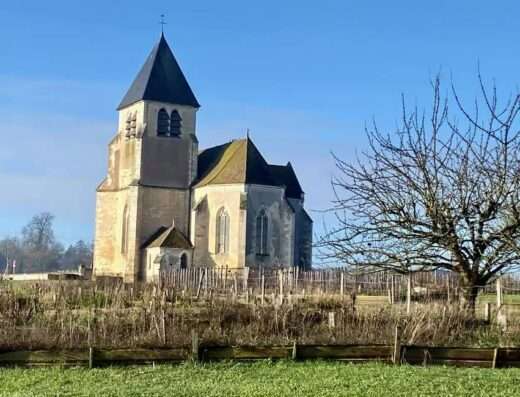
Pérignon was not merely a monk; he was an elite agricultural scientist. He introduced the practice of “drastic pruning” to reduce yields and increase the concentration of sugars and flavors in the grapes—a practice that is now a Legal Milestone codified in AOC law. He also insisted that the harvest take place in the cool, early morning hours to preserve the fruit’s volatile aromatics and prevent premature fermentation. When you stand in the choir of the church at the Abbey of Hautvillers today, you are standing over the remains of a man who transformed a humble monastic agricultural product into the world’s most sophisticated luxury asset.
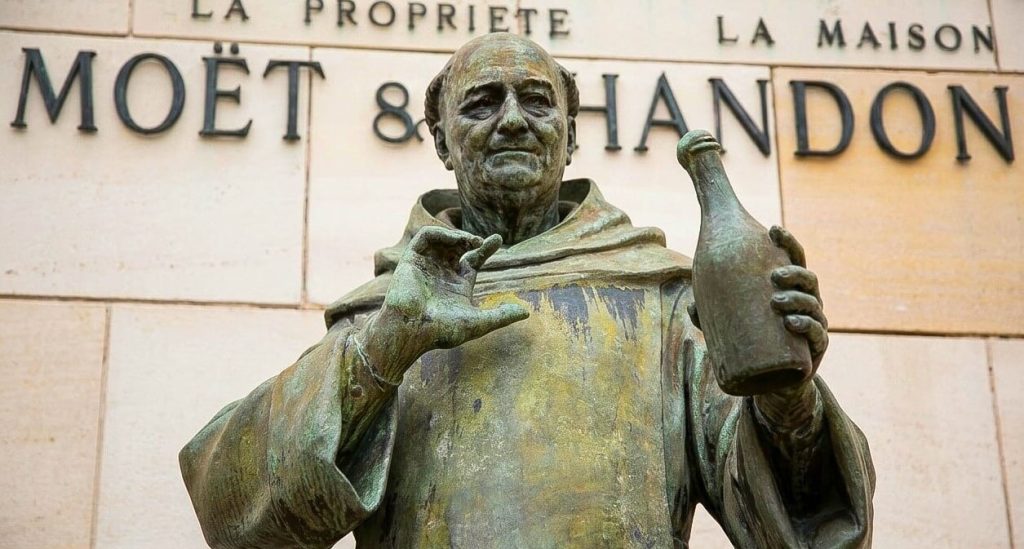
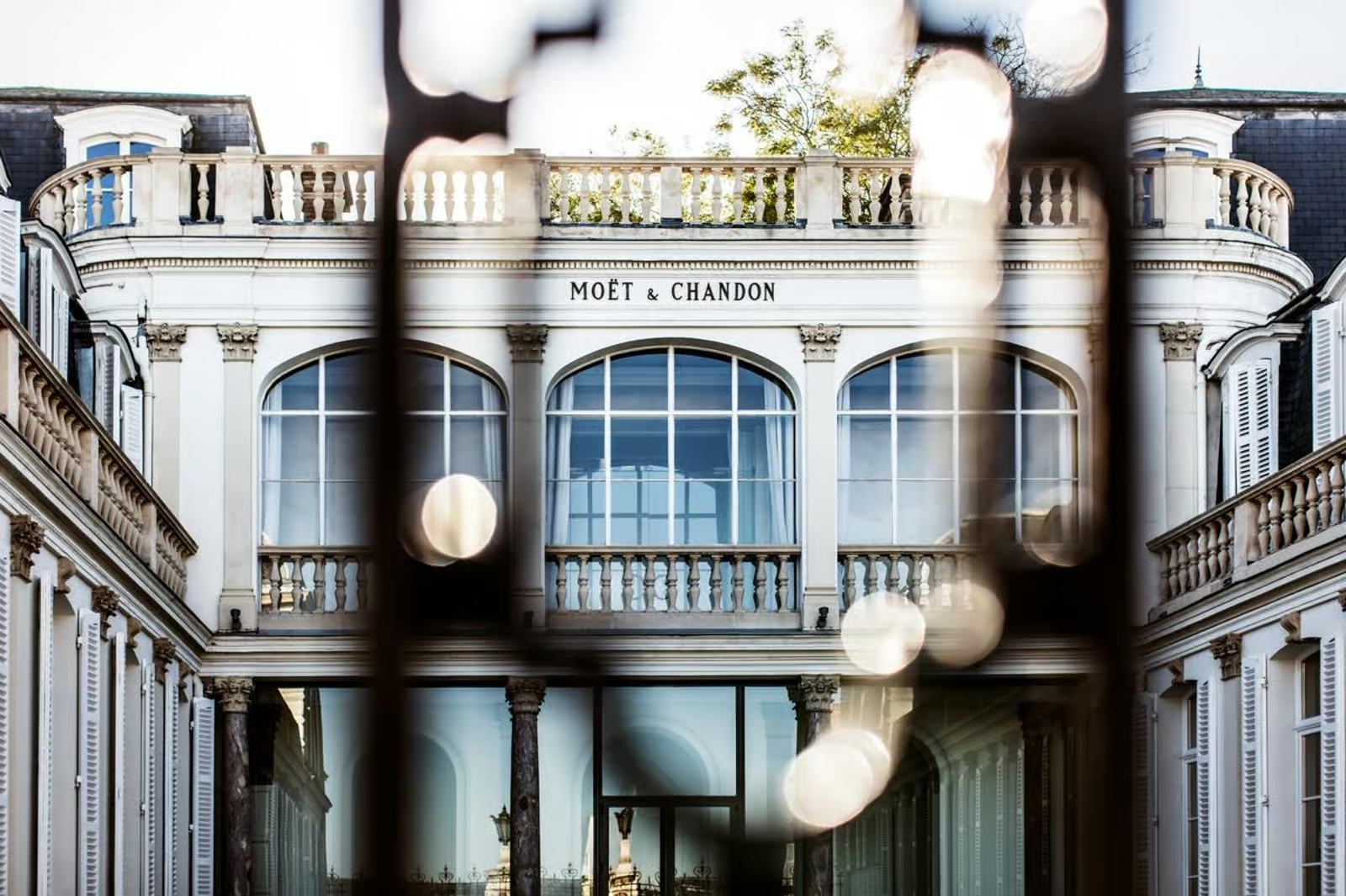
Dom Perignon Statue at Maison Moët & Chandon Champagne cellars
The Technical Revolution: Taming the "Devil’s Wine" (1715 – 1815)
Following Pérignon’s death, the 18th century became an era of intense Technical Evolution. The “sparkle,” once a seasonal accident caused by the region’s cold winters halting and then restarting fermentation, became a sought-after luxury. However, the science remained volatile. In some years, up to 80% of a cellar’s inventory would be lost to exploding bottles, earning it the nickname le vin du diable (the devil’s wine).
The industrial breakthrough came from a surprising source: the British. Their coal-fired glass furnaces produced “Verre Anglais,” which was significantly stronger than the wood-fired French glass. This, combined with the increasing precision of sugar measurements for the tirage (the addition of sugar and yeast to trigger bubbles), allowed merchant houses to move from accidental effervescence to a controlled, repeatable process. By the time of the French Revolution, the region had transitioned from a producer of high-end still wines to the global epicenter of sparkling wine.
The Widow’s Fortune: Barbe-Nicole Clicquot and the Industrial Age (1815 – 1910)
The 19th century witnessed the industrialization of luxury, a period defined by the emergence of the great Maisons and the visionary “Grandes Dames” who led them. Central to this era was Barbe-Nicole Clicquot, the “Widow Clicquot,” who took control of her husband’s business in 1805 at just 27 years old. Her leadership was not merely a feat of business management but one of radical technical innovation that solved the final major hurdle of sparkling wine production: clarity.
The Invention of the Riddling Rack (Pupitre)
Before 1816, all sparkling wine was served “on the lees,” meaning the dead yeast cells remained in the bottle, creating a cloudy, unappealing liquid. Madame Clicquot, frustrated by this lack of elegance, famously took a kitchen table and cut holes in it at an angle. This became the first Riddling Rack. By placing the bottles neck-down and giving them a rhythmic “shake and turn” (remuage) over several weeks, she forced the sediment into the neck of the bottle. This allowed for the sediment to be removed (disgorgement) without losing the precious carbonation, resulting in the crystal-clear, brilliant wine we recognize today.
The Global Expansion and the “Zone Rouge”
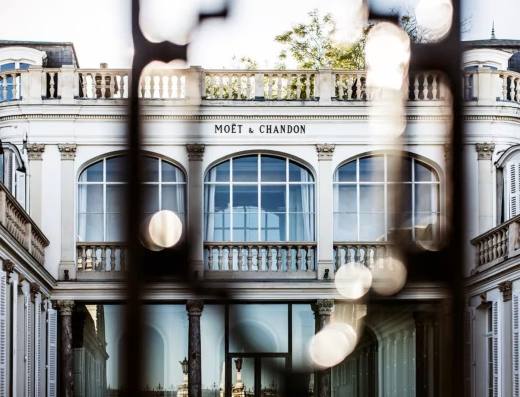
This technical breakthrough allowed for mass production and international export on a scale never before seen. While Clicquot was conquering the Russian Imperial Court, other houses like Moët & Chandon, Pommery, and Krug were establishing the region as a global brand. However, this prosperity was precarious. In the late 1890s, the Phylloxera louse arrived from America, devastating the vineyards. The region was forced into a total technical reboot, replanting every acre onto resistant rootstocks.
This agricultural crisis was immediately followed by the horror of World War I. The region became a “Zone Rouge” of the Western Front. The vineyards were crisscrossed with trenches, and the city of Reims was nearly leveled by 1,000 days of bombardment. Yet, the resilience of the region was proven as the population moved into the ancient Crayères, transforming the Roman chalk pits into underground cities with schools, hospitals, and bakeries, all while continuing to maintain the wine stocks that would fuel the eventual victory celebrations.
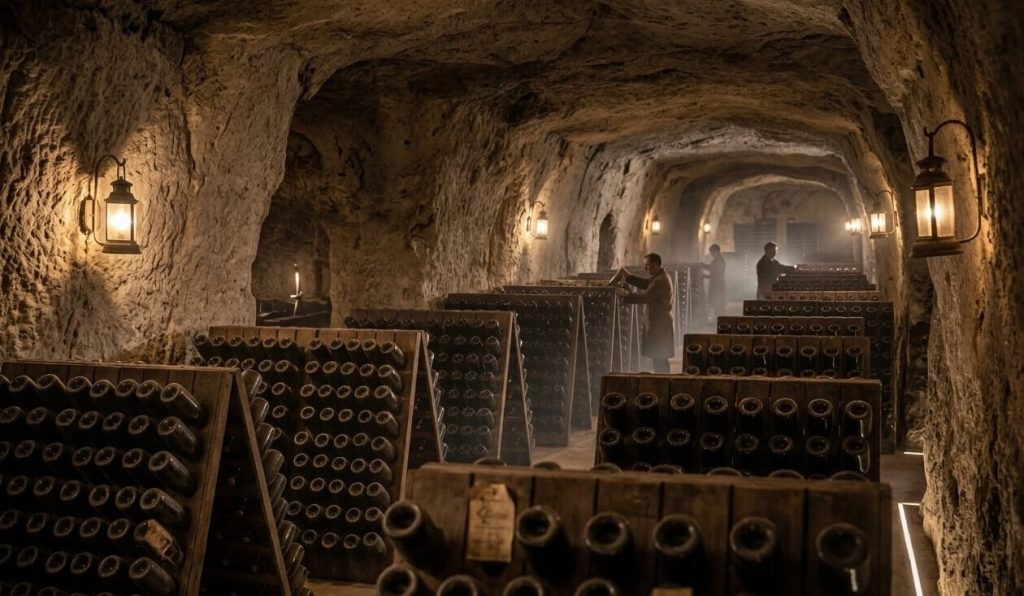
Riddling Rack also known as Pupitre
Legal Milestones: The Champagne Riots and the AOC (1910 – 1945)
As the 20th century dawned, the global fame of the name “Champagne” became its greatest liability. The region faced a dual crisis: the devastation of Phylloxera and a massive influx of “fraudulent” grapes from outside the region. Merchant houses were importing cheaper grapes from the Loire and even from abroad, bottling them under the prestigious label. This triggered the Champagne Riots of 1911, a violent uprising where thousands of local growers, fearing for their survival, destroyed warehouses and tipped thousands of bottles of “fake” wine into the Marne.
This explosion of Political Turmoil forced the French government to intervene, marking the start of the most significant Legal Milestones in wine history. In 1927, the first official decree delimited the production zone, strictly defining which villages had the right to use the name. This was further refined in 1935 with the establishment of the Appellation d’Origine Contrôlée (AOC). These laws were revolutionary; they didn’t just define geography, but also dictated viticultural discipline—pruning methods, minimum alcohol levels, and the mandatory Méthode Traditionnelle of secondary fermentation in the bottle.
During World War II, these legal protections were put to the ultimate test. Under Nazi occupation, the Commission de Propagande de la Champagne (the precursor to the modern CIVC) was formed to protect the region’s stocks from being looted. Growers and houses worked together to hide their finest vintages behind false walls in the Crayères. The war era solidified the region as a unified entity, proving that the protection of the “Champagne” name was a matter of national heritage as much as economic survival.
Modern Renaissance: Sustainability and Future Challenges (1945 – Present)
The Modern Renaissance is defined by a philosophical shift from industrial volume back to the biological purity of the Terroir. In the post-war decades, the region focused on global reconstruction and expansion, but as the 21st century approached, a new “Grower Revolution” took hold. Small vignerons began to pivot away from selling their fruit to the large Maisons, choosing instead to bottle their own estate wines—labels known as Récoltant-Manipulant. This movement has highlighted the micro-diversity of individual plots, emphasizing that even within a single village, the subsoil variations of Kimmeridgian Marl and Chalk can produce vastly different flavor profiles.
The Ecological Transformation
As an authority in the wine world, it is vital to note that the region is currently undergoing its most radical environmental transformation since the post-Phylloxera replanting. In 2014, the Comité Champagne launched the “Sustainable Viticulture in Champagne” (VDC) certification, with the ambitious goal of 100% of the region’s vineyards being certified by 2030. This shift involves the total abandonment of chemical herbicides in favor of “cover cropping” . Leading houses like Roederer have transitioned significant portions of their grand cru acreage to Biodynamics, viewing soil health as the only way to ensure the wine’s longevity and aromatic complexity.
The Existential Threat: Climate Adaptation
The primary Future Challenge facing the region is climate change. For two millennia, Champagne’s identity was tied to its “marginal” climate—the struggle of grapes to ripen in the cold north provided the essential high acidity and low sugar required for fine bubbles. Today, harvest dates have moved forward by nearly three weeks compared to the 1970s. Average alcohol levels are rising, and the once-vital Chaptalization (adding sugar to the must) is becoming obsolete.
To adapt, the region is experimenting with “forgotten” grape varieties like Arbane and Petit Meslier, which retain higher acidity in the heat. Furthermore, the 2021 approval of Voltis, a fungus-resistant hybrid variety, marks a historic legal milestone, allowing for reduced pesticide use while maintaining the region’s rigorous quality standards. The future of Champagne wine history lies in this delicate balance: honoring the 2,000-year-old heritage of the Crayères while utilizing cutting-edge genetic and viticultural science to survive a warming world.
Conclusion: A Legacy of Liquid Light
The history of Champagne is an epic of human ingenuity triumphing over environmental and political adversity. From the Roman labor that hollowed out the chalk foundations to the scientific rigor of Dom Pérignon and the industrial bravery of Madame Clicquot, every bubble carries the weight of two millennia. As the region moves toward a future defined by sustainability, it continues to set the global standard for excellence. To drink Champagne is to participate in this ongoing history—a toast to the past and a sparkling promise of the future.