Table of Contents
ToggleItaly is not just a country; it’s a living museum of viticulture. With a winemaking history stretching back millennia, it’s a place where ancient traditions and modern innovation coexist in harmony. Italy’s identity is inextricably linked to its wines, which are as diverse and captivating as its landscapes. To drink Italian wine is to taste the soul of a land shaped by sun, soil, and human passion.
Italy’s winemaking story is a long and rich one, stretching back to a time when wine was not just a beverage but a cornerstone of civilization itself.
Winemaking in Italy has its origins with the Etruscans and the Greeks. The Etruscans, an advanced civilization in central Italy, were cultivating grapes and producing wine as early as the 8th century BCE. They developed sophisticated methods of trellising and fermentation, and their wines were a significant part of their trade and culture.
At the same time, Greek colonists were settling in southern Italy, bringing with them their own viticultural knowledge. The Greeks called the land Oenotria—the “land of vines”—a testament to the abundance of grapes they found growing there. The true expansion and systematization of Italian winemaking came with the Roman Empire. The Romans viewed wine as a daily necessity and a symbol of their refined culture.They perfected viticultural techniques, introducing new trellising systems and expanding vineyards across the Italian peninsula and throughout their vast empire.
Roman writers like Pliny the Elder and Cato the Elder documented winemaking practices, and their treatises became foundational texts for future generations. The Romans also developed a sophisticated trade network, shipping Italian wines—like the famous Falernian from Campania—across the Mediterranean. This period solidified Italy’s status as a major winemaking power, laying the groundwork for the regions and styles that persist to this day.
From the rolling hills of Piedmont to the shores of Sicily, find your perfect wine tasting or winery visit
Following the collapse of the Roman Empire, winemaking faced a period of decline and fragmentation. It was the monasteries that became the guardians of viticulture, preserving ancient knowledge and grape varieties. Monks cultivated vineyards to produce wine for religious ceremonies and to sustain their communities.
They meticulously documented their methods, creating a crucial link between the ancient world and the Renaissance. As the Middle Ages progressed, the Italian peninsula was a patchwork of city-states, each with its own agricultural traditions. Noble families and wealthy merchants began to invest in large estates, viewing vineyards not only as a source of income but as a mark of prestige.
The powerful Medici family in Tuscany, for example, were significant patrons of the arts and agriculture, and their influence helped to establish the quality of Tuscan wines. The rise of maritime trade republics like Venice and Genoa further boosted the wine trade. Italian wines were shipped to northern Europe and the Middle East, becoming a valuable commodity.
This era also saw the emergence of specific regional identities, as winemakers began to specialize in grapes best suited to their local terroir. The early foundations of today’s wine regions, from Piedmont to Puglia, were being laid, each developing its unique character and style. The 17th and 18th centuries saw a period of stabilization and refinement. Winemaking families began to focus on improving quality and consistency.
They developed new fermentation and aging techniques, and the concept of cru or single-vineyard wines began to emerge in some regions. This period was crucial in cementing the traditions that would define Italian winemaking for centuries to come, setting the stage for the dramatic changes of the modern era
The 19th and early 20th centuries were a tumultuous period for Italian winemaking. The phylloxera epidemic, a devastating vine louse that ravaged vineyards across Europe, decimated much of Italy’s grape-growing landscape.
Following this, two world wars and political instability under Mussolini’s regime further hindered the industry. Many vineyards were abandoned, and the focus shifted toward quantity over quality, with a large portion of wine produced for bulk export.The mid-20th century marked a turning point.
A new generation of winemakers, inspired by the high-quality wines of France and other nations, began to challenge the status quo. They introduced modern techniques, such as temperaturecontrolled fermentation and clonal selection, and focused on improving vineyard management. This “Quality Renaissance” led to a re-evaluation of Italy’s indigenous grapes and a renewed commitment to expressing local terroir.
This shift was cemented by the establishment of the Denominazione di Origine Controllata (DOC) system in the 1960s, a classification system designed to protect and regulate the origin and quality of Italian wines. The system, which has evolved to include the higher-level Denominazione di Origine Controllata e Garantita (DOCG), provided a legal framework for quality assurance and helped to restore Italy’s reputation on the world stage. Today, these classifications are a cornerstone of the Italian wine industry, ensuring that a bottle of Barolo or Brunello di Montalcino meets the highest standards of quality and authenticity.
Terroir is a French term that encapsulates how a region’s unique climate, soil, and topography influence the character of its wine. In Italy, a country of staggering geographical diversity, terroir is not just a concept—it’s the very foundation of its viticultural identity.
Italy’s climate is highly varied, creating a patchwork of unique growing conditions. The north, with its proximity to the Alps and the Apennines, is characterized by a continental climate with cold winters and warm, dry summers. This is particularly true in regions like Piedmont and Veneto. The significant diurnal temperature shifts in these areas—where hot days are followed by cool nights—help to preserve the grapes’ acidity and aromatic compounds, resulting in elegant and structured wines. For example, the Nebbiolo grape in Piedmont thrives in these conditions, developing the complex aromas and firm tannins that define wines like Barolo.
Moving south, the climate becomes distinctly Mediterranean, influenced by the warm waters of the Adriatic and Tyrrhenian seas. Regions like Tuscany, Puglia, and Sicily experience hot, sunny summers and mild winters. The abundant sunshine ensures grapes ripen fully, leading to wines with generous fruit flavors and higher alcohol content. Coastal breezes help to moderate temperatures, preventing over-ripening and maintaining a crucial balance of acidity. In the extreme south and on the islands, the climate can become arid, with long, hot summers and very little rainfall. Here, winemakers must employ specific viticultural techniques, such as bush-vine training, to protect the grapes from the intense sun.
This is the case in Sicily, where the Nero d’Avola grape thrives, producing bold, rich, and full-bodied wines. Italy’s unique combination of north-south variation and mountainous terrain ensures that there is a perfect microclimate for every grape variety, from crisp whites in the north to robust reds in the south.
Italy’s diverse geology is a fundamental component of its terroir. From the volcanic slopes of Mount Etna to the limestone hills of Tuscany, the country’s soils and topography are a mosaic of winemaking potential. The Apennine mountain range, which forms the backbone of the peninsula, creates a multitude of microclimates and slopes, forcing vines to struggle for water and nutrients. This stress results in smaller, more concentrated berries, leading to wines with enhanced flavor and complexity.
In Piedmont, the dominant soil types are calcareous marl and sandstone. This ancient seabed, rich in limestone and clay, provides an ideal home for the Nebbiolo grape. The limestone ensures good drainage while retaining enough moisture to prevent drought stress, and it is widely believed to contribute to the high acidity and tannic structure of Barolo and Barbaresco. The subtle differences in the marl composition from village to village explain the distinctive character of wines from communes like La Morra (softer, more aromatic) versus those from Serralunga d’Alba (structured, powerful).
Tuscany is famously defined by its Galestro and Alberese soils. Galestro is a crumbly, schistous clay that is rich in minerals and well-draining, forcing Sangiovese roots to dig deep. This struggle is often cited as a reason for the grape’s signature savory notes and firm tannins, particularly in the Chianti Classico region. Alberese, a lighter, clay-rich limestone, is found in areas like Montalcino and contributes to the elegance and longevity of Brunello. In Campania, the soils are predominantly volcanic, a legacy of Mount Vesuvius and other dormant volcanoes. This soil is rich in minerals and poor in organic matter, which can give wines a distinctive savory, smoky, and mineraldriven character.
The local grapes, like Aglianico, thrive on these slopes, producing powerful and structured wines like Taurasi, which are known for their firm tannins and earthy complexity. The volcanic ash and rock provide excellent drainage, forcing the vines to work hard and leading to highly concentrated grapes.In Sicily, the volcanic soils of Mount Etna are a prime example of a unique terroir. The black volcanic sand and lava rock create a highly porous and mineral-rich environment. The elevation of the vineyards—some of the highest in Italy —provides a cooler climate and significant diurnal shifts, which help preserve acidity in the grapes. This unique combination of volcanic soil and mountain climate results in high-quality wines, like those made from Nerello Mascalese, that are remarkably elegant and complex, with a distinct mineral streak.
taly’s wine classification system, designed to protect and promote the quality and authenticity of its wines, is based on geographic origin and adherence to specific production rules. It aligns with the European Union’s Protected Designation of Origin (PDO) and Protected Geographical Indication (PGI) framework. Understanding these appellations is key to navigating the vast world of Italian wine and appreciating the regional specificities that make each bottle unique.
This is the highest tier of Italian wine classification. DOCG wines must meet the most stringent quality controls, including a guarantee of origin, strict production rules (grape varieties, yields, aging requirements), and a final tasting by a government-approved committee. These wines are “guaranteed” for their typicality and quality within their designated area. Examples include Barolo, Barbaresco, Brunello di Montalcino, and Chianti Classico. There are currently around 76 DOCG wines.
The DOC category represents the backbone of quality Italian wine. There are over 330 DOCs, each with specific regulations regarding grape varieties, geographical boundaries, winemaking methods, and aging. While slightly less stringent than DOCG, many DOC wines offer exceptional quality and represent excellent value. Examples include Montepulciano d’Abruzzo, Soave, and Valpolicella.
Introduced in 1992, the IGT category provides more flexibility for winemakers who wish to experiment with grape varieties or winemaking techniques outside the strict DOC/DOCG rules. These wines must still originate from a specific geographical area, but the regulations are broader. The “Super Tuscans” are prime examples of high-quality wines that often fall under this category, proving that IGT status does not necessarily imply lower quality. There are over 120 IGTs.
This is the most basic classification, with minimal regulations regarding grape varieties or geographic origin. While historically associated with simple, everyday wines, some adventurous winemakers use this category for experimental or declassified wines of surprising quality.
Italy’s strength lies in its incredible biodiversity of grape varieties. While international grapes like Merlot and Chardonnay are grown, it’s the native (indigenous) grapes that truly define the character of Italy wine country. With over 500 officially recognized indigenous grape varieties, and many more still to be fully explored, Italy offers a sensory adventure for every palate. Let’s delve into some of the most important:
The Sparkle of Veneto: The primary grape behind the world-famous Prosecco.
Characteristics: Glera grapes are relatively high-yielding and naturally acidic, making them ideal for sparkling wine production. Wines are typically light-bodied, with crisp acidity and delicate aromas of green apple, pear, white flowers, and citrus.
Styles: Predominantly used for Prosecco (Spumante – fully sparkling, Frizzante – semi-sparkling), it is a refreshing and approachable sparkling wine, perfect for aperitifs or light celebrations.
The King of Marche: An ancient and highly respected indigenous white grape primarily grown in the Marche region.
Characteristics: Verdicchio wines are celebrated for their vibrant acidity, pronounced minerality, and complex aromatic profile that includes notes of citrus (lemon, grapefruit), green apple, white flowers, and a distinctive bitter almond finish. The name “Verdicchio” itself comes from “verde,” referring to the greenish hue of the grapes and the wine.
Styles: Can range from fresh, crisp, and youthful wines (Verdicchio dei Castelli di Jesi) to more structured, age-worthy expressions (Verdicchio di Matelica, often with a “Riserva” designation) that develop honeyed, nutty notes over time.
Italy’s Popular White: While originating in France (Pinot Gris), Pinot Grigio has found a significant home in northeastern Italy, particularly in Veneto, Friuli-Venezia Giulia, and Alto Adige.
Characteristics: Italian Pinot Grigio is typically characterized by its light body, crisp acidity, and fresh, zesty flavors of green apple, pear, lemon, and sometimes a hint of almond or mineral.
Styles: Most commonly produced as a dry, easy-drinking white wine, it’s a versatile choice for a wide range of cuisines. In some regions, like Friuli, producers craft fuller-bodied, more complex expressions.
Vermentino is a vibrant white grape primarily found in Italy’s coastal regions, particularly Liguria, Tuscany, and Sardinia, as well as on the island of Corsica. With its aromatic profile and refreshing acidity, Vermentino is often referred to as the “grape of the sea,” as it thrives in maritime climates and pairs perfectly with seafood.
Key Characteristics:
Aromas & Flavors: Citrus (grapefruit, lemon peel), white flowers, green apple, and a distinct, characteristic note of almond or a saline, briny quality.
Structure: Medium-bodied with lively acidity, providing a crisp and refreshing finish. It’s often unoaked, allowing its fresh, aromatic character to shine.
Regional Expression: Sardinian Vermentino is known for its classic saline and mineral-driven character, while Vermentino from Liguria can be more delicate and floral. Tuscan versions, such as those from Bolgheri, are often richer and more textured.
An ancient white grape from Southern Italy, Fiano is best known for producing complex and aromatic wines in Campania. It’s a grape that combines richness with a bright, nervy acidity, making it a compelling alternative to more common varieties like Chardonnay. Its name is believed to be derived from Apiana, suggesting a grape favored by bees.
Key Characteristics:
Aromas & Flavors: Hazelnut, honey, pear, and tropical fruit on the nose, with a palate that adds a distinctive note of dried herbs and a mineral, almost smoky quality.
Structure: Fiano is a full-bodied white with a rich, nutty texture that is beautifully balanced by its high acidity. This combination allows it to age and develop even greater complexity over time.
Regional Expression: The most famous expression is Fiano di Avellino DOCG from Campania, where it displays a beautiful balance of richness, acidity, and mineral notes. Smaller plantings in Sicily and Puglia show a more Mediterranean, fruit-forward style.
Trebbiano is one of Italy’s most planted grapes, historically known for high-yield, neutral wines that were often used as a base for brandy or simple table wine. However, as quality has become the focus, certain Trebbiano clones have shown the ability to produce compelling, food-friendly wines with a clean, mineral character, proving its potential when yields are controlled.
Key Characteristics:
Aromas & Flavors: Trebbiano wines are typically subtle, with notes of lemon, green apple, and a stony, mineral character. Its strength is in its clean, refreshing neutrality.
Structure: Light-bodied with high acidity. It’s a classic easy-drinking, unoaked white that is meant to be consumed young.
Regional Expression: While found throughout Italy, the most renowned and distinct expressions come from Trebbiano d’Abruzzo, which can display a surprising depth and complexity, and Lugana, where it is known as Trebbiano di Lugana and produces more full-bodied, age-worthy wines.
Vernaccia is an ancient and unique white grape with a long history in the Tuscan hill town of San Gimignano. It is one of Italy’s oldest documented grapes, known for producing a white wine with a distinct bitter-almond finish. It offers a structured and savory alternative to the more aromatic whites of other regions.
Key Characteristics:
Aromas & Flavors: Green apple, grapefruit, chamomile, and a pronounced, signature bitter almond or saline note on the finish.
Structure: Medium-bodied with high acidity and a savory, almost grippy texture. This unique structure makes it a versatile food wine.
Regional Expression: The most famous and nearly exclusive expression is Vernaccia di San Gimignano DOCG. These wines can range from light and crisp to richer, barrel-aged versions with a fuller body and nutty character.
The Soul of Tuscany: Sangiovese is Italy’s most widely planted red grape and the undisputed king of Tuscany.
Characteristics: Known for its naturally high acidity, firm tannins, and savory character. Common aromas and flavors include sour cherry, red plum, dried herbs, tomato leaf, clay pot, and sometimes a hint of tobacco or leather as it ages.
Styles: Produces a wide range of styles, from the vibrant, approachable Chianti to the powerful, long-lived Brunello di Montalcino and the elegant Vino Nobile di Montepulciano. Its adaptability to different soil types (like galestro and alberese in Tuscany) contributes to its diverse expressions.
The Noble Grape of Piedmont: Named perhaps for “nebbia” (fog), which often blankets the hills where it thrives, Nebbiolo is a notoriously finicky grape, but when successful, it yields wines of profound depth and longevity.
Characteristics: Despite its pale, often garnet color, Nebbiolo wines are intensely structured with high acidity and formidable tannins. Its aromatic profile is complex and captivating, featuring notes of rose petals, tar, red cherry, licorice, and often truffles or dried fruits with age.
Styles: The backbone of Barolo and Barbaresco, two of Italy’s most revered wines, known for their immense aging potential. Also found in Gattinara and Lessona.
The Hearty Red of Abruzzo: Not to be confused with the town of Montepulciano in Tuscany, this grape is most prominently grown in the Abruzzo region.
Characteristics: Montepulciano produces dark-fruited, medium to full-bodied wines with soft, approachable tannins and moderate acidity. Common flavors include black cherry, plum, black pepper, and sometimes a hint of savory herbs.
Styles: Often seen as Montepulciano d’Abruzzo DOC, it offers a reliable and enjoyable red wine for everyday consumption, known for its pleasant drinkability.
Barbera is a red grape that is a star in its own right in Northern Italy’s Piedmont region, where it is the most planted red grape. For centuries, it was overshadowed by the more noble Nebbiolo, but it has now rightfully earned a reputation for producing vibrant, fruit-forward wines with a signature mouthwatering acidity and soft tannins, making it incredibly approachable.
Key Characteristics:
Aromas & Flavors: Pronounced notes of tart red cherry, raspberry, and blackberry, with a savory, earthy undertone. Oak aging can introduce notes of vanilla and spice.
Structure: Barbera’s hallmark is its high, zesty acidity and soft, low tannins. This makes it feel much smoother and more accessible than many other Italian reds, even at a young age.
Regional Expression: The most famous wines are Barbera d’Asti and Barbera d’Alba. Barbera d’Asti is often prized for its elegant structure and bright acidity, while Barbera d’Alba tends to be fruitier and more rustic.
Often called the “Barolo of the South,” Aglianico is a noble red grape that reigns supreme in the rugged, volcanic terroirs of Southern Italy. It is a late-ripening variety that produces powerful, deeply colored, and highly structured wines with immense aging potential. The name is believed to be a corruption of “Hellenico,” suggesting Greek origins.
Key Characteristics:
Aromas & Flavors: Dark fruit (black cherry, black currant), leather, black pepper, and a distinctly volcanic, earthy, and mineral character. With age, it develops complex notes of forest floor, tobacco, and balsamic.
Structure: Aglianico is naturally high in both acidity and firm, assertive tannins. This dual structure gives the wines their legendary longevity and makes them a perfect match for rich, savory food.
Regional Expression: The most celebrated wines are Taurasi DOCG from Campania and Aglianico del Vulture DOCG from Basilicata, both of which are grown on ancient volcanic soils and produce wines of incredible power, concentration, and elegance.
Italy boasts 20 distinct wine regions, each with its unique climate, soil, and indigenous grapes, producing a dizzying array of styles. From the Alpine foothills to the sun-baked south, every corner offers a new discovery.
Abruzzo is a beautiful region on Italy’s Adriatic coast, dominated by mountains and national parks. While historically a producer of simple, rustic wines, Abruzzo is now making waves with its high-quality, authentic expressions of its native grapes, particularly Montepulciano.
Montepulciano d’Abruzzo: This region is the home of one of Italy’s most widely planted grapes. The wines are known for their deep color and soft, velvety tannins, with lush flavors of plum, black cherry, and red fruit. The Cerasuolo d’Abruzzo is a dark, savory rosé made from the same grape.
Trebbiano d’Abruzzo: While many Trebbiano wines are simple, the best examples from Abruzzo can be complex and full-bodied, with flavors of citrus, almond, and a crisp minerality.
Nestled high in the Italian Alps, the Valle d’Aosta is Italy’s smallest and least-known wine region. It’s a land of breathtaking mountain scenery, with vineyards clinging to steep, terraced slopes. The unique Alpine climate, with significant temperature shifts between day and night, and diverse soil types, creates wines with remarkable freshness, high acidity, and distinct minerality. The region is a treasure trove of indigenous grape varieties.
Petit Rouge: The most widely planted red grape in the valley. It produces light-bodied, ruby-red wines with notes of red berries and a characteristic floral scent. It’s a key component in many of the region’s blended wines, such as the Torrette.
Fumin: A native red grape known for its deep color, high tannins, and lively acidity. Fumin wines are structured and complex, with aromas of black fruit, spice, and a distinctive herbal or earthy character. They have excellent aging potential.
Prié Blanc: A unique white grape that thrives at high altitudes, often planted on slopes above 900 meters (2,950 feet). Its wines are crisp and lean, with high acidity and notes of green apple, citrus, and a subtle flinty or mineral quality. It’s used to make the refreshing Blanc de Morgex et de La Salle.
Apulia, or Puglia, the “heel” of Italy’s boot, is a hot, sun-drenched region that has long been a source of bulk wine. However, a new generation of winemakers is now producing high-quality wines that highlight the region’s unique grapes and generous terroir.
Primitivo di Manduria: This sub-region is famous for its bold, powerful Primitivo wines. They are typically full-bodied with high alcohol and concentrated flavors of dark fruit, spice, and cocoa.
Salice Salentino: Located in the southern part of Puglia, Salice Salentino is a DOC known for its powerful red wines made from the Negroamaro grape, often blended with Malvasia Nera. These wines are known for their dark fruit flavors and earthy notes.
Basilicata is a rugged, mountainous region in southern Italy, often overlooked but with a rich winemaking history dating back to ancient Greece. Despite being located in the warm south, its high altitudes and volcanic soils create a unique terroir that produces wines with exceptional structure and complexity. The continental climate, with hot, dry summers and significant temperature drops at night, allows grapes to ripen slowly, retaining acidity and aromatic complexity.
Aglianico del Vulture: Often called the “Barolo of the South,” Aglianico is the star grape of Basilicata. It’s a late-ripening, thick-skinned variety that thrives in the volcanic soils of Mount Vulture. The resulting wines are powerful and full-bodied with high acidity and firm tannins. They often exhibit notes of black cherry, plum, spice, and a distinctive earthy, mineral character. These wines have an incredible aging potential, often needing many years to soften and reveal their full complexity.
Matera DOC: This region, centered around the ancient city of Matera, is known for its diverse wines. While Primitivo is the most celebrated red grape, producing full-bodied, fruit-forward wines with high alcohol content, Matera also has a long history with Sangiovese and international varieties like Cabernet Sauvignon. The area’s climate is more Mediterranean, leading to ripe and generous fruit expressions.
Terre dell’Alta Val d’Agri DOC: Located in the province of Potenza, this DOC produces red wines primarily from Aglianico and international grapes like Merlot and Cabernet Sauvignon. The high-altitude vineyards here result in elegant, aromatic wines with a distinct freshness and structure.
Calabria, located at the “toe” of the Italian peninsula, is a region with a long and storied winemaking tradition, dating back to when the ancient Greeks called the land “Enotria,” or “land of wine.” Despite this history, it is a relatively unknown region in the modern wine world, making its wines an exciting discovery. Calabria’s diverse landscape—from coastal plains to mountainous terrain—and its hot, dry Mediterranean climate, moderated by sea breezes, create a unique environment for cultivating an array of indigenous grapes.
Cirò: The flagship wine of Calabria, Cirò is made primarily from the native Gaglioppo grape. Known for its deep ruby color and robust structure, Cirò Rosso can be a powerful, tannic wine in its youth that softens and gains complexity with age, offering notes of red fruits and spices. There are also smaller productions of elegant rosés and crisp whites from the Greco Bianco grape.
Greco di Bianco: This is a rare and unique dessert wine made from the Greco Bianco grape. The grapes are partially dried after harvest, a process known as passito, to concentrate their sugars and flavors. This results in a luscious, aromatic wine with a deep amber color and complex notes of dried apricot, honey, and herbs.
Terre di Cosenza: This newer DOC (Denominazione di Origine Controllata) encompasses a wide range of wines from the province of Cosenza. While Gaglioppo is still important, this region is also known for reds made from the Magliocco grape, which produces wines with deep color, rich fruit flavors, and a distinctive earthy or spicy character.
Campania, in southern Italy, is a region with an ancient winemaking history and a distinctive volcanic terroir. The rugged landscape and unique native grapes produce some of Italy’s most complex and structured wines, often referred to as the “Barolo of the South.”
Taurasi: Made from the Aglianico grape, this is Campania’s only DOCG red. It is a powerful, tannic, and age-worthy wine with complex flavors of black cherry, fig, and earthy notes. It is often compared to a northern Italian wine due to its structure.
Fiano di Avellino: This DOCG white is made from the Fiano grape. It produces a full-bodied and complex wine with a rich texture and aromas of hazelnut, tropical fruit, and honeysuckle.
Greco di Tufo: Also a DOCG white, this wine is known for its crisp acidity, and mineral-driven character. Made from the Greco grape, it offers aromas of lemon, almond, and a distinct flinty note.
Emilia-Romagna, a fertile region in northern Italy, is renowned for its culinary excellence and is also one of the country’s most significant wine producers by volume. The region is divided into two areas with distinct winemaking traditions: Emilia, known for its sparkling wines, and Romagna, which focuses on still wines. The varied climate, ranging from the continental plains to the hilly Apennine foothills, allows for a wide array of wine styles.
Lambrusco: This is the most famous wine of the Emilia side, and it’s not a single grape, but rather a family of grapes that create a variety of sparkling red wines. Once known for mass-produced sweet wines, modern producers now create complex, dry (secco) and off-dry (amabile) versions that are excellent pairings for the region’s rich, fatty foods like cured meats and cheeses. The main varieties are Lambrusco di Sorbara, which makes light, floral wines, and Lambrusco Grasparossa, which produces more full-bodied, tannic wines.
Sangiovese di Romagna: In the Romagna area, Sangiovese is king. It’s the same grape as in Tuscany’s famous Chianti, but here it takes on a different character. Sangiovese di Romagna wines are typically less austere and more approachable in their youth, offering vibrant fruit flavors of cherry and plum with a subtle earthy finish. The wines are often classified as Superiore or Riserva, which indicates higher quality and more aging.
Albana di Romagna: This was the first white wine in Italy to be granted the prestigious DOCG status. Made from the native Albana grape, the wines can be made in a range of styles, from dry, full-bodied whites with notes of stone fruit and almonds to sweet Passito wines made from dried grapes. The dry versions are known for their strong structure and a slightly tannic, bitter finish.
Situated in Italy’s northeast corner, Friuli-Venezia Giulia is a cool-climate region celebrated for its exceptional white wines. Its proximity to the Alps and the Adriatic Sea, along with its unique soil types, creates an ideal environment for producing crisp, aromatic, and often age-worthy whites.
Collio: This hilly DOC is considered a premier area for white wines. The unique ponca soil (a mix of marl and sandstone) produces elegant, structured wines with impressive minerality. Pinot Grigio and Sauvignon Blanc from this area are particularly renowned.
Colli Orientali del Friuli: Located in the eastern hills, this region is known for its indigenous white grapes like Friulano, which produces a wine with a delicate almond finish. It also produces excellent examples of international varieties and the Pignolo red grape.
Lazio, the region surrounding Rome, has an ancient winemaking history, with its wines once favored by emperors and popes. While it has long been known for producing large quantities of simple, easy-drinking white wines, a new generation of winemakers is reviving its historical reputation by focusing on quality and indigenous grapes. The region’s volcanic hills, influenced by the Tyrrhenian Sea, provide a unique terroir that imparts a distinctive mineral character to the wines.
Frascati: Located in the Alban Hills just south of Rome, Frascati is the most famous wine of the region. Made primarily from Malvasia and Trebbiano grapes, it is a dry, crisp white wine known for its freshness and notes of citrus, white flowers, and a characteristic hint of almond on the finish. Modern versions are more elegant and complex than their predecessors.
Cesanese del Piglio: This is the first and only red DOCG in Lazio, a testament to the quality of the native Cesanese grape. The wines are full-bodied and complex, with a deep ruby color. They offer aromas of dark berries, spices, and a touch of earthiness, with firm tannins and good aging potential. It is often called the “Barolo of the South” by locals.
Est! Est!! Est!!! di Montefiascone: A white wine with a legendary name, this DOC is located in the northern part of Lazio. The wine, a blend of Trebbiano and Malvasia, is known for its light, crisp character, and bright acidity. The name comes from a historical tale of a visiting bishop who, upon tasting the wine, wrote “Est!” (“It is!”) on the door of the tavern to signal its quality.
Liguria is a narrow, crescent-shaped region of northwest Italy, a land of steep mountains and cliffs that plunge directly into the sea. The term “heroic viticulture” is often used to describe the challenging conditions here, where vineyards are carved into terraces and most work must be done by hand. This unique coastal environment, with its mild Mediterranean climate and mineral-rich soils, produces small quantities of highly distinctive wines, often with a remarkable freshness and savory, sea-salt character.
Vermentino: The most widely planted white grape in Liguria, Vermentino thrives in the region’s coastal climate. It produces a crisp, aromatic white wine with notes of citrus, herbs, and a distinctive mineral, almost salty finish. It is a perfect match for the local seafood and pesto.
Pigato: Often considered a biotype of Vermentino, Pigato is a native Ligurian grape that is prized for its wines. It typically produces a slightly richer and more structured wine than Vermentino, with aromas of peach, almond, and a characteristic savory, herbal quality.
Rossese di Dolceacqua: The most famous red wine of Liguria, Rossese di Dolceacqua is made from the native Rossese grape in the western part of the region near the French border. It is a light-bodied red with a delicate ruby color and elegant aromas of red berries, rose, and spice. Despite its light appearance, it can have surprising complexity and structure, with a pleasant bitter finish.
Lombardy, one of Italy’s most populous and economically powerful regions, is a land of great diversity in both landscape and winemaking. From the Alpine vineyards in the north to the plains and rolling hills in the south, the region’s varied climates and soils produce an eclectic mix of wines. This diversity makes it a fascinating area for wine lovers, offering everything from elegant sparkling wines to powerful reds and crisp whites.
Franciacorta: Located near Lake Iseo, Franciacorta is Italy’s answer to Champagne. Made using the traditional method of secondary fermentation in the bottle, these sparkling wines are a blend of Chardonnay and Pinot Noir, with some Pinot Blanc. They are known for their fine bubbles, complexity, and aromas of toasted bread, citrus, and stone fruit, with aging requirements that often exceed those of Champagne.
Oltrepò Pavese: Situated south of the Po River, this region is a major hub for Pinot Noir production. While it produces still wines, it is best known for its sparkling wines, particularly those made in the classic method. Its sparkling Pinot Noir, known as Cruasé, is recognized for its unique character and elegance. The region also produces a range of still reds, most notably from the Bonarda and Barbera grapes.
Valtellina: Tucked into the steep Alpine valleys, Valtellina is a heroic viticulture area where vineyards cling to terraces. Here, the Nebbiolo grape, locally known as Chiavennasca, produces wines with a distinct, elegant profile. The best-known wine is Sforzato di Valtellina, a powerful dry red wine made from Nebbiolo grapes that are dried for several months after harvest to concentrate their flavors, resulting in a wine with high alcohol, rich fruit, and complex aromas of dried fruit and spice.
Marche, a central Italian region on the Adriatic coast, is a land of rolling hills that extend from the Apennine Mountains to the sea. Its diverse geography and varied microclimates, from the cooler inland areas to the warmer coastal zones, create a wide range of wine styles. Though historically known for large-scale production, a new focus on quality has brought its indigenous grapes to the forefront.
Verdicchio: This is Marche’s most famous and celebrated white grape. Known for its high acidity and aging potential, Verdicchio wines are typically crisp and mineral-driven with notes of citrus, green apple, and a characteristic almond-like finish. The two most important Verdicchio regions are Verdicchio dei Castelli di Jesi, which produces fresh, vibrant wines, and Verdicchio di Matelica, known for more structured and age-worthy examples.
Conero: This red wine DOCG is centered on the slopes of Mount Conero, a limestone massif that juts into the Adriatic Sea. The wines here are made primarily from the Montepulciano grape, often blended with a small amount of Sangiovese. Conero wines are full-bodied and rich, with flavors of dark fruit, spice, and a distinctive earthy minerality from the unique terroir.
Passerina and Pecorino: These two native white grapes are gaining popularity. Passerina, with its name derived from the Italian word for “sparrow” due to the birds’ love for the ripe grapes, produces light, floral, and subtly herbal wines. Pecorino, on the other hand, yields more full-bodied, aromatic wines with high acidity and notes of stone fruit and a savory minerality.
Molise, Italy’s second-smallest region, is a land of mountains, hills, and a short stretch of coastline on the Adriatic Sea. For years, it was administratively part of neighboring Abruzzo, and its winemaking traditions have long been overshadowed. However, Molise has its own distinct identity, with a rugged landscape and a climate that balances the warmth of the south with significant diurnal temperature shifts. This unique environment nurtures indigenous grapes that produce wines of surprising character and quality.
Tinto del Molise: This is a robust red wine made primarily from the native Tintilia grape. It is believed that this variety was introduced by the Spanish and thrives in the region’s hilly terrain. The wines are known for their deep color and a rustic yet elegant character, with notes of dark berries, spices, and a touch of wild herbs. They have a distinct personality and good aging potential.
Biferno: This is one of the region’s most important DOCs (Denominazione di Origine Controllata). Biferno Rosso is a red blend based on Montepulciano and Aglianico grapes. The result is a full-bodied wine with complex aromas of red fruit and earthiness. Biferno is also produced as a rosé (rosato) and a white (bianco) from Trebbiano and Bombino Bianco grapes, which are known for their crisp and fresh character.
Molise Rosso: This DOC allows for a broader range of styles. While it includes wines from Tintilia and other local grapes, it also permits the use of international varieties like Cabernet Sauvignon and Merlot. This offers winemakers the flexibility to produce a variety of wines, from easy-drinking reds to more structured and complex examples.
Nestled in the northwest, at the foot of the Alps, Piedmont is a region of nobility, home to some of Italy’s most prestigious red wines. Its foggy mornings, from which the Nebbiolo grape likely derives its name (“nebbia” meaning fog), contribute to the unique character of its wines.
Barolo: Often hailed as the “King of Wines,” this powerful red, made from 100% Nebbiolo grapes, is known for its intense tannins, complex aromas of rose, tar, cherry, and truffle, and incredible aging potential. A true investment for the cellar.
Barbaresco: Also crafted from Nebbiolo, Barbaresco is often considered Barolo’s more elegant sibling – equally captivating but typically more approachable in its youth, with similar nuanced flavors.
Barbera and Dolcetto: These offer fruitier, more immediate drinking experiences, showcasing the versatility of Piedmontese reds. Barbera, with its high acidity and softer tannins, is a versatile food-pairing wine, while Dolcetto offers charming dark fruit and almond notes.
Sardinia, a large island off the west coast of Italy, has a long history of winemaking influenced by a variety of cultures, particularly Spanish. Its winemaking tradition is deeply tied to its unique landscape, with a mix of rugged mountains, rolling hills, and coastal plains. The Mediterranean climate, with hot, dry summers and constant sea breezes, results in wines with concentrated flavors and a distinct mineral, almost salty character.
Cannonau: This is Sardinia’s most iconic red grape, believed to be the same variety as Grenache. Cannonau thrives in the island’s hot climate, producing full-bodied, robust wines with high alcohol and soft tannins. They are known for their generous flavors of ripe red berries, spices, and a hint of Mediterranean herbs. Cannonau di Sardegna DOC is the island’s most important red wine.
Vermentino: Sardinia’s most famous white grape is Vermentino, which produces crisp, aromatic wines. They are characterized by notes of citrus, green apple, and a distinctive saline finish, making them a perfect pairing for the island’s famous seafood. Vermentino di Gallura is the only DOCG in Sardinia, known for its powerful and fragrant wines.
Carignano del Sulcis: This DOC is located in the southwestern part of the island. The Carignano grape, which is believed to have originated in Spain, thrives in the sandy soils of this coastal region. The wines are full-bodied with firm tannins and dark fruit flavors, often with notes of black pepper and liquorice.
Sicily is the largest island in the Mediterranean and a region of immense viticultural potential. Its hot climate, diverse soils, and ancient vineyards have long produced powerful, sun-ripened wines. The recent focus on quality has transformed Sicily into a source of some of Italy’s most exciting and expressive wines.
Etna: On the slopes of the active Mount Etna volcano, the volcanic soils produce wines with a unique mineral character. The reds, from Nerello Mascalese, are elegant and aromatic, while the whites, from Carricante, are crisp and savory.
Cerasuolo di Vittoria: This is Sicily’s only DOCG wine. It is a blend of Nero d’Avola and Frappato. The wine combines the structure and power of Nero d’Avola with the bright, aromatic, and easy-drinking nature of Frappato.
Menfi: Located on the southwestern coast, Menfi is a region of rolling hills and coastal influences. It is known for its excellent examples of both native grapes like Nero d’Avola and international varieties like Syrah and Chardonnay.
rentino-Alto Adige is a mountainous region in Italy’s far north, bordering Austria and Switzerland. It is a region of dramatic landscapes, with vineyards nestled in valleys and on steep, terraced slopes. The region is effectively two distinct wine areas: the German-speaking Alto Adige (Südtirol) in the north and the Italian-speaking Trentino in the south. The cool Alpine climate and diverse soils, from volcanic to limestone, create a unique environment for both international and indigenous grape varieties.
Trentino, with its more moderate climate and fertile soils, is known for its elegant white wines and high-quality sparkling wines. Trento DOC is a prestigious sparkling wine made using the traditional method, primarily from Chardonnay and Pinot Noir. These wines are known for their complexity, fine bubbles, and fresh acidity. The region also produces excellent still whites from grapes like Pinot Grigio and Chardonnay, as well as structured reds from Teroldego and Marzemino.
Alto Adige has a cooler, more Alpine climate, and its winemaking traditions are heavily influenced by its Austrian heritage. The region is famous for its crisp and aromatic white wines, which include Pinot Grigio, Pinot Blanc (Weissburgunder), and Gewürztraminer, known for its floral and spicy notes. Red wines, particularly from Lagrein and Schiava (Vernatsch), also thrive here. Lagrein produces dark, full-bodied reds, while Schiava makes light, fragrant wines with notes of red berries and almonds.
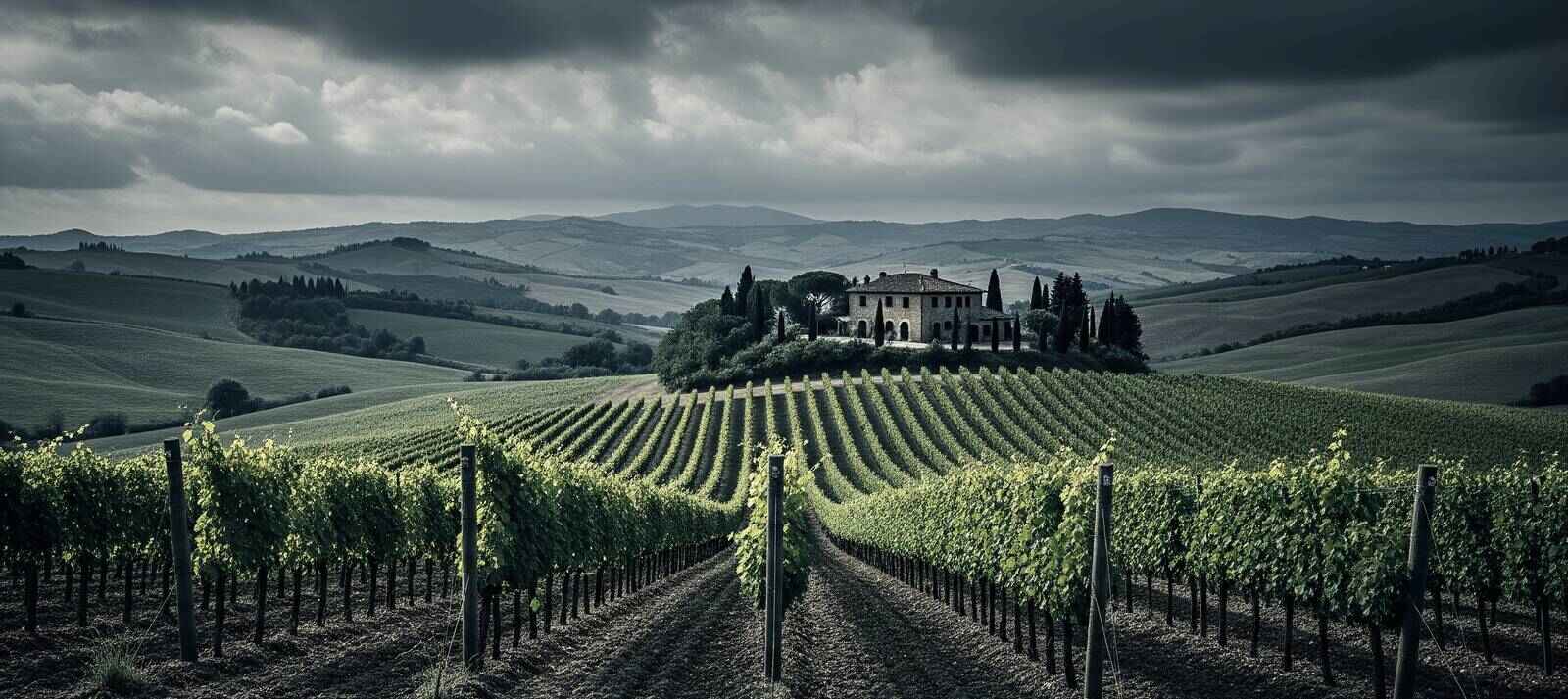
The rolling hills of Tuscany, dotted with cypress trees and historic towns, are synonymous with classic Italian reds. The region’s diverse soils, from galestro to alberese, impart unique characteristics to its Sangiovese-based wines.
Chianti Classico: The quintessential Tuscan wine, primarily Sangiovese, known for its vibrant cherry fruit, savory notes, and firm acidity – a perfect partner to rich Italian cuisine. Look for the black rooster (Gallo Nero) on the neck of the bottle, the symbol of the Consorzio Chianti Classico.
Brunello di Montalcino: A powerful and long-lived expression of 100% Sangiovese Grosso (a local clone of Sangiovese), celebrated for its robust structure, deep fruit, and capacity to age gracefully for decades. It requires significant aging before release, ensuring its complexity.
Vino Nobile di Montepulciano: Another esteemed Sangiovese-based wine, often blended with other local varieties, offering a harmonious balance of fruit and structure, typically a bit softer than Brunello in its youth.
Super Tuscans: These innovative wines, often blending Sangiovese with international varieties like Cabernet Sauvignon and Merlot, broke free from traditional regulations to achieve exceptional quality and global recognition, proving that great wine can transcend strict appellation rules.
Umbria is a landlocked region in central Italy, bordered by Tuscany, Lazio, and Marche. Known as the “green heart of Italy” for its lush, verdant landscapes and rolling hills, the region has a long and respected winemaking tradition. With no coastline, Umbria’s climate is more continental, with warm summers and cool nights, which allows grapes to ripen slowly, retaining acidity and aromatic complexity. The region is particularly known for its powerful red wines and unique whites.
Sagrantino di Montefalco: This is the flagship red wine of Umbria and one of Italy’s most tannic and age-worthy wines. Made from 100% Sagrantino grapes, it is a deeply colored, full-bodied wine with intense aromas of dark fruit, spice, and earth. Due to its high tannin content, it requires significant aging to soften and express its full potential. A softer, drier version of the wine is also made under the Montefalco DOC.
Orvieto: The most famous white wine of Umbria, Orvieto is a blend of local grapes like Grechetto and Trebbiano Toscano. The wines can range from dry and crisp to semi-sweet and are known for their fresh, floral aromas and a characteristic almond-like finish. The vineyards are often located on the region’s volcanic soils, which impart a unique mineral character.
Grechetto: An indigenous white grape that is gaining popularity for its high quality. Grechetto wines are typically full-bodied with notes of ripe stone fruit, citrus, and a savory minerality. It is used as a blending grape in Orvieto but is also bottled as a single varietal wine, particularly in the Grechetto di Todi DOC, where it shows a more complex and structured profile.
In northeastern Italy, Veneto is a highly productive and diverse region, renowned for both its sparkling and still wines. Its varied topography, from the Dolomite foothills to the Adriatic coast, allows for a wide range of viticulture.
Prosecco: The world’s most popular sparkling wine, made primarily from the Glera grape. Its crisp, fruity, and approachable style, often characterized by notes of green apple, pear, and citrus, makes it a favorite for celebrations and everyday enjoyment. Look for Prosecco DOC, and for even higher quality, Prosecco Superiore DOCG from Conegliano Valdobbiadene.
Amarone della Valpolicella: A majestic, full-bodied red wine made using the appassimento method, where grapes (Corvina, Rondinella, Molinara) are partially dried before fermentation, concentrating their flavors and sugars to create a rich, intense, and often age-worthy wine with notes of dried fruit, chocolate, and spice.
Soave: A delightful, crisp white wine made from the Garganega grape, offering delicate floral and almond notes, perfect with seafood and light dishes.
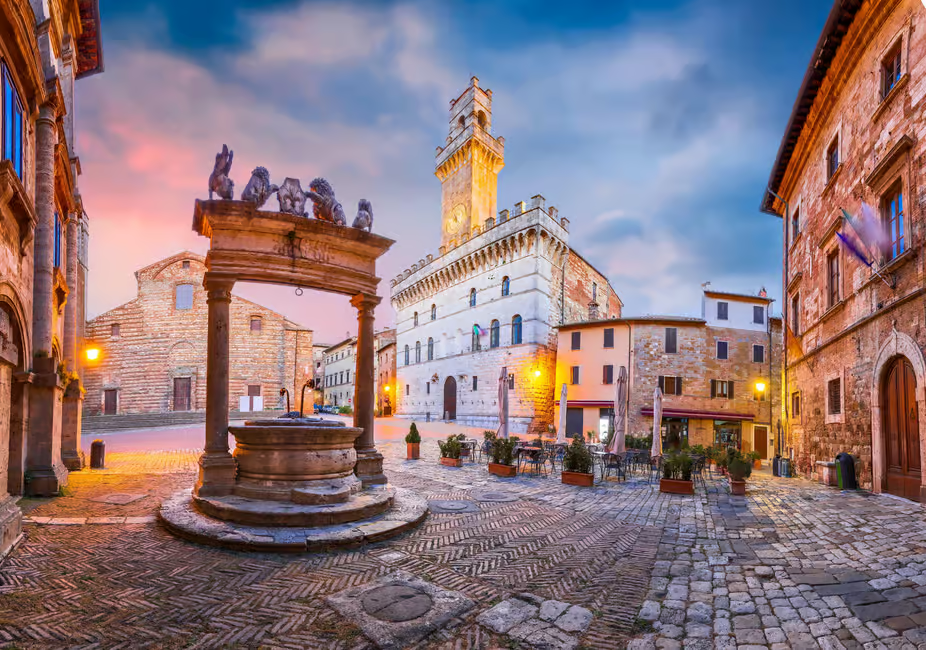
Not to miss, the Montepulciano village. Drive from Roma to visit this jewel of Tuscany. Join the trip
Italy’s wine industry is not just about history and passion; it’s a global powerhouse, constantly adapting to global trends while cherishing its traditions.
Production Volume: Italy consistently ranks among the top wine-producing countries in the world. In 2024, Italy’s wine production reached nearly 44 million hectoliters, representing a significant increase from 2023, and solidifying its position as a leading global producer. This includes approximately 20.9 million hectoliters of PDO (DOC/DOCG) wine.
Vineyard Superficy: Italy boasts an impressive vineyard area, estimated to be around 728,000 hectares, making it one of the largest vineyard footprints globally. While some regions, particularly in the North-East, have seen vineyard expansion (e.g., Veneto and Friuli-Venezia Giulia increasing by 38% and 53% respectively between 2000 and 2023 driven by Prosecco and Pinot Grigio), other areas in Central and Southern Italy have experienced some decline.
Indigenous Grape Varieties: This is where Italy truly shines! With over 500 officially recognized indigenous grape varieties and potentially over 2,000 unique grapes in total, Italy offers an unparalleled diversity found almost nowhere else. This incredible genetic library allows for a vast spectrum of wine styles and flavors, showcasing the country’s unique viticultural heritage. Roughly 75% of Italy’s vineyard is covered by 80 native grape varieties.
Exports: Italian wine is a beloved export, with significant volumes shipped worldwide. In 2023, Italy’s wine exports reached an impressive $8.73 billion, making it the second-largest wine exporter by value globally. The United States, Germany, and the United Kingdom are key markets, eager for the diverse range of Italian wines, from premium DOCG reds to popular Prosecco..
Quality Focus: A remarkable 70% of Italian bottled wines are classified as DOCG, DOC, or IGT, signifying a strong commitment to quality and adherence to specific production regulations. This high percentage underscores Italy’s dedication to quality control and geographical authenticity.
taly’s winemaking regions are as diverse as its culinary traditions. The long-standing principle of pairing regional food with regional wine is a testament to centuries of harmonious development, where each complements the other perfectly. This guide explores the best food and wine pairings from Italy’s most celebrated regions, offering a taste of the country’s rich gastronomic heritage.
High in the Alps, this region’s cuisine is hearty and rustic, focusing on local cheeses, cured meats, and game.
Pairings: Pair the light, ruby-red Petit Rouge with cured meats like Lard d’Arnad and rustic soups. The more structured Fumin, with its firm tannins, is an excellent match for slow-cooked meat dishes such as Carbonade, a beef stew braised with wine and spices. For a simple pairing, the crisp Prié Blanc is an ideal partner for the region’s famous Fontina cheese.
he “King of Wines,” Barolo, and the “Queen,” Barbaresco, are famous for their power and complexity.
Pairings: These noble wines, made from the Nebbiolo grape, demand equally rich and structured dishes. A glass of Barolo is the perfect match for rich truffle dishes like Tajarin al Tartufo, hearty stews such as Brasato al Barolo, or roasted game. The region’s lively Barbera pairs wonderfully with classic pasta dishes with meat sauces, like Agnolotti al Plin.
From sparkling wines to powerful reds, Lombardy offers a diverse range of styles. The cuisine is rich, with a focus on risotto, polenta, and braised meats.
Pairings: The world-class sparkling Franciacorta is a versatile aperitif and an excellent match for Risotto with saffron and freshwater fish from the local lakes. The elegant reds from Valtellina, made from the Nebbiolo grape, are ideal for pairing with rich dishes like Pizzoccheri, a buckwheat pasta with potatoes and cheese, or braised red meats.
A blend of Italian and Austrian traditions, this region’s cuisine features hearty dishes, cured meats, and dumplings.
Pairings: In the Italian-speaking Trentino, crisp and acidic whites like Chardonnay and Pinot Grigio are excellent with lighter dishes, from trout to lemon-based pasta. The local red Teroldego pairs well with rustic fare like polenta with game. In the cooler, German-speaking Alto Adige, the aromatic Gewürztraminer and Pinot Blanc are a great match for a wide variety of foods, including spicy dishes, creamy cheeses, and pork.
This region is a land of great diversity, from the sparkling Prosecco to the powerful Amarone. Venetian cuisine includes seafood, polenta, and risotto.
Pairings: Prosecco is the quintessential aperitif, perfect with light appetizers like bruschetta and cicchetti (Venetian tapas). The crisp white Soave is a fantastic choice with seafood and light pasta dishes, while the full-bodied Amarone pairs well with game meats and rich mushroom risotto. For a truly unique pairing, the sweet Recioto della Valpolicella is a perfect match for chocolate.
Known as Italy’s “Food and Wine Capital,” this region is home to culinary treasures like Prosciutto di Parma and Parmigiano Reggiano.
Pairings: The famous sparkling red Lambrusco is a versatile pairing. Dry versions are perfect with the region’s rich, fatty foods like cured meats and Parmigiano Reggiano, while the more full-bodied styles are excellent with lasagna and other richly sauced pasta dishes. Sangiovese di Romagna, with its bright acidity, pairs well with the region’s classic tomato-based sauces and meat dishes.
A blend of inland and coastal traditions, this region’s cuisine features both hearty meat dishes and fresh seafood.
Pairings: The versatile Verdicchio is the most famous white. Young versions are ideal with seafood risotto, while more structured, aged Verdicchios can stand up to white meats in sauces or rich pasta dishes with mushrooms. The full-bodied red Conero, made from Montepulciano grapes, pairs perfectly with grilled meats and aged cheeses.
Known for its bold reds and rustic, straightforward cuisine.
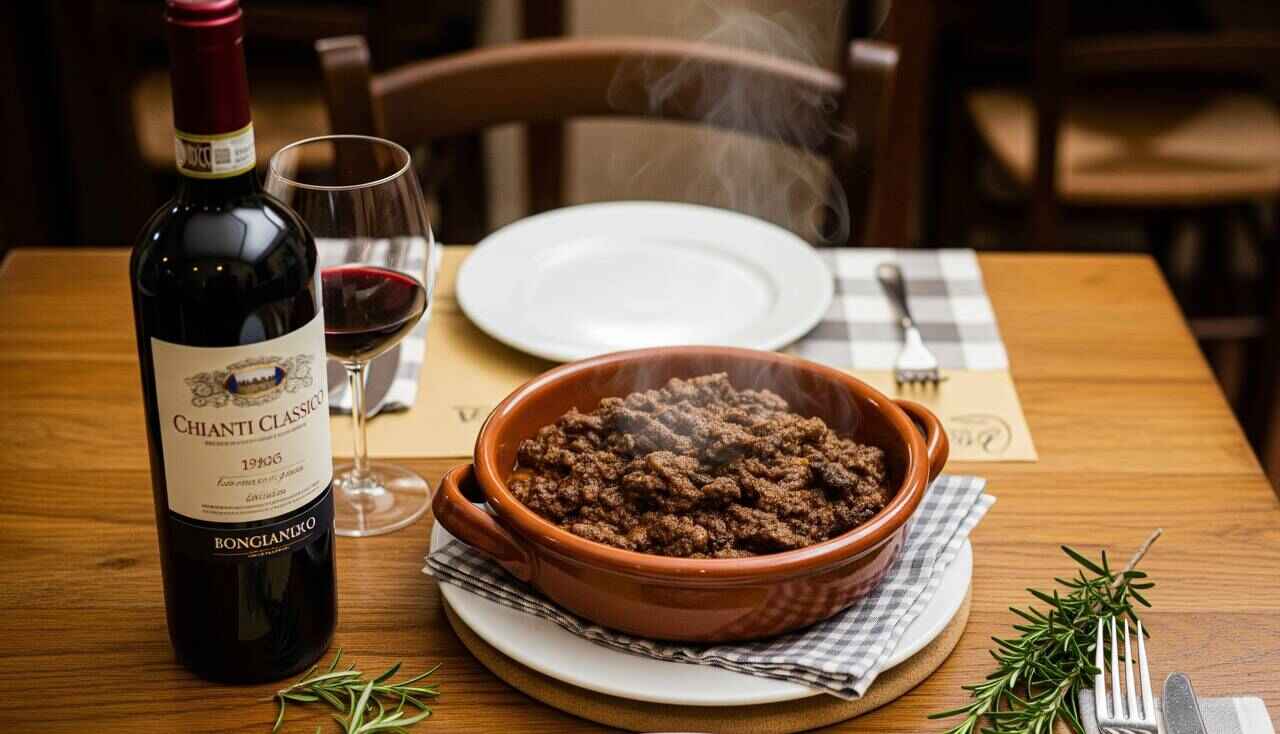
Pairings: The flagship Chianti Classico, with its high acidity and savory notes, is an ideal partner for the iconic Florentine steak (Bistecca alla Fiorentina) or wild boar ragù (Cinghiale al ragù). Brunello di Montalcino demands equally rich and structured dishes, such as roasted game or Osso Buco.
The “green heart of Italy,” Umbria is famous for its black truffles, olive oil, and cured pork.
Pairings: The powerful red Sagrantino di Montefalco is a perfect match for rich, savory dishes that can stand up to its firm tannins, such as roast lamb or aged pecorino cheese. The region’s famous white, Orvieto, is an ideal partner for light appetizers and freshwater fish.
The region surrounding Rome has a rustic cuisine focused on local ingredients and four famous pastas.
Pairings: The crisp white Frascati is a classic pairing for seafood and the simple pasta dish of Cacio e Pepe. The full-bodied red Cesanese del Piglio is a fantastic match for Bucatini all’Amatriciana, as its powerful fruit and spice notes stand up to the rich, peppery sauce.
The “toe” of the Italian peninsula, known for its strong, spicy cuisine.
Pairings: The flagship wine of Calabria, Cirò, made from the Gaglioppo grape, is a powerful red that can stand up to the region’s robust dishes. It pairs perfectly with grilled pork, rich pasta with a spicy meat sauce, or a lamb ragout. The elegant rosé versions of Cirò are excellent with fresh seafood.
A rugged region with a cuisine characterized by hearty peasant dishes.
Pairings: The star of the region, Aglianico del Vulture, with its high acidity and firm tannins, is the perfect pairing for the region’s rich, savory dishes, such as braised beef brisket or mushroom ragù. The high acidity of the wine cuts through the richness of the food, creating a balanced pairing.
This small, hidden gem’s cuisine is simple and rustic, with a focus on pork, lamb, and homemade pastas.
Pairings: The robust red Tinto del Molise is an excellent pairing for hearty meat dishes like Agnello alla Molisana (lamb with rosemary and garlic) or a rich, meaty pasta sauce. The reds from the Biferno DOC pair well with braised meats.
The south is home to some of Italy’s most exciting wines and a vibrant, sun-drenched cuisine.
Pairings: In Sicily, the bold red Nero d’Avola beautifully complements grilled lamb or rich eggplant dishes like Parmigiana di Melanzane. In Apulia, the robust Primitivo and Negroamaro are superb with spicy cured meats, rich tomato sauces, and grilled vegetables. For white wines, Campania’s Fiano di Avellino pairs well with fresh mozzarella and seafood pasta, while Aglianico, the region’s most famous red, is a fantastic match for hearty meat stews and aged hard cheeses.