
That bottle from a hillside estate in Tuscany or a small cellar in Napa always feels different once you have met the people behind it. Knowing how to safely fly with wine: luggage & rules matters because the trip home is where a memorable purchase can turn into a sticky disaster – or an expensive customs surprise.
Bringing wine home is completely doable, but the right approach depends on where you are flying, how many bottles you are carrying, and whether your wine is packed in checked luggage, a specialty case, or a shipping box approved by your airline. The romance of wine travel is real. So are baggage handlers, security rules, pressure changes, and import limits.
How to safely fly with wine: luggage & rules at a glance
For most travelers, the safest path is simple: pack wine in checked luggage, protect each bottle individually, and confirm both airline baggage allowances and the arrival country’s customs limits before you leave for the airport. In the US, standard table wine is not allowed through TSA in carry-on if the bottle exceeds the liquid limit, which almost every full-size wine bottle does. That means your carry-on is rarely the answer unless you are buying after security at the airport or using a duty-free sealed bag on an eligible international itinerary.
Checked luggage is where most wine travels. The challenge is not cabin pressure, which commercial aircraft regulate well enough for sealed wine bottles, but impact. Bottles break because they knock against each other, shift inside a soft suitcase, or sit too close to the outer shell of the bag.
Start with the rules before you pack
If you are flying within the US, TSA rules are straightforward. Full-size wine bottles belong in checked bags. Mini bottles may fit carry-on liquid limits, but that is not how most people travel back from wine country. Alcohol between 24% and 70% ABV has quantity restrictions in checked luggage, but wine is usually well below that threshold, so standard still and sparkling wines generally fall into the easier category.
Your airline is the next checkpoint. Most carriers allow wine in checked luggage as long as it is properly packed and within baggage weight limits, but that does not mean they will cover breakage. Many airlines limit liability for fragile items inside checked bags. So even when wine is allowed, the risk sits largely with you.
Then there is customs. If you are returning to the US from abroad, you can usually bring back wine for personal use, but duty-free allowances and state-level alcohol rules vary. Federal allowances may be modest, yet travelers often can bring more if they declare it and pay any applicable duty and taxes. The key word is declare. A few extra bottles are usually a paperwork issue, not a criminal drama, but undeclared alcohol can become an unnecessary headache.
If you are flying internationally to somewhere other than the US, check the destination country’s import rules before you buy heavily at the winery. Limits differ widely, and so do taxes.
Checked luggage is usually the best option
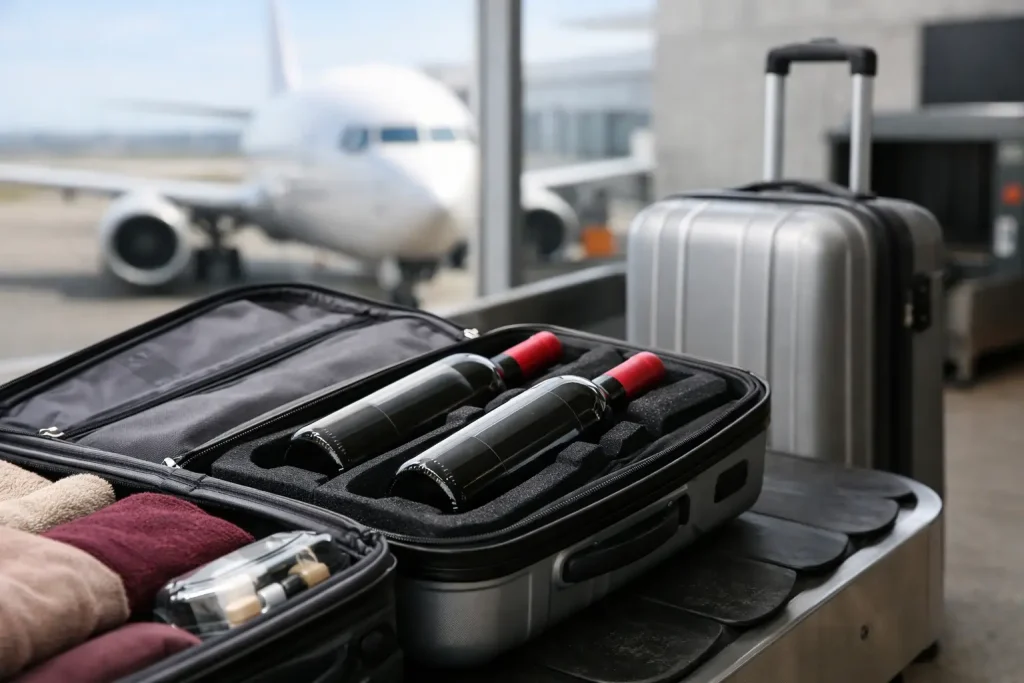
For one to six bottles, a sturdy checked suitcase often works well if you pack carefully. Hard-shell luggage gives more structure and impact resistance than soft-sided bags, although a heavily padded soft case can still work if packed tightly. The main goal is to create a buffer on every side of the bottle.
Specialized wine sleeves are worth considering, especially if you plan to visit multiple estates and build a mixed case over several days. Inflatable bottle protectors, padded wine travel sleeves, and leak-resistant wine bags all add a layer of insurance. They are not glamorous, but they can save a suitcase and the clothes packed inside it.
If you are traveling with more than a few bottles, a dedicated wine suitcase or shipping-style wine carrier may make more sense than trying to improvise with your regular luggage. These cases are designed around bottle separation, shock absorption, and weight distribution. They can also make repacking at the end of a trip much less stressful.
How to pack wine so it actually survives
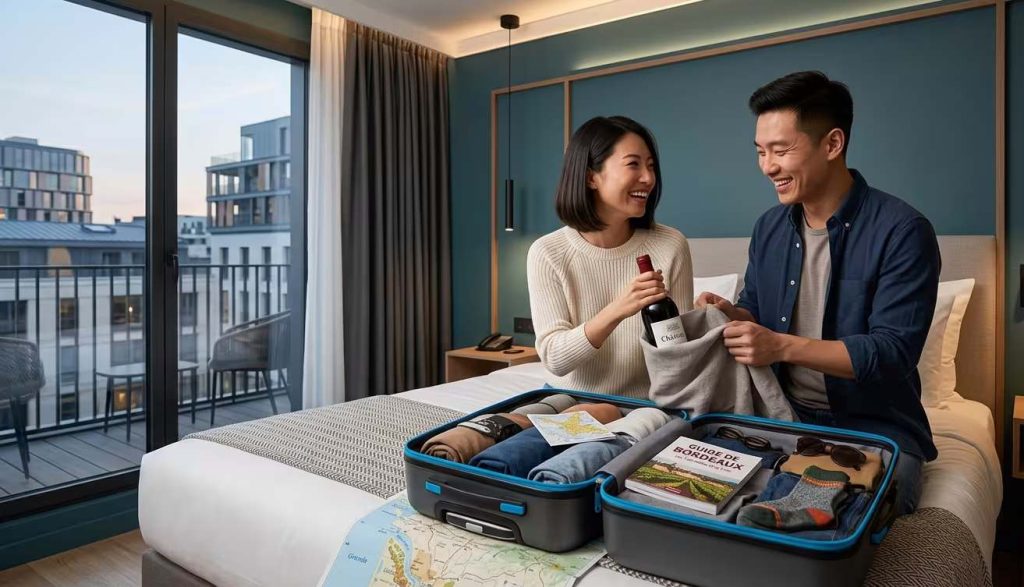
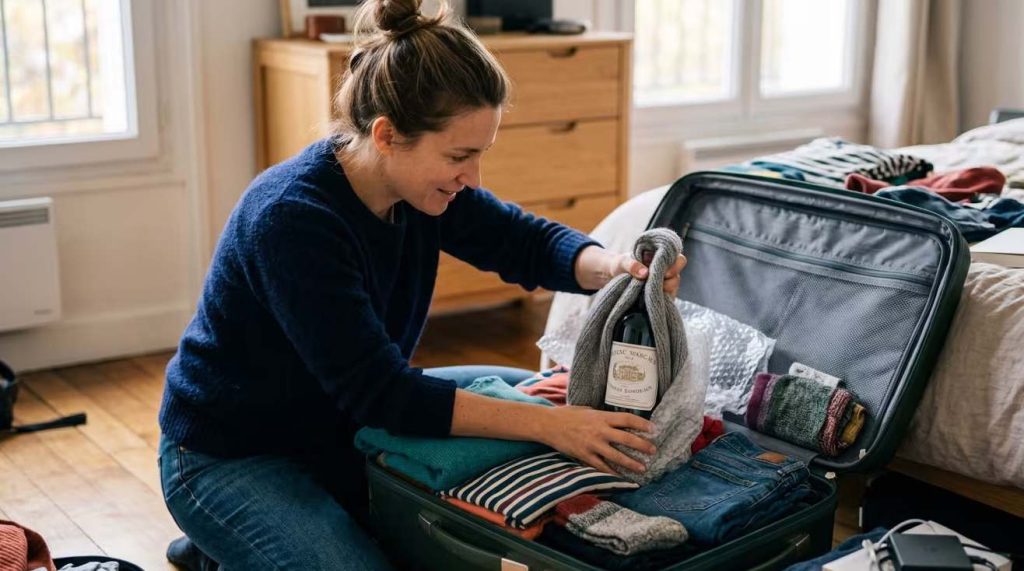
A beautiful bottle wrapped in a sweater is better than nothing, but it is not a serious packing strategy. Each bottle should be protected individually first, then stabilized within the suitcase so it cannot roll, collide, or absorb direct pressure from the outside.
Start by sealing each bottle in a waterproof bag. If the worst happens, the leak stays contained. Then wrap the bottle in a padded wine sleeve or several layers of soft clothing. Socks are useful for necks and shoulders, while thicker items such as sweaters or jackets can cushion the body of the bottle.
Place bottles in the center of the suitcase, never along the edges. Surround them with soft, dense items on all sides, and avoid leaving any empty space that allows movement. Shoes can help brace the load, but do not let hard soles press directly against glass. If you are packing sparkling wine, take extra care. The bottle is strong, but the pressure inside makes breakage even messier.
Weight matters too. Wine is heavy, and it adds up quickly. A standard 750 ml bottle weighs roughly 2.5 to 3 pounds once packed. That means six bottles can push a suitcase toward common airline weight limits before you add clothing or shoes. If you are bringing home a serious haul from Bordeaux, Mendoza, or the Barossa, it may be smarter to split bottles across bags or check an additional case.
Carry-on wine is possible, but only in narrow cases
This is where many travelers get caught out. A normal bottle of wine purchased before airport security cannot go through TSA screening in your carry-on. The liquid volume is too large. If you are buying wine at the airport after security, that is different, though connection rules can complicate things, especially on international itineraries.
Duty-free purchases may be allowed in tamper-evident sealed bags, but if you have a long layover, need to re-clear security, or are changing terminals, that protection can unravel fast. Some countries and airports are stricter than others. If your itinerary includes multiple checkpoints, checked luggage is usually the safer bet.
For very valuable bottles, some travelers assume carry-on is always better. Sometimes it is, but only when the bottle size and itinerary make it legal and practical. For most standard wine purchases, checked baggage remains the realistic option.
Should you ship wine instead?
Sometimes yes. If you are traveling through several regions, buying age-worthy bottles, or collecting a full case from a prestigious estate, shipping can be the cleaner solution. Wineries in major destinations often work with licensed shipping partners and know the paperwork, temperature concerns, and legal restrictions involved.
That said, shipping wine is not universally simple. Direct-to-consumer alcohol shipping laws vary by country and by US state. Temperature is another issue. A bottle that would have been fine in your checked luggage for twelve hours may not fare as well in a hot delivery truck or warehouse.
If you are buying just two or three bottles tied to a memorable tasting, flying with them is often easier than arranging shipment. If you are buying a larger collection or premium bottles you do not want to risk, ask the winery what they recommend before you pay.
A few wine-specific mistakes travelers make
The first is assuming all bottles travel equally well. They do not. Odd bottle shapes, wax seals, long necks, and heavy glass can change how easy a wine is to protect. A classic Bordeaux bottle is simpler to pack than a wide-format Champagne bottle.
The second is forgetting climate. Never leave purchased wine in a hot rental car trunk for hours before your flight. Heat can damage the wine long before airport handling does. If you are spending a final day sightseeing, ask your hotel or winery whether they can store bottles somewhere cool.
The third is overbuying on impulse without considering the route home. It is easy to fall for a cellar-door exclusive after a memorable tasting. It is less charming when you are kneeling on a hotel floor trying to fit eight bottles into one medium suitcase at 5 a.m.
The most practical mindset for wine travel
The smartest travelers buy wine with the return journey in mind. If you know you want to bring bottles home, pack a foldable wine sleeve, leave room in your checked bag, and review customs rules before the trip starts. A little planning preserves the pleasure of discovery.
That is part of what makes wine travel so compelling. A bottle is not just a souvenir. It carries a place, a vintage, a conversation, and sometimes an entire afternoon among vines. Whether you are returning from Sonoma, the Douro, or a family-run estate outside Florence, the goal is the same: let the bottle arrive home with the story intact.
If your next tasting itinerary includes room in the suitcase for something special, travel like a collector, not a gambler – and give every bottle the journey it deserves.