
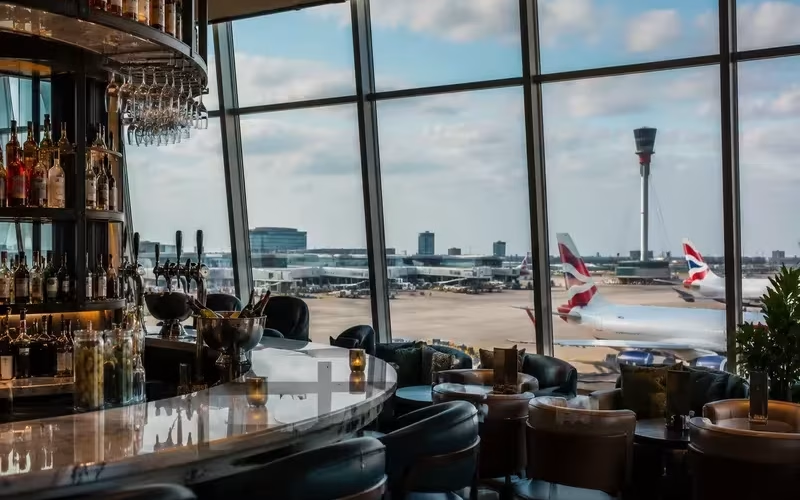
A two-hour connection need not end with a rushed coffee beside a departure board. For travelers seeking an airport oasis: the best hidden airport wine bars globally for layover tastings are often found just beyond the obvious food court, offering a glass that reflects the place they are about to visit – or the place they have reluctantly left behind.
These are not always dramatic, destination restaurants. Some are compact counters with a thoughtful by-the-glass list; others sit inside food halls, tucked at the far end of an international concourse. What distinguishes them is intention: a chance to taste local grapes, pause between flights, and turn transit time into a small chapter of the journey.
What Makes an Airport Wine Bar Worth the Stop?
The best airport wine experiences do more than pour familiar labels at inflated prices. They offer a useful sense of regional identity. In California, that may mean Sonoma Coast Pinot Noir or a bright Napa Sauvignon Blanc. In France, it could be a Loire Chenin Blanc, Champagne by the glass, or a modest Bordeaux with real character. In New Zealand, a crisp Marlborough Sauvignon Blanc can make even a short connection feel distinctly placed.
A worthwhile layover wine bar also understands the rhythm of travel. Service should be attentive without becoming formal, pours should arrive quickly, and food should be designed for a traveler who may be boarding in 35 minutes. The sweet spot is a focused list, staff who can make one good recommendation, and a setting where a suitcase does not feel like an inconvenience.
There is a trade-off. The quietest wine bars are sometimes outside security, which makes them better for long arrivals or planned departures than tight connections. Airside options are more practical, but selection and opening hours can change with terminal renovations, airline schedules, and concessions. Always check your terminal and connection rules before treating a particular bar as part of the itinerary.
Airport Oasis Picks for Layover Tastings
San Francisco International Airport: California in a Glass
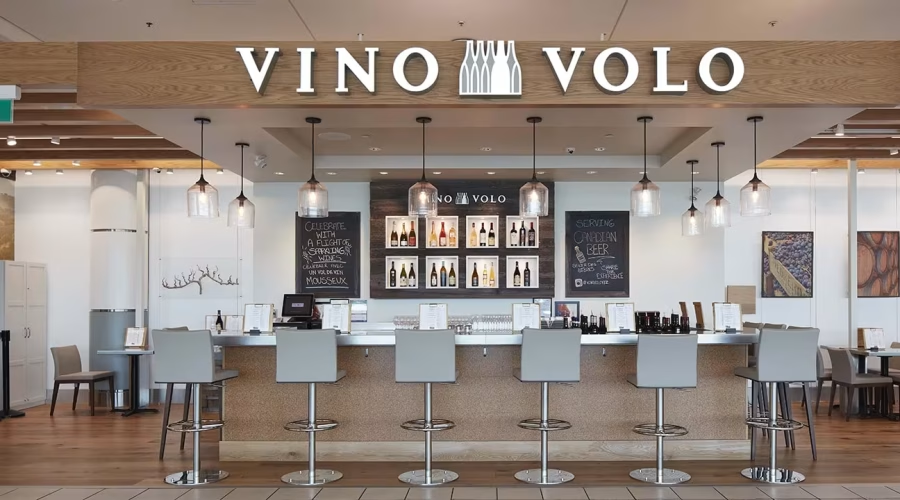
San Francisco International Airport is one of the strongest airports for travelers who want wine with a clear sense of place. The landscape of the airport is defined by two distinct approaches: the familiar, reliable convenience of Vino Volo, and the more focused, curated experience at SF Uncork’d. Together, these locations have long made the airport a natural, high-quality prelude to Napa, Sonoma, and the Santa Cruz Mountains.
Rather than ordering the biggest Cabernet on the list, consider a lighter expression suited to flying: cool-climate Pinot Noir, sparkling wine, or a textured white from Sonoma or Mendocino. Whether you are browsing the broader selection at Vino Volo or seeking a more specific local flight at SF Uncork’d, the goal is to lean into wines that offer vibrancy and tension.
The appeal here is educational as much as restorative. California’s wine landscape is broad, and a well-chosen flight—whether navigated through the diverse menu at Vino Volo or the localized picks at SF Uncork’d—can introduce coastal acidity, mountain fruit, and classic valley richness before a winery visit even begins.
For a traveler continuing to wine country, it is an elegant palate primer that sets the stage for the specific terroirs you are about to explore. For someone flying home, it offers one final, sophisticated taste of the region without committing to a full meal, allowing you to carry the memory of the vineyard with you until your next return.
London Heathrow: A Civilized European Pause
At Heathrow, Terminal 2 has become one of the airport’s best addresses for travelers who prefer a wine-led pause over generic airport dining. Beyond the familiar chain restaurants, several venues offer thoughtfully curated wine lists and a more relaxed atmosphere before departure. Rather than reaching automatically for an international label, consider exploring English sparkling wine or a distinctive European bottle.
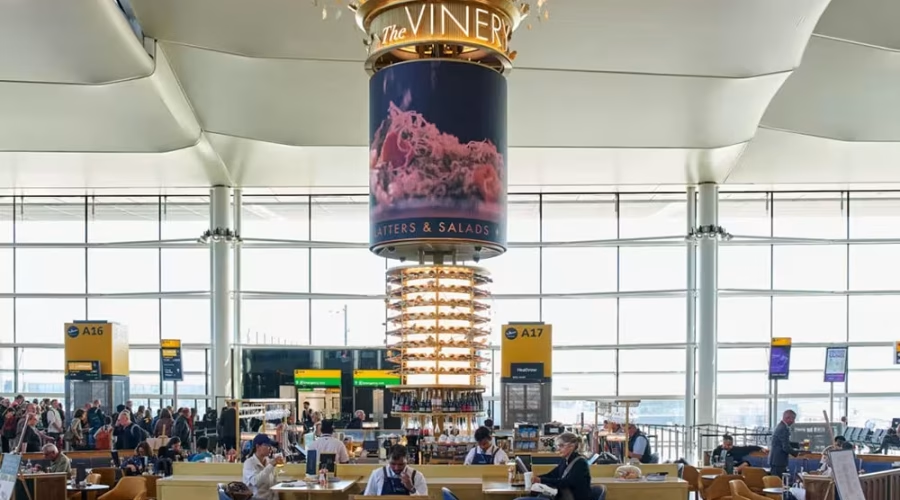
Among the highlights is The Vinery (Terminal 2 Departures), Heathrow’s flagship wine bar and restaurant. Its extensive international wine list places a particular emphasis on award-winning English sparkling wines, while its Coravin program allows guests to sample prestigious bottles by the glass. In Terminal 5, the elegant Fortnum & Mason Bar offers one of the airport’s finest Champagne selections alongside artisan wines and refined accompaniments such as caviar, smoked salmon, and other classic British delicacies.
For travelers seeking a full meal with excellent wine, Gordon Ramsay Plane Food (Terminal 5 Departures) combines a polished dining room with an impressive international cellar, making it one of the airport’s strongest choices for escaping the terminal bustle over a quality glass. Meanwhile, Caviar House & Prunier Seafood Bar, with locations across Terminals 2, 3, 4, and 5, remains a reliable destination for Champagne, Chablis, and other crisp white wines paired with smoked salmon, oysters, and premium seafood.
If you are arriving early or waiting before passing through security, Heathrow also offers worthwhile landside options. The Queen’s Arms (Terminal 2) provides a comfortable pub atmosphere with a surprisingly comprehensive wine list alongside its traditional ales, while The Globe Pub & Kitchen (Terminal 5) is another excellent pre-security stop, praised for its diverse wine selection as much as for its craft beers.
Heathrow is also a useful reminder that the best wine choice depends on the journey ahead. A long-haul flight often pairs better with sparkling wine or a fresh, lower-alcohol white than with a powerful red. And if your itinerary continues to Bordeaux, Tuscany, or Rioja, resist the temptation to duplicate what awaits at your destination. Instead, take the opportunity to discover an English sparkling wine or another European bottle that may not cross your path again during the rest of your travels.
Paris Charles de Gaulle: Let France Set the Tone
Paris Charles de Gaulle can be hectic, but its French-focused bars and restaurant counters reward travelers who seek them out rather than settling for the nearest café. Look for wine lists that highlight producers or regions rather than simply naming the grape. A glass of Champagne is an obvious pleasure, yet a mineral-driven Chablis, Beaujolais, Alsace Riesling, or Loire Cabernet Franc can be just as revealing—and often a better match for airport dining.
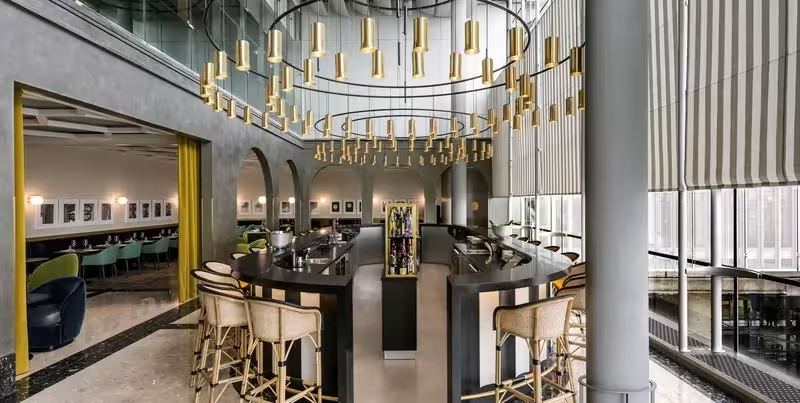
Several standout venues make it easy to enjoy a quality glass before your flight. Les Caves Particulières (Terminal 2E, Gates K, L, M) is the airport’s premier destination for prestige Champagne tastings, offering iconic labels such as Dom Pérignon, Ruinart, and Krug. Nearby, I Love Paris by Guy Martin (Terminal 2E, Gate L22) combines an elegant wine and Champagne bar with refined French bistro cuisine in one of the airport’s most stylish settings.
For a more substantial meal, The French Taste by Guy Martin (Terminal 2F, Gate F41) is one of the airport’s best neo-brasseries, celebrating French terroir through regional dishes and an excellent selection of wines. Seafood lovers should consider Caviar House & Prunier Seafood Bar (Terminals 2A and 1), where Champagne and crisp white wines are thoughtfully paired with caviar, smoked salmon, and fresh seafood. If you’re simply looking for a well-curated glass without a long meal, Le Bar (Terminal 2E, Gates L) offers a polished selection of premium French wines, cocktails, and light bites.
Travelers with landside access can escape the terminal bustle at the Galaxy Bar, located inside the Sheraton Hotel in Terminal 2, where a relaxed atmosphere, curated French wines, and sharing plates make it an appealing stop before check-in. Those flying in premium cabins—or with lounge access—can also enjoy excellent wine programs in the ICARE Lounge (Terminal 1) and the Air France Lounges (Terminals 2E and 2F), both known for serving French wines and Champagnes that far surpass the average airport offering.
This is a place to keep the tasting simple. One carefully chosen glass with a proper bite of cheese, charcuterie, seafood, or a warm French dish is far more satisfying than rushing through multiple wines. If your layover is the beginning of a journey through France’s vineyards, let it serve as an introduction to the country’s everyday wine culture—relaxed, food-oriented, and deeply rooted in regional expression.
Venice Marco Polo: A Sparkling Welcome to the Veneto
Venice Marco Polo Airport offers a fitting first encounter with the Veneto through prosecco-focused bars such as Bottega Prosecco Bar. This is not the setting for a scholarly examination of every hillside designation. It is, however, an ideal place to understand why Prosecco works so beautifully in travel: it is bright, sociable, and naturally suited to a small plate before boarding.
Choose a dry style if you prefer briskness, or ask whether a higher-quality bottling from the Conegliano Valdobbiadene area is available. Pair it with cicchetti-style snacks, Italian cheese, or cured meats when possible. Travelers headed into the hills north of Venice can treat the airport glass as an introduction, then save their more detailed tasting for a family estate, a vineyard walk, and a slow lunch among the vines.
Auckland Airport: A First Taste of New Zealand
Auckland Airport is a compelling gateway for travelers heading toward Marlborough, Hawke’s Bay, Central Otago, or Waiheke Island. Airport wine lists here often provide an accessible introduction to New Zealand’s defining styles: Sauvignon Blanc with its lifted aromatics, Pinot Noir with freshness and spice, and increasingly impressive Chardonnay.
The most rewarding choice is not necessarily the most famous label. Look for a producer from the region you are visiting next, especially if the wine is offered by the glass. Tasting a Central Otago Pinot Noir before heading south, for example, gives context to the landscapes and cellar doors that follow. If your flight is overnight, consider a smaller pour. Cabin air and fatigue can flatten aromas, and the point is pleasure, not a formal assessment.
North American Pioneers
Vyne Washington (Seattle-Tacoma – SEA): A powerful showcase for the Pacific Northwest. It avoids the generic “airport wine” trap by diving deep into the Columbia Valley, Walla Walla, and Yakima Valley—making it essential for those wanting to understand the structural integrity of Washington State’s reds.
Crú Wine Bar (Denver International – DEN): With a focus on fine wine and a professional, welcoming atmosphere, this location manages to escape the typical airport “chaos” factor, offering a curated menu that allows for a contemplative pre-flight tasting.
Surdyk’s Flights (Minneapolis-Saint Paul – MSP): A standout for its focus on the “flight” experience. It is specifically designed for the educational traveler, offering thematic tastings (e.g., “Festive Whites” or regional explorations) that act as a mini-masterclass before boarding.
European Havens
Marenna Wine Bar (Naples International Airport – NAP): A masterclass in regional identity. The focus here is strictly on Campania’s viticulture. With a partnership with the celebrated Feudi di San Gregorio, it offers a rare opportunity to explore the nuances of Aglianico or Fiano while still on the tarmac.
Bubbles Seafood & Wine Bar (Amsterdam Schiphol – AMS): This is for the serious oenophile. They have achieved the rare feat of pouring first-growth Bordeaux by the glass, thanks to advanced preservation systems. It is arguably the most prestigious wine-by-the-glass list you will find in a transit hub.
Sparkling Bar Contadi Castaldi (Catania Airport – CTA): A sleek, 24/7 oasis in Sicily. It serves as an elegant homage to Franciacorta, perfect for a crisp, high-acid sparkler that cuts through the fatigue of long-haul travel.
The "Lounge-as-a-Cellar" Experience
The Vinery (London Heathrow – LHR): More than just a bar, it uses a 360-degree digital vineyard backdrop and a sommelier-curated list that bridges Old and New World classics. It also utilizes the Coravin system, which allows them to offer rare, high-end wines that would otherwise be impossible to pour by the glass.
Le Clos (Dubai International – DXB): Technically a premium wine and spirits retailer, but it operates with the service and expertise of a high-end wine bar. For the traveler with a layover in Dubai, this is a legendary stop for accessing rare, aged vintages—many of which have been held in their cellar for decades.
How to Taste Well Between Flights
Airport tasting asks for a different approach than a winery visit. Begin with time, not wine. If you have less than 45 minutes before boarding, choose a single glass only if the bar is near your gate and already has open seating. With 90 minutes or more, a short tasting flight or a glass with food becomes realistic. For international connections, leave room for terminal transfers and security checks even when you remain airside.
Avoid judging a wine too harshly in the airport environment. Dry cabin air, travel fatigue, spicy food, and the noise of a busy concourse can all alter perception. Drink water alongside the wine, eat something modest, and favor styles that retain energy at a cooler serving temperature. Sparkling wines, aromatic whites, dry rosés, and lighter reds often perform better than high-alcohol, heavily oaked bottles.
There is also a practical etiquette to layover drinking. Treat the bar as a tasting room, not a final destination. One or two well-chosen pours preserve the pleasure of the experience and make boarding more comfortable. Travelers crossing multiple time zones may find that alcohol affects them more quickly than expected.
Seek Regional Character, Not Just a Famous Name
The hidden airport wine bar is valuable because it can connect a flight itinerary to a wider wine journey. A great glass at an airport does not replace walking through a vineyard at harvest, listening to a winemaker explain a vintage, or lingering over lunch at an estate. It can, however, sharpen anticipation and turn an anonymous terminal into a meaningful first taste of a region.
When planning the larger trip, let that curiosity lead somewhere deeper. Wine Tour Searcher helps travelers move from a passing airport pour to vineyard visits and tastings shaped by place, producer, and local culture. The best layover glass should leave you with a question: where did this wine begin, and when can you meet the people who made it?