
A vineyard can look almost implausible against a field of sand, canyon walls, or a horizon of bare mountains. Yet these dramatic contrasts are exactly what make Desert Landscapes Every Wine Traveler Should Experience so compelling. In the world’s dry wine regions, water is precious, sunlight is intense, and every vine is a vivid expression of human patience and place.
For the wine traveler, desert country offers more than a beautiful tasting-room backdrop. It reveals the practical art behind terroir: mountain snowmelt carefully directed through ancient channels, vines planted at astonishing elevations, and wineries that turn climatic extremes into freshness, fragrance, and structure. These are destinations for travelers who want to taste beyond the familiar and understand why a glass could not have come from anywhere else.
Why Desert Terroir Makes Wine Travel So Memorable
Desert does not mean lifeless. Many of the world’s most captivating wine areas sit in arid or semi-arid landscapes where irrigation, elevation, coastal fog, or dramatic day-to-night temperature shifts make viticulture possible. The vines may face relentless sunshine, but cool nights often preserve the acidity that gives wine energy and balance.
That tension is visible on the road as much as it is in the glass. One morning may take you along orderly rows framed by the Andes; the next might lead to a sun-washed Baja valley where olive groves, contemporary restaurants, and small-cellar wineries share the same dusty road. A desert wine journey is rarely about a single grape. It is about the resourcefulness of the people who learned to grow wine where visitors might not expect it.
There are trade-offs. Summer heat can be severe, some regions are spread across long distances, and harvest timing varies greatly with altitude and hemisphere. The reward is an experience that feels deeply rooted in landscape rather than designed around a standard tasting itinerary.
Desert Landscapes Every Wine Traveler Should Experience
Mendoza, Argentina: Andes Drama and Malbec at Altitude
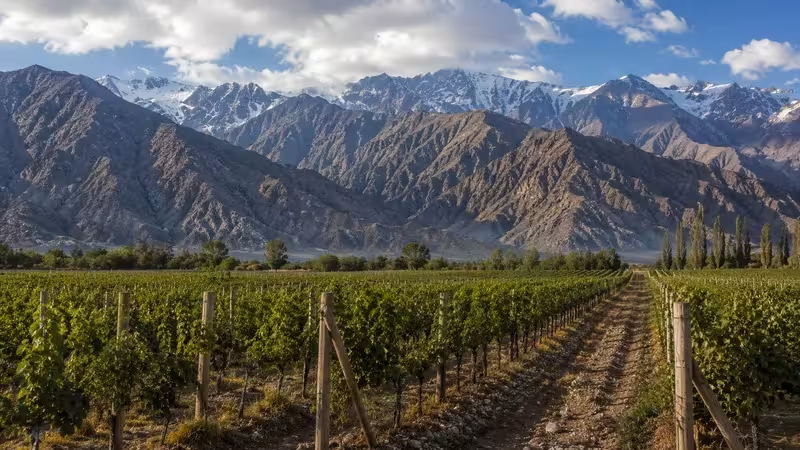
Mendoza is one of wine travel’s great visual encounters. The vineyards stretch across a dry plain at the foot of the Andes, sustained by meltwater that descends from snow-covered peaks through a network of canals. It is a landscape of broad skies, poplar-lined roads, and mountain light that changes by the hour.
Malbec is the essential starting point, especially in Luján de Cuyo and the Uco Valley, but Mendoza rewards travelers who look further. Cabernet Franc, Chardonnay, and high-elevation expressions of Malbec show how altitude and cool nights can bring lift to a region associated with generous fruit and depth. Tastings often make the differences between lower and higher sites remarkably clear.
For a polished, food-centered visit, base yourself between Mendoza city and the Uco Valley. The city brings restaurants and wine bars; the valley offers striking architecture, long estate lunches, and vineyards rising toward the mountains. Harvest season, typically from late February through April, has a celebratory energy, though spring and fall offer easier temperatures for cycling and outdoor lunches.
Cafayate, Argentina: High-Elevation Wine in the Calchaquí Valleys
Farther north, Cafayate feels like Mendoza’s wilder, more intimate counterpart. Set in the arid Calchaquí Valleys of Salta, it is surrounded by red-rock formations, cactus-studded hills, and sunburnished canyons. The road into town is part of the experience, particularly through the dramatic Quebrada de las Conchas.
The defining grape is Torrontés, Argentina’s signature aromatic white variety. At its best, it offers jasmine, citrus peel, and white peach aromas with a dry, refreshing finish that makes sense in the desert heat. Local producers also work successfully with Malbec, Tannat, Cabernet Sauvignon, and increasingly refined sparkling wines.
Cafayate is best for travelers who value atmosphere as much as formal wine credentials. Boutique hotels, colonial courtyards, regional cuisine, and smaller producers give the destination a personal scale. It is less densely developed than Mendoza, so plan transport in advance and leave time to enjoy the landscape between appointments.
Valle de Guadalupe, Mexico: Baja’s Culinary Wine Country
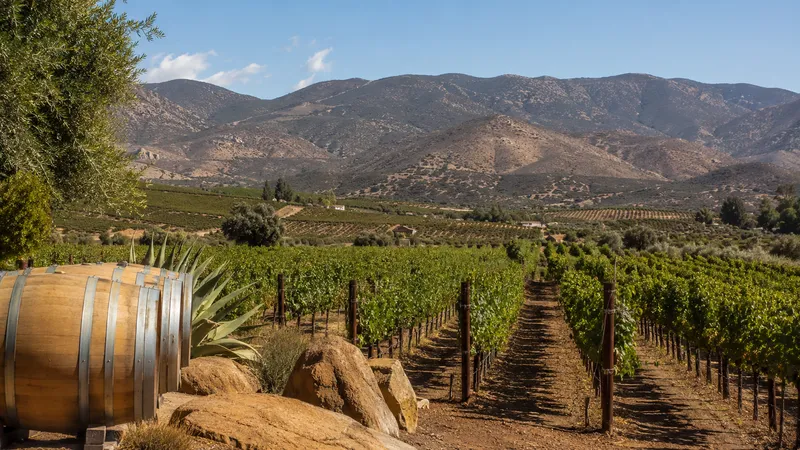
About two hours south of San Diego, Valle de Guadalupe brings a distinctly Baja California interpretation to desert wine travel. The valley is dry, sunlit, and framed by granite hills, yet its proximity to the Pacific moderates conditions. This blend of inland heat and ocean influence helps explain the region’s range of styles.
The wine scene is inventive rather than doctrinaire. You will find expressive reds made from Nebbiolo, Tempranillo, Cabernet Sauvignon, and blends, alongside Chenin Blanc, Sauvignon Blanc, rosé, and sparkling wines. The most interesting visits often pair a tasting with an on-site meal, where sea urchin, wood-fired seafood, local lamb, and produce from nearby farms connect Baja’s wines to its larger culinary identity.
Valle de Guadalupe has become popular, and that popularity can change the mood depending on where and when you visit. Weekdays and shoulder seasons are more relaxed. A thoughtful itinerary balances celebrated architectural wineries with smaller, family-run cellars, where conversations can be less hurried and the winemaking story more direct.
The Negev, Israel: Wine Where the Desert Seems to Win
In Israel’s Negev Desert, vineyards are a lesson in determination. Producers work with limited rainfall, high solar intensity, and soils that demand careful management. Some sites depend on modern irrigation, while the wider agricultural history of the region recalls Nabataean systems that captured and directed scarce water long before modern viticulture arrived.
Wine travelers should not expect a single Negev style. The region’s elevation and site variation matter greatly, with cooler desert nights helping grapes retain acidity. Syrah, Cabernet Sauvignon, Chenin Blanc, Sauvignon Blanc, and Mediterranean varieties can all appear, often with ripe fruit shaped by savory, mineral, or herbal notes.
A Negev wine route works especially well as part of a larger journey through Israel, combining tastings with desert hiking, archaeological sites, and stargazing. Check tasting hours before setting out, particularly around religious holidays and weekends, since smaller wineries may operate on schedules that differ from urban hospitality venues.
Elqui Valley, Chile: Pisco Country with a Quiet Wine Renaissance
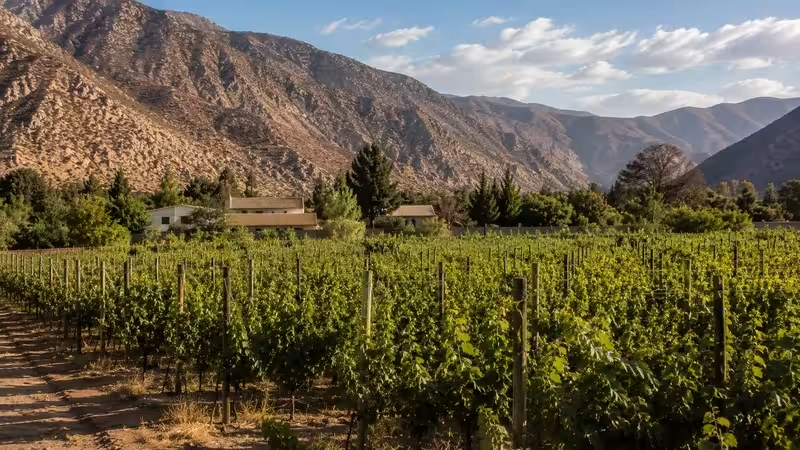
Chile’s Elqui Valley is better known internationally for pisco than for wine, which is precisely why it appeals to curious travelers. North of Santiago, the valley cuts through one of the driest regions on Earth, where irrigated green corridors sit beneath stark mountains and exceptionally clear skies. It is an arresting place to understand how water can transform a desert.
Wine production here remains smaller in scale than in Chile’s famous central valleys, but that is part of its charm. Look for aromatic whites, fresh rosés, and small-batch wines shaped by bright sunshine and elevation. Visiting a vineyard alongside a pisco producer gives a fuller picture of how grapes define this valley’s identity.
Elqui rewards a slower itinerary. Pair tastings with an observatory visit, a stay in a quiet valley town, or a meal centered on Chilean seafood and local goat cheese. It is not the destination for a long list of grand estates. It is for travelers drawn to emerging regions, intimate producers, and the sensation of arriving somewhere still outside the standard wine trail.
The Swan Valley and Margaret River’s Dry Country, Western Australia
Western Australia is not a desert wine region in the same way as the Atacama or Negev, but its dry landscapes and vast sense of space deserve a place on an arid-climate wine itinerary. Near Perth, the Swan Valley offers one of Australia’s oldest wine-growing areas, while farther south, Margaret River combines a dry-season rhythm with a maritime climate that supports some of the country’s most refined Cabernet Sauvignon and Chardonnay.
The contrast between the two makes a worthwhile regional journey. Swan Valley is accessible and relaxed, with historic estates, fortified wines, and an easy food-and-wine day from Perth. Margaret River is more remote and coastal, known for cellar doors set among forest, farmland, and long stretches of Indian Ocean coastline. It proves that a dry landscape need not produce heavy wines: its best bottles are often defined by restraint, perfume, and freshness.
Plan for the Climate, Not Just the Tasting List
Desert wine travel calls for a little more intention than a city-based tasting weekend. Book morning visits during hot months, carry water, and allow generous driving time between estates. In high-altitude regions, temperature can fall quickly after sunset, so a light layer matters even when the afternoon is hot.
Focus on a manageable number of visits rather than trying to cover every winery. Two or three well-chosen appointments can create a richer day when they include a vineyard walk, a conversation about irrigation or elevation, and a meal that reflects the region. When comparing experiences through Wine Tour Searcher, look for details on estate location, transportation, lunch options, and whether the visit includes the vineyards rather than only a tasting room.
The most lasting desert wine memories often arrive between appointments: a glass of Torrontés after a canyon drive, the first view of Andes vineyards at dawn, or a Baja red poured beside a meal cooked over open fire. Choose a region whose landscape you genuinely want to inhabit, then give it enough time to tell its story.