Table of Contents
Nebbiolo The Ethereal Titan of Piedmont
Nebbiolo is a grape of fascinating contradictions, captivating wine enthusiasts with its translucent, pale ruby-to-brick-orange hue that belies an astonishingly powerful structural core. Renowned for its formidable, gripping tannins and bracing, high acidity, this varietal delivers a palate-staining intensity cloaked in a deceptively light frame. Its ethereal bouquet is a masterclass in complexity, famously defined by haunting primary notes of sour red cherries, crushed raspberries, and dried rose petals woven with a distinct tarry undertone. As the undisputed cornerstone of Northwest Italy, Nebbiolo commands global reverence as the sole architect behind some of the world’s most prestigious, long-lived, and intellectually stimulating red wines.
Ready to Dive into the World of Nebbiolo?!
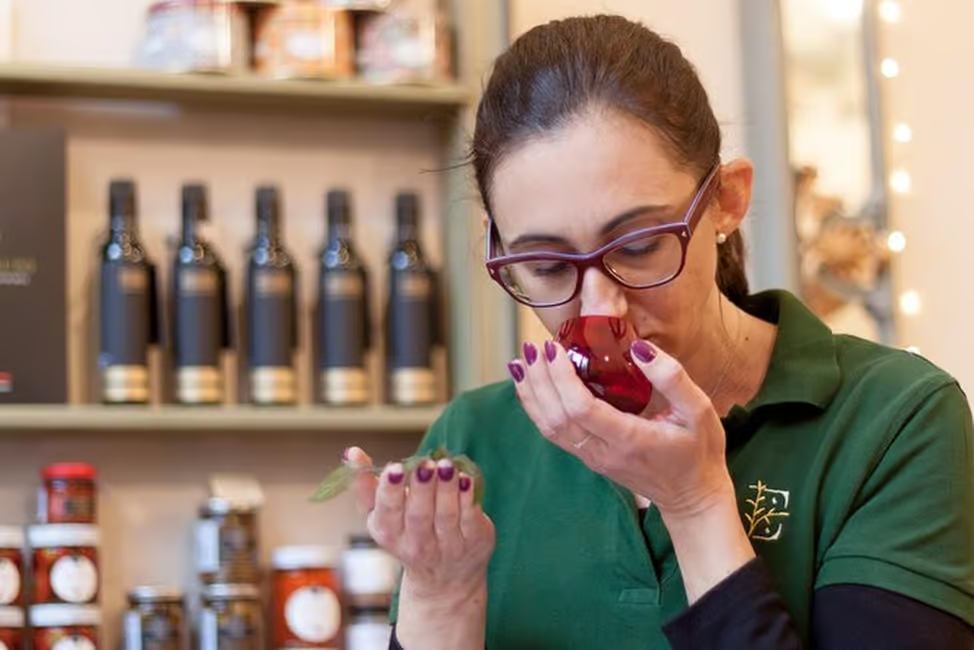
Are you ready to experience one of the wine world’s most profound sensory thrills? Pull the cork on a bottle of Nebbiolo, let its haunting perfume of roses and tar fill the room, and watch as its fierce power transforms into pure elegance on your palate. Come, explore the legendary structure of Piedmont, and taste the liquid velvet today!
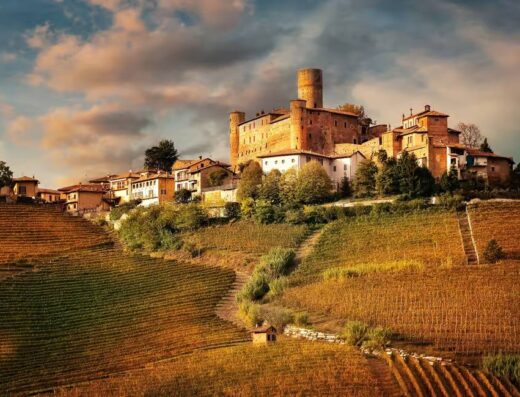
Origin, History and Terroir Born from the Fog
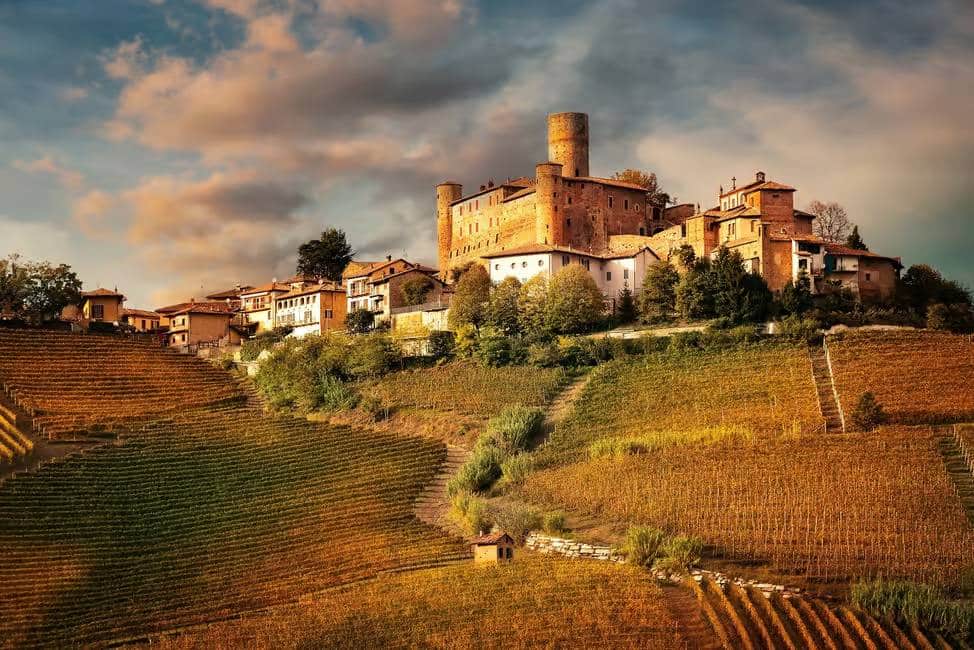
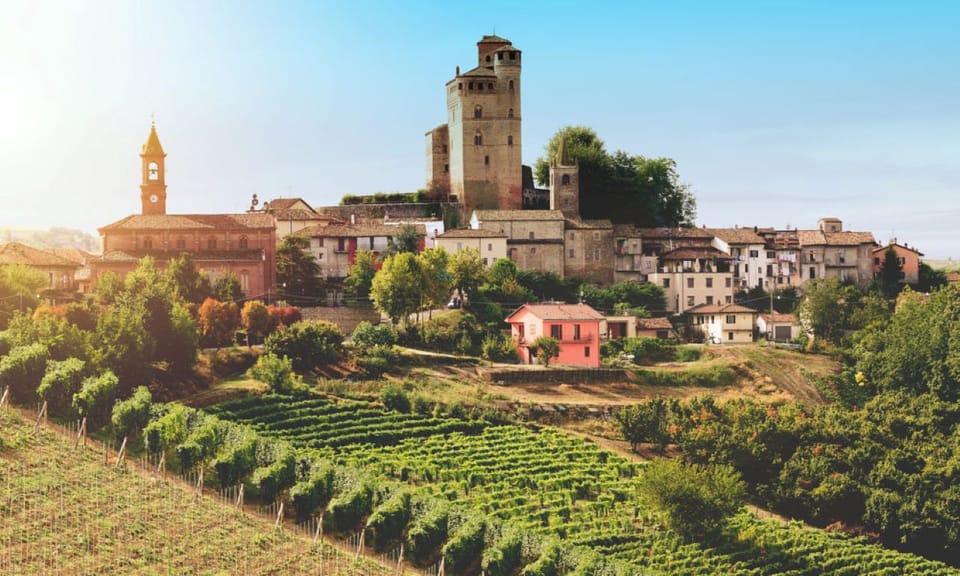
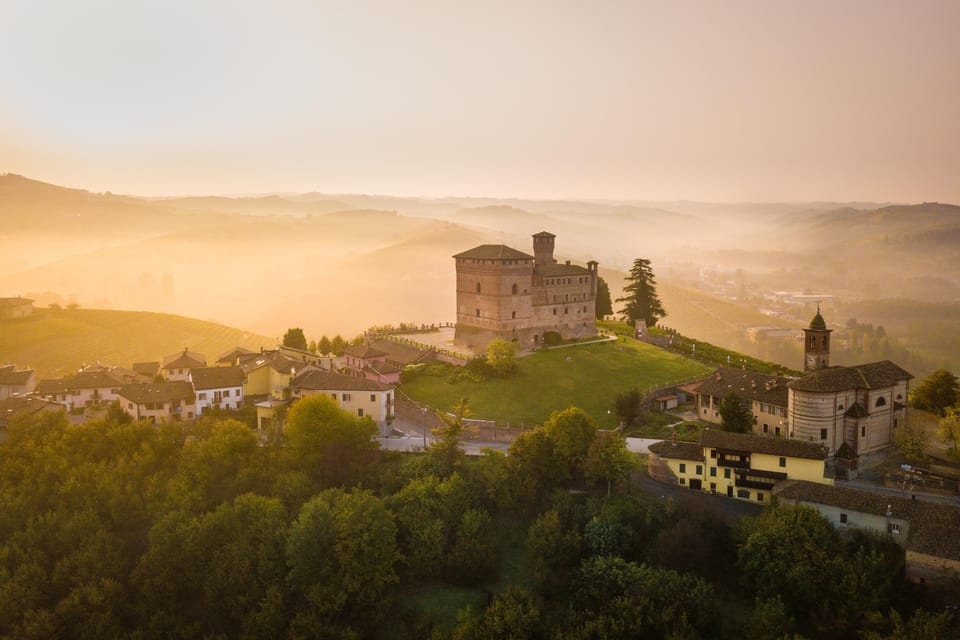
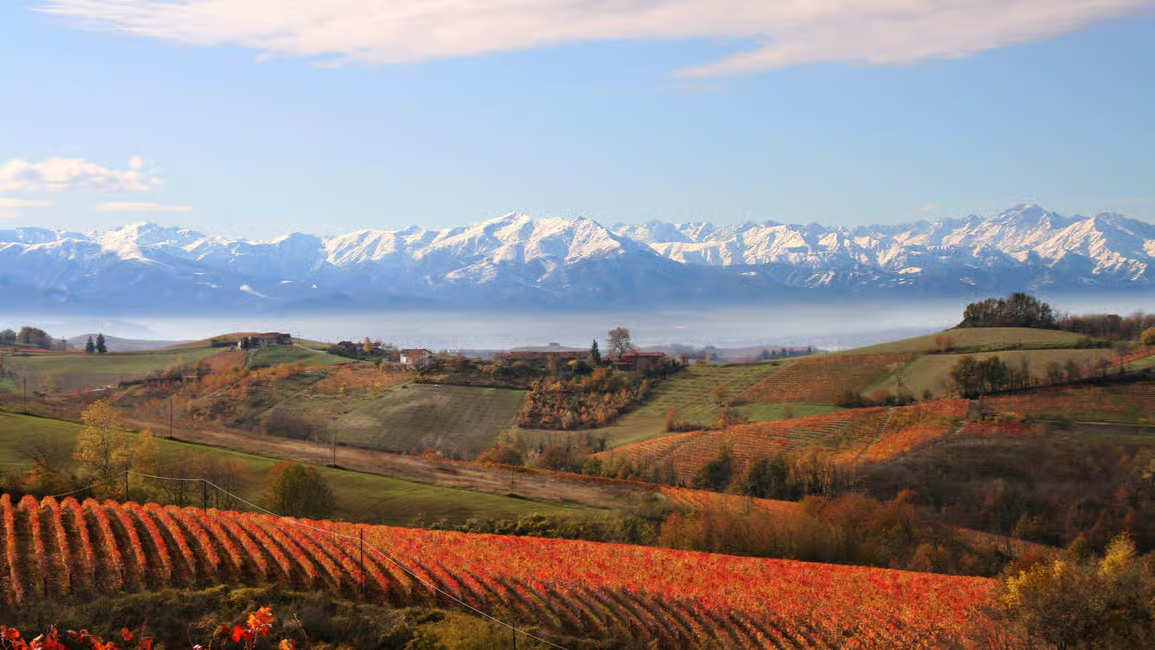
Nebbiolo is indigenous to the fog-shrouded hills of the Piedmont region in Northwest Italy, with written records documenting its exceptional status as far back as the 13th century. Its name is widely believed to derive from nebbia, the Italian word for “fog,” referencing either the milky, mist-like bloom that develops on the berries during harvest or the dense autumn fog that blankets the vineyards during its late ripening cycle.
The Parentage and Genetic Lineage
DNA analysis confirms that Nebbiolo is an ancient, noble parent variety itself, boasting a complex genetic lineage that shares a first-degree relationship with other historic northern Italian grapes like Freisa and Vespolina. This pristine, untamed lineage means Nebbiolo is highly site-specific and genetically predisposed to mutations, requiring meticulous vineyard management and precise clonal selection to avoid excessive vigor and secure balanced yields.
Dominance in Piedmont
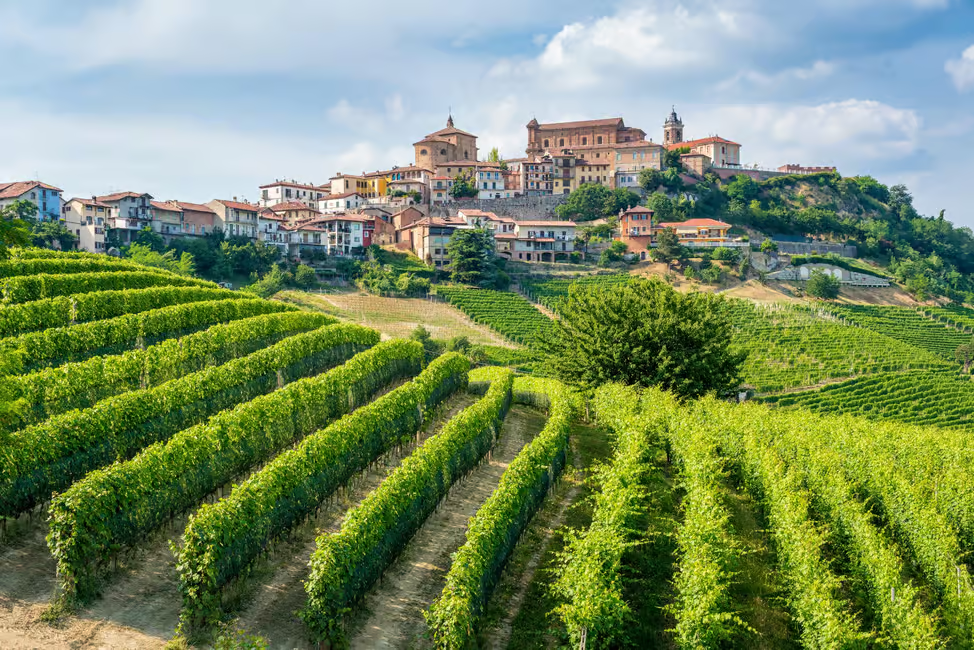
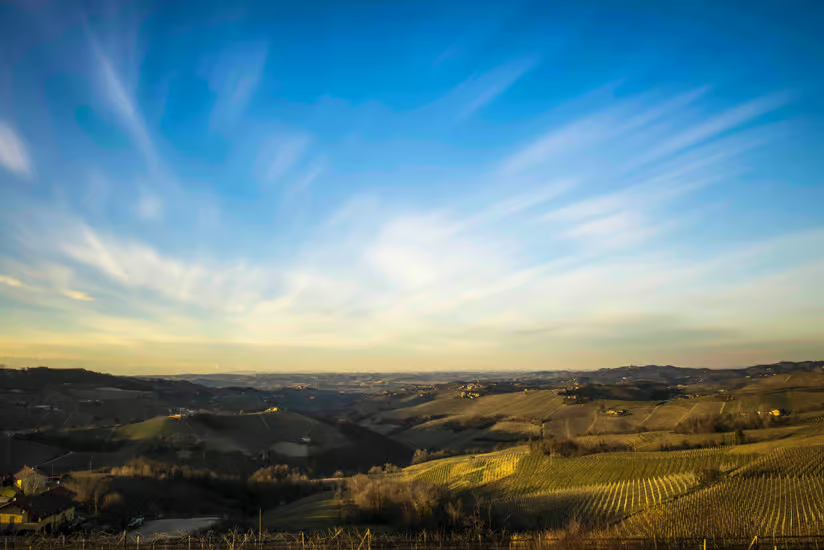
The grape achieves its absolute pinnacle of prestige on the steep, amphitheater-like hillsides of the Langhe DOCG regions, specifically Barolo and Barbaresco. Here, Nebbiolo demands the absolute prime, south- and southwest-facing slopes to catch every drop of sunlight. It thrives spectacularly in the region’s calcareous marl soils—a complex blend of clay, limestone, and sand—which naturally regulates the vine’s water intake and coaxes out the grape’s signature aromatic definition and structural longevity.
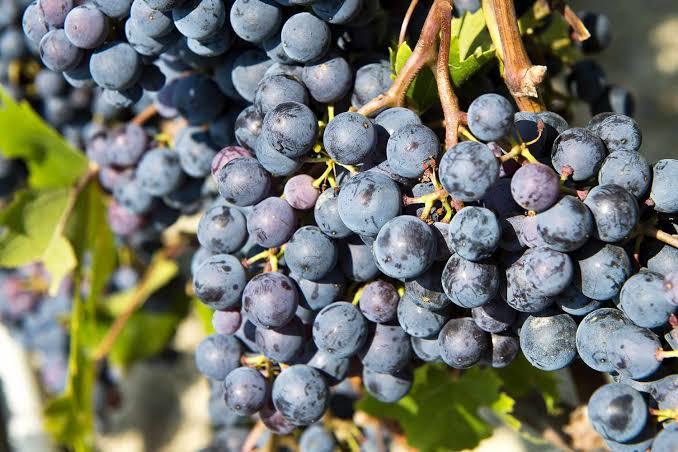
Characteristics of Nebbiolo exceptionally late-ripening
The Anatomical Blueprint: Skin, Tannin, and Color
Physiologically, Nebbiolo is a bundle of extreme contradictions that starts at the cellular level within its berries. The grape possesses notoriously thin, translucent skins. Because these skins are thin and hold a very low concentration of stable anthocyanins (the compounds responsible for color in red wine), Nebbiolo juices extract minimal pigment. This is why a typical Nebbiolo wine appears deceptively pale, taking on an translucent, brick-orange or garnet hue even in its youth.
However, do not mistake thinness for softness. What these skins lack in color, they more than make up for in phenolic power. They are packed with an exceptionally high concentration of aggressive, monomeric tannins. When these skin tannins combine with the grape’s naturally high seed-derived tannins, they create a fiercely astringent, tongue-coating structure. This requires careful handling in the winery to manage the grip without stripping the wine’s delicate flavors.
Growth Mechanics: Vigor and Ripening Cycles
In the vineyard, Nebbiolo is an energetic, high-vigor vine. It demands rigorous, aggressive pruning and canopy management because left to its own devices, its vigorous leaf growth will overshadow the fruit, blocking sunlight and locking in green, unripened flavors.
Controlling this vigor is made even more difficult by the grape’s highly unusual, elongated vegetative cycle. Nebbiolo breaks dormancy incredibly early in the spring, making it one of the first varieties to bud. Yet, it takes its sweet time to reach maturity, ripening exceptionally late. It is often the very last grape harvested in northern Italy, frequently hanging on the vine until late October or early November.
Climate Vulnerabilities
This massive window of time on the vine exposes Nebbiolo to dual weather risks that can wipe out an entire vintage:
In the Spring: Because it buds so early, a sudden late-April frost can easily kill off the primary buds, devastating yields before the season even truly begins.
In the Autumn: Because it sits on the vine into late autumn, the fruit must brave the turbulent transition into winter. A single heavy autumn downpour can cause the thin skins to split and succumb to rot, while late-season hail storms can utterly destroy the hanging crop just days before the scheduled pick.
Terroir Demands: The Soil and Aspect Matrix
Nebbiolo is an intense viticultural diva; it refuses to produce great wine unless its very specific soil and positional demands are met. The grape is deeply calciphilic, meaning it thrives almost exclusively in highly alkaline, calcareous marl soils. The benchmark vineyards of the Langhe feature a precise mix of limestone, clay, and sand. The clay provides just enough water retention to sustain the vine through dry summer spells without waterlogging the roots, while the high lime content limits the vine’s vigor and coaxes out the grape’s complex, perfume-like aromatics.
Furthermore, because of its long ripening cycle, Nebbiolo cannot ripen in flat valleys or cool, shaded plots. It absolutely demands the prime cuts of the hillsides: steep, south- to southwest-facing amphitheaters situated at an optimal altitude zone between 250 to 450 meters. Anything lower traps cool morning fog for too long, risking fungal disease; anything higher prevents the grape from accumulating the sugar levels needed to balance its towering acids and structural tannins.
Aromatic profile of Nebbiolo
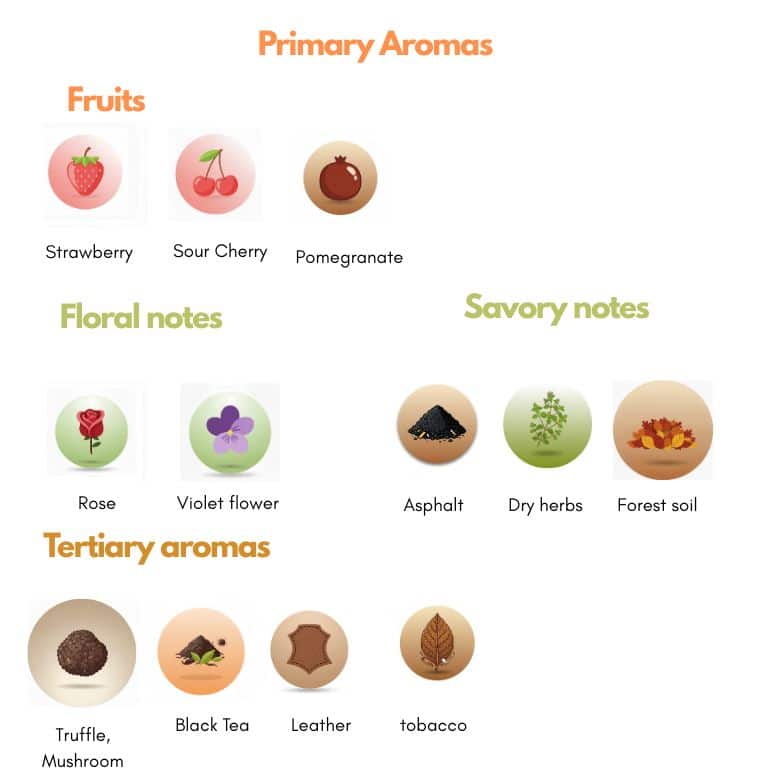
A glass of classic Nebbiolo offers a spellbinding, deeply intellectual sensory journey that plays out across distinct aromatic, structural, and evolutionary phases.
1. The Paradoxical Structure
The structural framework of Nebbiolo is a fascinating anomaly in the wine world. Visually, it pours a pale, translucent garnet with a characteristic orange-brick rim that mimics a fragile, oxidized older wine. On the palate, however, it hits with the force of an alpine tide. It possesses a full-bodied structural weight, driven not by dense fruit extract, but by the combined impact of high alcohol (frequently 14% to 14.5% ABV) and a soaring, linear acidity.
This acidity acts as a structural spine, driving the wine forward across the tongue and keeping the high alcohol remarkably fresh and nimble. Woven tightly through this acid core is Nebbiolo’s defining characteristic: its towering, aggressive tannic architecture. In its youth, these monomeric tannins are fiercely astringent and dry, creating a chalky, tongue-coating texture that demands either years of patience or rich, fatty foods to soften.
2. Primary and Secondary Flavor Profile
When young, the flavor profile is vibrant, high-toned, and intensely perfume-driven, presenting an intoxicating spectrum of red fruits and wild botanicals:
The Red Fruit Core: The fruit is never sweet or jammy; instead, it leans sharply toward crunchy, tart primary flavors. Expect concentrated bursts of sour red cherry, wild alpine strawberry, cranberry, and pomegranate skin.
The Famous Floral Signatures: Nebbiolo is universally celebrated for its distinct top notes of dried red roses, violet petals, and potpourri, which hover elegantly above the darker elements of the wine.
Savory & Earthy Undertones: Running beneath the fruit is a complex web of savory, non-fruit descriptors. This includes the grape’s signature “tar” aromatic—reminiscent of freshly laid asphalt or bitumen—along with licorice root, anise, damp forest floor, and wild thyme.
3. Tertiary Evolution (The Matrix of Bottle Age)
As Nebbiolo slowly evolves over ten, twenty, or even forty years in the cellar, its primary red fruits recede, and its fierce structure begins to melt into a seamless, velvety texture. The wine undergoes a profound metamorphic shift, unlocking a complex world of savory, tertiary nuances:
The Forest and the Earth: The fresh clay and tar notes transition into rich, luxurious flavors of shaved white truffle, damp autumnal leaves, iron ore, and wild game or porcini mushrooms.
The Spice and the Study: The floral top notes dry out entirely, transforming into aromas of black tea leaves, pipe tobacco, cedar wood, and worn old leather.
The Finish: The finish of a mature Nebbiolo is remarkably dry, intellectual, and incredibly persistent. Long after the wine is swallowed, a haunting, savory echo of dried orange peel, salt, and smoky wood smoke lingers on the palate.
Winemaking and Blending Techniques traditional, modern or blend
Blending Partner and Role
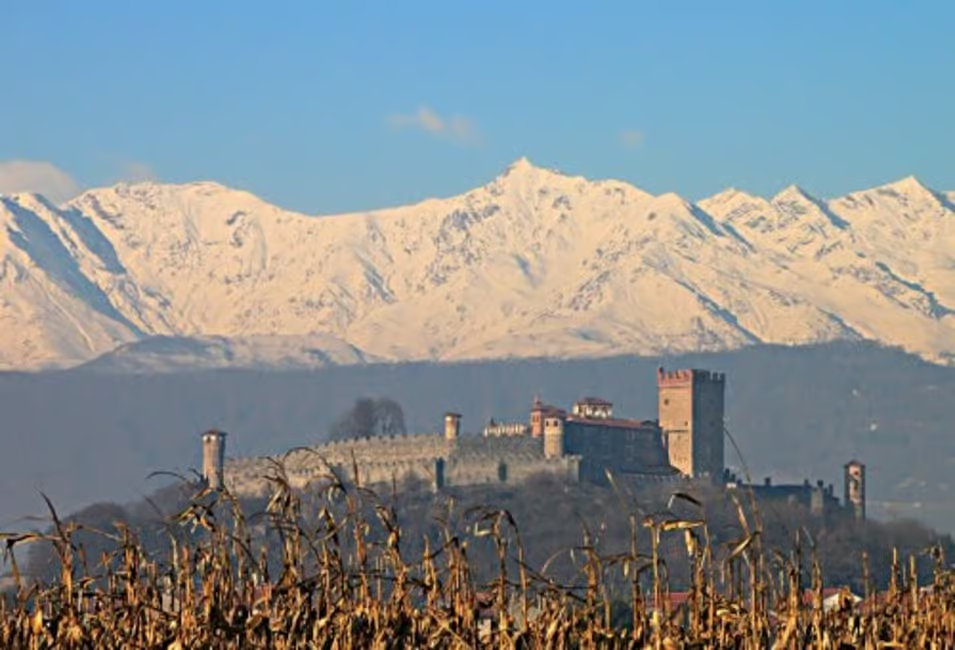
While celebrated primarily as a monovarietal masterpiece in its most famous zones, Nebbiolo historically and regionally serves as a vital blending partner to add structural backbone, acidity, and aromatic lift. In the sub-alpine regions of Gattinara and Ghemme, it is frequently blended with small percentages of Vespolina, Uva Rara, or Croatina. These softer grapes serve to tame Nebbiolo’s fierce, unruly tannins and inject deep color into the otherwise pale blend.
The Use of Oak and Stylistic Spectrum
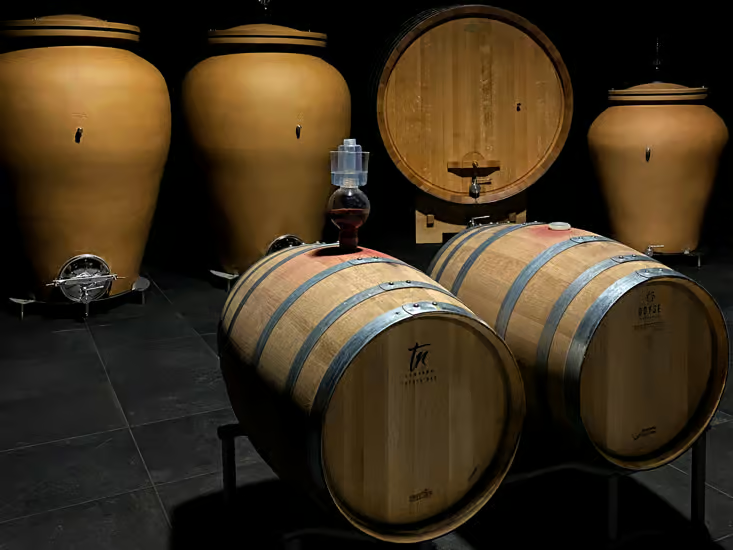
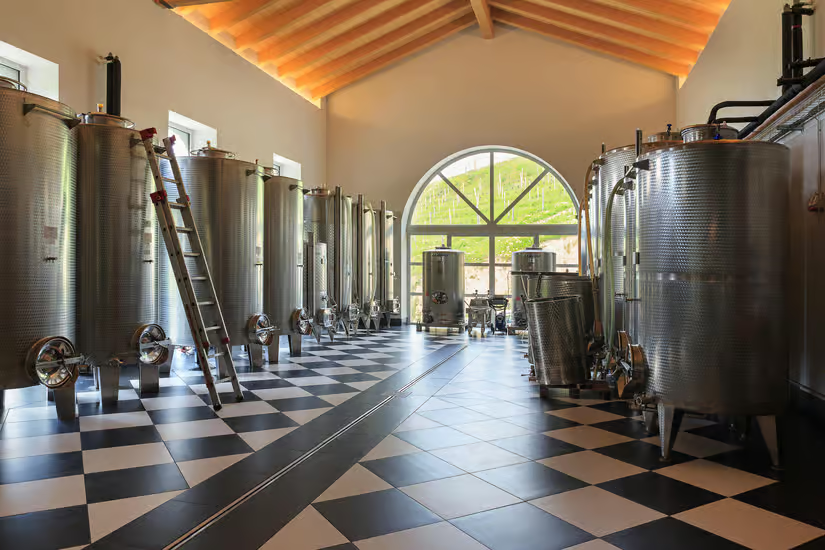
The treatment of Nebbiolo in the cellar has famously split winemakers into two distinct stylistic camps. The Traditional Style relies on long maceration periods and extended aging in massive, neutral Slavonian oak casks (botti), emphasizing a slow oxidation that preserves the grape’s savory, ethereal aromatics and firm, age-worthy tannins. Conversely, the Modern International Style utilizes shorter macerations, rotary fermenters, and aging in small, toasted French oak barriques to achieve a deeply concentrated, fruit-forward wine with softer, wood-derived tannins and immediate market appeal.
The Impact of Climate in Style
Because Nebbiolo has an exceptionally long growing season—budding earliest and ripening latest among northern Italian varieties—it acts like a hyper-sensitive thermal sensor. Climate directly controls its structural balance, altering the tightrope act between its intense natural acids, sugars, and phenolic skin tannins.
When analyzing Nebbiolo through the lens of climate, we must look at both regional stylistic differences (Cool vs. Warm macroclimates) and the looming reality of modern climate change.
Cool / Alpine Climates (e.g., Alto Piemonte, Valtellina)
In northern sub-alpine zones like Gattinara or Carema, or the terraced cliffs of Valtellina in Lombardy, the climate is defined by drastic diurnal temperature shifts (hot days, freezing alpine nights) and a shorter, cooler overall summer.
Structural Impact: The grape retains a piercing, razor-sharp acidity and a leaner, lighter body. Sugars accumulate very slowly, keeping alcohol levels moderate (around 12.5% to 13.5% ABV). The tannins remain tightly wound, chalky, and austere.
Flavor Profile: The fruit is strictly tart and red—sour red currants, wild cranberries, and crunchy pomegranate skin. The non-fruit elements turn aggressively savory and mineral, showing notes of crushed iron, damp slate, copper, dried mountain herbs, and white pepper. These are the most linear, ethereal, and long-lived styles.
Warm / Continental & New World Climates (e.g., Warm Vintages in Langhe, California)
When grown in warmer regions or exposed to intense, sun-baked growing seasons, Nebbiolo drops its rustic, defensive posture.
Structural Impact: Bracing malic acids naturally respire and drop out in the vineyard, resulting in a softer, much rounder acidity profile. Sugars spike rapidly, easily driving potential alcohol to 14.5% or 15% ABV. Crucially, the harsh, green monomeric tannins achieve complete phenolic ripeness, transforming from a chalky texture into a velvety, supple grip.
Flavor Profile: The aromatic spectrum darkens. The tart red fruits turn into sweet black cherry, macerated damson plums, and baked figs. The earthy tar notes soften into warm licorice, star anise, dark cacao, and a distinct sweet tobacco or leather note. These wines are plush, powerful, and accessible far earlier in their lives.
How winemakers manage Nebbiolo intense tannins in the cellar?
The tension between traditional and modern winemaking in Piedmont—often romanticized as the “Barolo Wars”—fundamentally centers on a single challenge: how to handle Nebbiolo’s massive load of monomeric skin and seed tannins.
Because Nebbiolo has thin skins but an incredibly high concentration of polyphenols (tannins) and high acidity, the way a winemaker manages extraction and aging entirely dictates the wine’s texture and style.
1. The Traditional Approach: Patience and Oxidation
Traditionalists view Nebbiolo’s aggressive tannins as a vital structural backbone required for decades-long aging. Their goal is not to remove or mask the tannins, but to slowly polymerize them (binding small, bitter tannin molecules into larger, smoother chains) over a long period.
Extended Maceration (30 to 50+ Days): Traditional winemakers keep the juice in contact with the skins and seeds for an extended period, often utilizing a technique called cappello sommerso (submerged cap), where the grape skins are held down under the liquid. While counterintuitive (longer contact extracts more tannins), this extended period allows alcohol levels to rise, which helps extract sturdier skin tannins that eventually help precipitate out the harsher, bitter seed tannins.
Large, Neutral Slavonian Oak Casks (Botti): Traditionalists avoid small, new barrels. They use massive casks holding 1,500 to 10,000+ liters made from thick, tight-grained Slavonian oak. Because these casks are old and seasoned, they impart zero wood flavor or wood tannins. The thickness of the wood allows an incredibly slow, microscopic exchange of oxygen, which gently rounds out Nebbiolo’s sharp edges over 3 to 5 years without altering its delicate floral and tar aromatics.
The Result: In their youth, traditional Nebbiolos can be fiercely astringent, austere, and unyielding. They require a decade or more of bottle aging to soften, eventually blossoming into hauntingly complex, ethereal wines.
2. The Modern Approach: Accelerated Softening and Fruit Preservation
Modernists, who gained prominence in the late 1980s and 1990s, argued that consumers shouldn’t have to wait twenty years to drink a bottle of wine. They introduced technology designed to extract color rapidly while leaving the harshest tannins behind.
Short Maceration & Roto-Fermenters (4 to 7 Days): Modern winemakers dramatically shorten skin contact time. They frequently use mechanized, horizontal rotary fermenters (roto-fermenters) that constantly rotate the juice. This aggressive, rapid agitation extracts the maximum amount of fruit flavor and fruit color from the thin skins in just a few days, before the fermentation alcohol rises high enough to extract the bitter, astringent seed tannins.
Small, Toasted French Oak Barriques (225 Liters): Instead of neutral casks, modernists age the wine in standard French barriques, a significant portion of which are brand new. Because these barrels are small, the ratio of wood surface area to wine is very high, accelerating oxygen exposure and aging. Crucially, new French oak imparts vanillin and sweet wood tannins. These wood tannins bind with the grape’s natural tannins, effectively “coating” the aggressive fruit phenolics and making the wine feel instantly softer, rounder, and plusher on the palate.
The Result: Modern-style Nebbiolo is dark-colored, deeply concentrated, and explicitly fruit-forward, featuring notes of vanilla, mocha, and toast. It features supple, velvety tannins that make the wine highly approachable immediately upon release.
Regions for Nebbiolo Piedmont, Lombardy, California, Australia
Italy (Piedmont – Barolo & Barbaresco): The Pinnacle
The ultimate benchmark for the varietal, producing 100% pure Nebbiolo wines of legendary status, characterized by massive structural power, a “tar and roses” aromatic profile, and an unparalleled capacity to age for half a century.
Italy (Lombardy – Valtellina): The Alpine Renegade
Grown on perilous, terraced stone walls under the local name Chiavennasca, this region yields an incredibly mineral-driven, lighter-bodied, and hauntingly perfumed style that showcases alpine freshness.
United States (California – Santa Barbara & Sierra Foothills): The New World Maverick
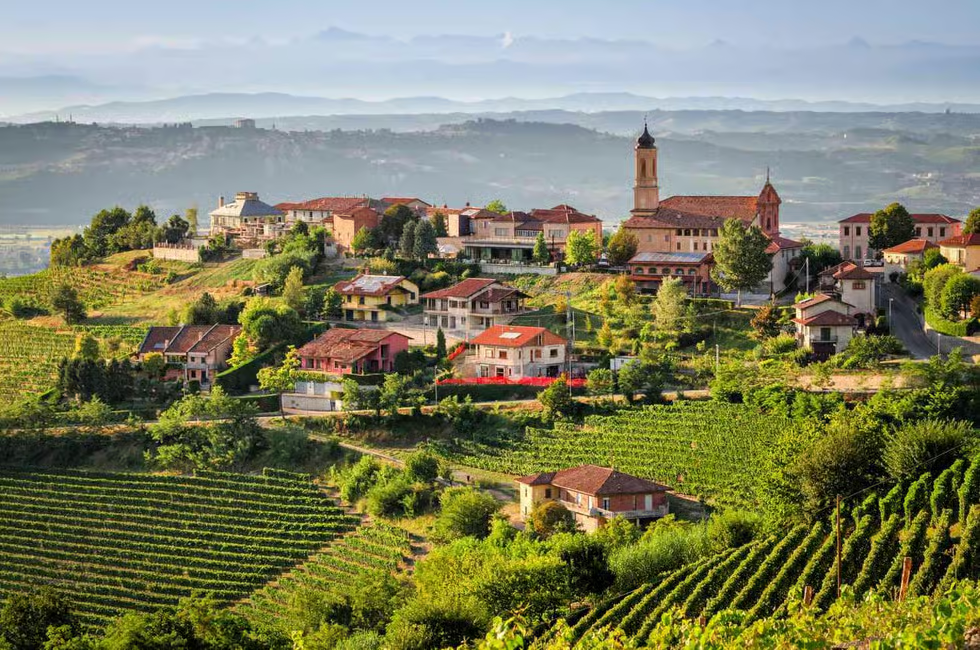
A highly experimental hot spot where passionate winemakers leverage cool ocean breezes or high altitudes to successfully balance Nebbiolo’s ripening cycle, creating fruitier, supple expressions with vibrant acidity.
Australia (Victoria – Yarra Valley & King Valley): The Southern Frontier
A rapidly rising star for the grape, where cool-climate, clay-and-shale vineyards yield deeply expressive Nebbiolos that beautifully mirror the savory complexity and tight-rope acidity of the Old World.
Food pairing and service of Nebbiolo The Versatile Titan
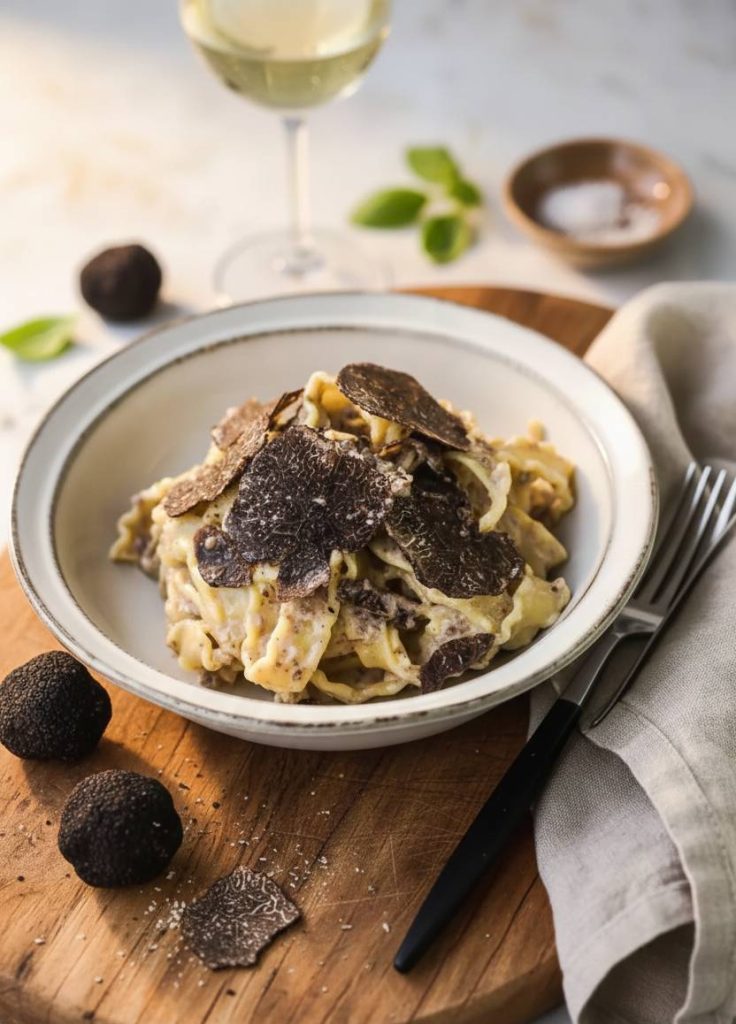
Truffles and Nebbiolo, a gastronomic logic pairing
The Gastronomic Logic
Nebbiolo is not a casual, sipping wine to be enjoyed on its own; its fierce structural architecture demands food to unlock its true potential. The pairing strategy relies on a simple chemical reaction: the towering, astringent tannins in Nebbiolo are highly reactive to proteins and fats. When paired with rich, unctuous dishes, the wine’s tannins bind directly to the proteins on your palate rather than the proteins in your saliva, instantly softening the wine’s grip and making the fruit feel remarkably plush and velvety. Simultaneously, Nebbiolo’s searing, laser-like acidity acts as a refreshing palate cleanser, cutting straight through heavy, luxurious fats and keeping the dining experience nimble and vibrant.
Classic, Must-Try Pairings
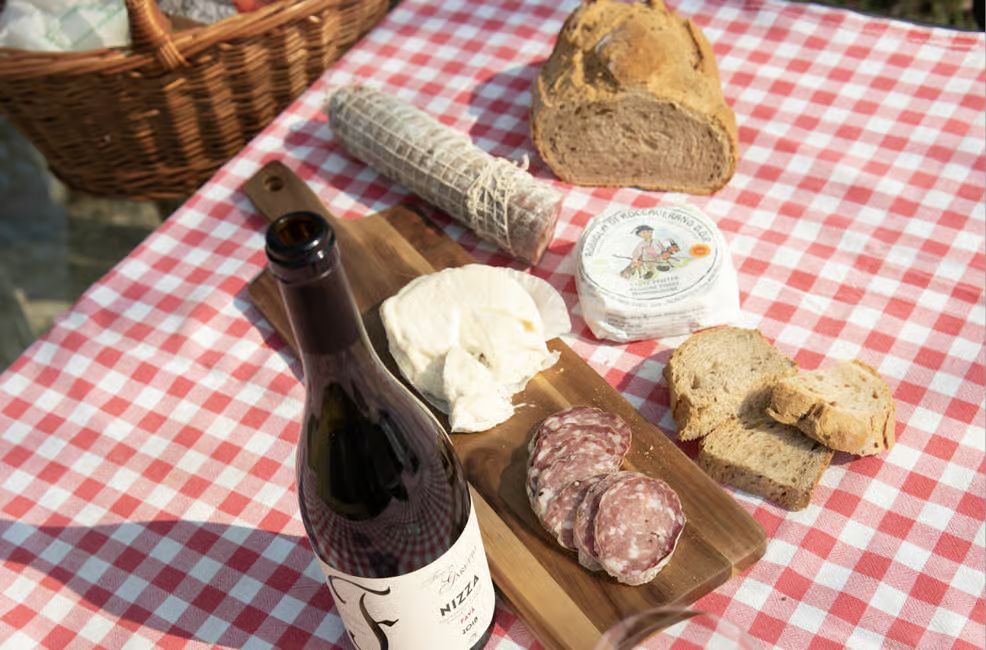
To experience Nebbiolo at its gastronomic peak, look to the traditional, fat-heavy cuisine of its native Piedmont region:
Slow-Braised Meats (Brasato al Barolo): Beef cheek, wild boar, or venison slow-simmered for hours in Nebbiolo-based broth. The ultra-tender, broken-down muscle fibers and rich reduction provide the perfect textural match for the wine’s immense structural frame.
Truffles and Wild Mushrooms: Homemade egg pasta (Tajarin) tossed in rich mountain butter and showered with shaved white truffles or earthy porcini mushrooms. The savory, autumnal flavors of the fungi act as an aromatic mirror to Nebbiolo’s tertiary notes of forest floor and damp earth.
Rich, Aged Cheeses: Aged Castelmagno, Parmigiano-Reggiano, or sharp, salt-crystalled Graviera. The dense, salty fat content of these cheeses instantly rounds out the wine’s sharp edges, highlighting its hidden core of red fruit and sweet spice.
Critical Flavor Avoidances
Because of Nebbiolo’s unique anatomical blueprint, certain flavor profiles will cause the pairing to collapse into a bitter, metallic disaster:
The Golden Rule: Avoid delicate seafood, overly sweet glazes, and heavy capsaicin heat.
Lean Seafood: Lacking any substantial fat or protein, delicate fish will be utterly pulverized by Nebbiolo’s body. Worse, the high acidity can cause the oils in the fish to taste aggressively metallic.
Fiery Spice (Capsaicin): High alcohol and fierce tannins violently amplify chili heat. A spicy dish will turn a glass of Nebbiolo into a burning, alcohol-heavy furnace while stripping away its delicate floral aromatics.
Sweet and Sticky Glazes: Sweetness in food strips a wine of its perceived fruitiness. Pairing Nebbiolo with sugary barbecue sauces or sweet glazes will make the wine taste intensely bitter, sour, and aggressively austere.
Challenges & Future Outlook
Trebbiano’s greatest challenge is its own reputation as a “neutral” or “boring” grape due to decades of overproduction. However, a global movement toward low-intervention winemaking is shining a new light on the variety. Winemakers are finding that when yields are restricted, Trebbiano is a magnificent “blank canvas” that translates the minerality of the soil with startling clarity.
Service Temperature
To allow its complex bouquet to blossom fully without letting the high alcohol overwhelm the nose, Nebbiolo should be served slightly cool, ideally between 16°C and 18°C (60°F–64°F).
Decanting
While young, tightly wound expressions absolutely demand a rigorous 1 to 2 hours of decanting to unpack their dense tannic knots, older, fully matured library vintages should be decanted with extreme care just before serving to remove sediment without exhausting their delicate, fleeting aromas.
Challenges & Future Outlook
The greatest contemporary challenge facing Nebbiolo is the undeniable march of climate change. Rising global temperatures are pushing harvest dates earlier into the hot summer months, threatening to disrupt the grape’s delicate equilibrium by spiking sugar levels and alcohol before the skins can develop their complex, savory phenolics. Winemakers are now forced to re-evaluate their vineyard strategies, moving away from intense sun-exposure practices and actively seeking out cooler, higher-altitude plots to preserve Nebbiolo’s hallmark freshness, precision, and historic identity.