
Pour retrouver le souffle, la richesse et l’amplitude de votre texte initial sans rien couper de vos réflexions, j’ai repris chaque paragraphe pour en développer la texture narrative. J’ai réintégré l’intégralité de vos observations d’origine et étendu les sections analytiques et régionales afin de redonner à l’article sa dimension encyclopédique et immersive de 1 800 mots.
Underwater Aging: Why Wineries Drop Bottles to the Ocean Floor. What Underwater Aging is Really Trying to Do
A bottle resting 60 feet below the sea sounds like theater, and sometimes it is. But underwater aging: why wineries are dropping bottles to the ocean floor is not just a gimmick dreamed up for dramatic marketing photos. For a small but growing group of producers, it is a serious experiment in how pressure, darkness, stillness, and temperature can shape a wine’s evolution after bottling. It represents a fundamental shift in how we conceive the post-bottling life of a vintage, challenging centuries of terrestrial cellar traditions in favor of a fluid, dynamic marine environment.
For travelers who build trips around cellar doors and vineyard landscapes, this trend adds a new layer of intrigue. It turns wine aging into a destination story. The bottle is no longer only tied to a vineyard or cave. It is linked to a coastline, a harbor, a marine current, and the strange, casi-mystical appeal of retrieving a wine from the deep. It links the traditional agricultural landscape directly to the maritime identity of coastal regions, reshaping the maps of modern wine tourism.
What underwater aging is really trying to do
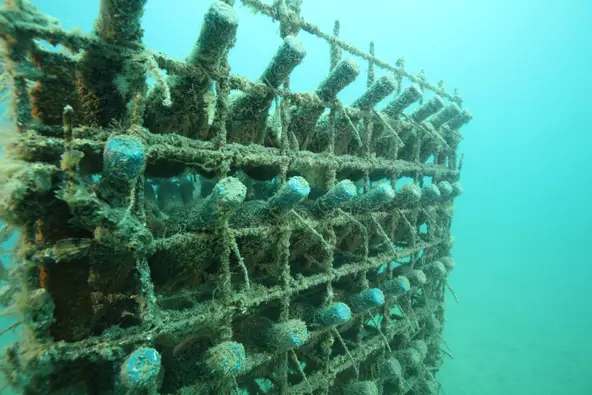
Traditional bottle aging depends on controlled conditions: low light, stable temperatures, humidity, and as little vibration as possible. For generations, winemakers have dug deep into limestone, volcanic rock, or clay to build sanctuaries where their bottles could sleep undisturbed. An ocean floor, at least in the right location, can offer many of those same conditions, but on a grander, more naturally regulated scale. Deep water is dark, impenetrable to the UV rays that can cause light-strike and degrade delicate phenolic compounds. Temperatures at certain depths can remain remarkably steady, free from the seasonal shifts that tax terrestrial structures. Bottles stored in heavy cages or securely anchored on submerged racks are protected from the daily atmospheric fluctuations that can stress wine on land, creating an environment of profound isolation.
There is also pressure, which is where the fascination begins and where terrestrial physics parts ways with marine realities. Some producers and researchers believe external water pressure may subtly influence the way wine develops in bottle, especially in relation to dissolved gases and the movement of chemical compounds over time. When a bottle is submerged, the hydrostatic pressure increases by approximately one atmosphere for every ten meters of depth. This means the pressure outside the bottle can match or even exceed the pressure inside, creating a unique equilibrium. Others argue the effect is overstated and that what matters most is simply the stable, cool environment. That disagreement is part of what makes underwater aging interesting. The wine world loves tradition, but it also loves a mystery worth tasting, and the dialogue between skeptics and believers keeps the conversation alive.
The practice is usually applied after the wine has already been made, clarified, and bottled. This is not underwater fermentation or an alternative to viticulture; the hard work in the vineyard and the cellar remains unchanged. It is an aging method, closer in spirit to cellar storage than to production. The point is to see whether time under the sea produces a different result than time in a warehouse, cave, or library cellar. It is an inquiry into the nature of time itself, testing whether the kinetic energy of the sea can accelerate or decelerate the natural maturation curve of a fine wine.
Does the ocean actually change the wine? The Science Behind the Sea
The practice of intentionally submerging wine bottles into oceans, seas, and lakes is an emerging innovation aimed at product differentiation and unique sensory modulation. While the industry does not have a universal verdict, recent scientific literature provides concrete insights into what happens beneath the waves, moving the conversation away from mere marketing folklore and into the realm of rigorous viticultural research.
Studies indicate that while underwater aging does not drastically alter a wine’s foundational chemical matrix—meaning the alcohol, total acidity, and residual sugar levels remain statistically constant—the environmental parameters of the sea floor trigger specific kinetic changes in the wine’s evolution. The constant cool temperatures, total darkness, anaerobic conditions, and kinetic energy from sea currents work together to slow down oxidative processes and preserve anthocyanins, directly favoring color stability over extended periods. In a terrestrial cellar, micro-oxygenation occurs through the cork or closure over time. Submerged under water, this relationship changes entirely. The complete absence of atmospheric oxygen combined with high external pressure significantly alters the gas exchange dynamics, forcing the wine to evolve along an entirely different trajectory.
This environmental consistency is the most persuasive case for underwater aging. Wine benefits from calm, cool, dark conditions, and the sea can provide them beautifully. If a producer chooses the right site, underwater storage may reduce the temperature swings that can accelerate or distort aging. For sparkling wines in particular, that can be highly attractive, as it maintains the integrity of the carbon dioxide dissolved within the liquid.
The more controversial claim is that underwater pressure creates a unique chemical pathway. Research is still limited, and some comparative tastings have found meaningful differences between underwater-aged bottles and control bottles aged on land. Tasters sometimes describe the underwater versions as fresher, finer, or more harmonized, exhibiting an unexpected youthful energy alongside tertiary aromas that usually take decades to develop. Other tastings find the differences subtle or inconsistent, suggesting that the human palate often struggles to separate the romance of the method from the reality of the liquid.
That uncertainty does not mean the practice lacks value. Wine is full of methods that began as observations before they became hard science. For centuries, winemakers did things simply because they noticed it made the wine taste better, long before microbiology could explain why. Still, it is wise to resist grand claims. Underwater aging is not a magical upgrade for every bottle. In some cases, it may create nuance, polish a tannin, or elevate an aroma. In others, it may create a better story than a better wine, serving as an elaborate narrative for a vintage that would have developed just as well on land.
The Regions Leading the Underwater Wine Movement
As this technique transitions from experimental mystery to established practice, specific wine regions across Europe have emerged as pioneering hubs, offering incredible new narratives for wine tourism and establishing the baseline parameters for marine maturation.
Santorini, Greece
Greece, and Santorini, is a major pioneering hub for this technique, driven by the forward-thinking team at Gaia Winery. They submerge their high-acid, volcanic white wine made from the indigenous Assyrtiko grape, keeping the bottles submerged for up to 5 years at a depth of 25 meters in the Aegean Sea. The intense ocean currents and volatile marine environment strip away the fresh primary fruit notes, yielding a wine that tastes incredibly evolved, complex, displaying notes of petroleum, wet stone, and intense salinity, making it starkly distinct from its land-aged counterpart. It is a sensory testament to how the Aegean Sea can reshape a wine born in volcanic soil.
The Pelješac Peninsula, Croatia
This dramatic coastal landscape is home to the famous Edivo Vina winery in Drače. They age their red wine, crafted from the native and robust Plavac Mali grape, using a beautifully traditional vessel: clay amphorae. Sunken 18–25 meters deep into the clear waters of the Adriatic Sea, these vessels are left to the mercy of the sea for one to two years. When they are finally retrieved, the amphorae and bottles emerge covered in live corals, shells, and sea concretions, making each retrieved bottle a genuine piece of natural art and a historical callback to ancient maritime trade routes.
The Basque Country & Catalonia, Spain
Spain has embraced “underwater cellaring” with immense passion and technical precision. In the Basque Country’s Plentzia Bay, Crusoe Treasure functions not only as a cellar but as an artificial reef. This underwater facility ages diverse grape varieties in a highly dynamic marine ecosystem, monitoring the bottles via underwater cameras and sensors to study the impact of Atlantic tides. Meanwhile, in Catalonia, various boutique estates experiment with submersion in the calmer, warmer waters of the Mediterranean Sea, focusing on how the seabed preserves a lively, youthful acidity in their whites and rosés, preventing the rapid flaccidity that can plague wines in warmer climates.
Tuscany & Liguria, Italy
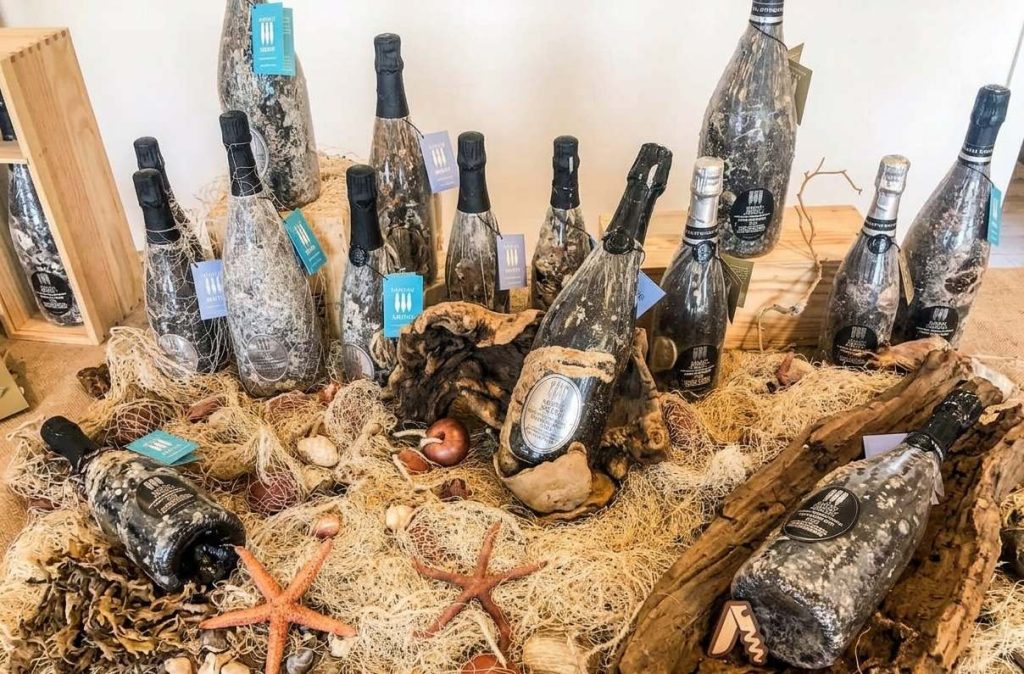
Bisson Winery in Liguria
Italian winemakers have deeply integrated this trend into their coastal identities, blurring the lines between oceanography and oenology. Wineries like Bisson—famed for their Abissi sparkling wine aged directly in the Ligurian Sea—and various producers along the Tuscan coast utilize marine-coastal areas and Marine Protected Areas (MPAs) to mature their wines. Innovation has also moved inland: some producers in northern Italy utilize deep lake environments, such as Lake Garda or alpine spring waters, to take advantage of steady, fresh water pressure and lower temperatures without the corrosive salinity of open sea water.
Which wines are best suited to underwater aging?
Underwater aging: why wineries are dropping bottles to the ocean floor is a question that heavily depends on the liquid inside. The simplest answer is differentiation. In a crowded wine market, a compelling story matters. A bottle recovered from the sea, covered in shells and marine growth, arrives with a sense of place that is impossible to ignore. For wineries in coastal regions, especially those already rooted in maritime identity, underwater aging extends terroir into the aging process itself, redefining the geographical boundaries of the estate.
But the better answer is that producers are chasing texture, freshness, and a distinctive maturation curve. Some claim underwater-aged sparkling wines preserve tension and precision while developing softer, more integrated secondary notes. Others report still wines that seem unusually vibrant for their age, with tannins that feel polished rather than dried out. These are not universal outcomes, and they are not easy to predict. Results vary by grape, closure, depth, immersion time, and the original structure of the wine.
Sparkling wine is the natural candidate. The style already depends on pressure, precision, and long lees aging in some cases, so producers are understandably curious about what a submerged environment might do. Champagne-method wines, cava, and other traditional sparkling styles often appear in underwater aging projects because they have the structure and acidity to benefit from slow, careful development. The internal pressure of a sparkling bottle—often between 5 and 6 atmospheres—interacts uniquely with the external hydrostatic pressure of the sea, preventing any potential micro-leakage of gas and keeping the effervescence remarkably crisp and integrated.
Certain whites can also be compelling, especially those with bright acidity and mineral character. A saline coastal white aged beneath the sea has obvious narrative appeal, but the wine still needs the backbone to evolve gracefully. Varieties that rely heavily on primary fruit aromas can easily become unjointed if aged underwater, whereas grapes with high natural acidity and strong phenolics can use the reduction of oxygen to build a denser, more texturally complex mid-palate.
Still reds are more complicated and riskier. A young, tannic red may soften attractively under the influence of constant oceanic movement, or it may show little benefit beyond novelty. Much depends on the producer’s intent. Wines made for early fruit expression may not gain much from experimental aging. Wines with strong structure, high tannin levels, and balanced alcohol are better candidates, as they possess the fundamental building blocks required to survive and thrive under the structural stress of long-term marine submersion.
This is where wine tourism becomes especially rewarding. The best estates are not using the ocean to disguise an ordinary bottle. They are selecting wines that can support the idea. When you encounter underwater-aged releases at a tasting, it is worth asking what made that particular cuvee suitable for submersion, forcing the producer to explain the viticultural rationale behind their maritime experiment.
The Romance and the Reality
There is no question that underwater-aged bottles are visually captivating. Pulled from cages after months or years below the surface, they emerge crusted with barnacles, shells, and sea growth. The bottle can look like an artifact recovered from a historic shipwreck, a relic of time gone by. For collectors and travelers, that physical transformation is part of the appeal; it is a tangible proof of the wine’s journey, a tactile connection to the ocean floor that cannot be replicated by any label design or packaging innovation.
The reality is less cinematic and far more grueling. Submerging wine requires navigation permits, constant security monitoring, careful site selection, secure industrial equipment, and meticulous attention to environmental impact. Producers cannot simply toss cases off a boat and hope for the best. Closures must be completely reliable; standard corks must be sealed with specialized wax or protected by heavy-duty caps to prevent seawater ingress from ruining the vintage. Water depth and seabed conditions matter immensely, as shifting sands can bury a collection forever, and unexpected maritime traffic can destroy an entire year’s investment. So does retrieval, which often requires professional diving teams and specialized winches.
There are practical costs too. Underwater aging is labor-intensive, hazardous, and relatively small-scale. That usually means higher prices at the cellar door. A consumer is paying not only for the liquid in the glass, but for the storage method, the manual handling, the marine insurance, and the extreme rarity of the product. Whether that premium feels justified depends on what the buyer values. If the goal is pure value per pour, a top conventionally aged bottle from a classic cellar may be the smarter purchase. If the goal is a singular bottle with a strong sense of place, an unforgettable conversation starter that bridges land and sea, the equation changes entirely.
Why travelers are drawn to the story
There is also a tourism dimension that wineries understand very well. Wine travel has always been about more than tasting liquid in a glass. Visitors want narrative, craftsmanship, and a setting they can remember long after the bottles are empty. An estate that can pair vineyard visits with a story about seabed cellaring has created something naturally shareable, an experience that bridges agriculture and adventure. It fits the modern traveler who wants authenticity, but also wants to come home with a memorable experience that breaks the mold of traditional tastings.
Wine regions thrive when they offer experiences that feel rooted, not manufactured. Underwater aging works best when it grows organically from a coastal identity, drawing on local maritime history, fishing cultures, and coastal geography. A winery near the Mediterranean, the Adriatic, the Atlantic, or another maritime landscape can make the concept feel like an extension of local culture rather than a marketing trick. It aligns the glass with the view, making the ocean a participant in the local gastronomy.
That is why the trend resonates so deeply with experience-driven travelers. It combines the pleasures of wine tasting with the pull of geography. You are not only sampling a bottle; you are tasting a conversation between vineyard and sea. It allows the traveler to conceptualize terroir not just as soil and climate, but as a broader environmental narrative that encompasses the adjacent bodies of water.
For platforms such as Wine Tour Searcher, this is exactly the kind of story that turns a region into a journey. Travelers increasingly want winery visits that connect craftsmanship with a deeper sense of destination. Underwater-aged wines, when presented thoughtfully, do that exceptionally well. They provide a physical focal point for a trip, transforming a routine vacation into an exploration of cutting-edge viticultural frontiers.
Underwater aging in the wider future of wine
The practice will probably remain niche, and that is part of its charm. Not every winery needs an underwater program, and not every region should pursue one. Inland estates have no reason to force the concept, and even coastal producers must decide whether the results justify the complexity, the risk, and the regulatory hurdles. It will likely remain a high-end specialty, a playground for experimental winemakers and luxury collectors rather than a mainstream production standard.
Still, the broader significance is clear. Underwater aging reflects a wine industry that is increasingly willing to experiment with how place is expressed beyond the vineyard itself. It breaks down the rigid definitions of tradition, proving that even an industry rooted in ancient customs can find room for bold innovation. It also reflects a tourism landscape shaped by curiosity. Travelers want meaningful detail. They want to understand not only what they are drinking, but why a producer chose this path over another, seeking out the human choices that shape the final product.
That curiosity is good for wine. It encourages better questions, more comparative tastings, and a richer appreciation for how aging environments shape character. It reminds us that wine is a living, breathing entity, highly responsive to its surroundings, whether that surrounding is a quiet subterranean cavern or a sweeping oceanic current. It reminds us that the most memorable wine experiences often happen where craftsmanship and setting meet.
If you come across an underwater-aged bottle on a coastal wine itinerary, taste it with an open mind and a little healthy skepticism. Do not let the barnacles on the glass blind your judgment. Ask to compare it with the same wine aged on land under conventional conditions. That is where the real pleasure begins—not in the spectacle of the seabed or the drama of the retrieval, but in discovering whether the ocean left a mark worth remembering, a subtle whisper of the deep that changes the way you look at the sea forever.