
A vineyard picnic sounds idyllic until someone under eight is hungry, bored, or sprinting toward a barrel room. That is exactly why family friendly winery tours matter. The best ones are not watered-down versions of adult tastings. They are thoughtfully paced, beautifully set, and designed so parents can enjoy the sense of place while children have room to be comfortable, curious, and welcome.
What makes family friendly winery tours actually family friendly
Not every winery that allows children is truly set up for families. There is a difference between tolerated and welcomed, and travelers feel it immediately. A genuinely family-oriented estate usually offers space to move, an easygoing service style, and an experience that does not depend on prolonged silence or rigid timing.
Outdoor settings are often the strongest fit. Vineyards with gardens, lawns, shaded courtyards, or farm-style grounds give the day breathing room. Parents can focus on the story in the glass while children have a change of scene beyond a tasting counter. Some estates go further with non-alcoholic drinks, simple snacks, animal encounters, or grape juice tastings, which can turn a stop into a shared outing rather than a compromise.
That said, the most polished family experiences still preserve what makes wine travel special. The landscape matters. The architecture matters. The sense of craft matters. The ideal tour balances those pleasures with a realistic understanding of how families move through a day.
The best family friendly winery tours start with the right format
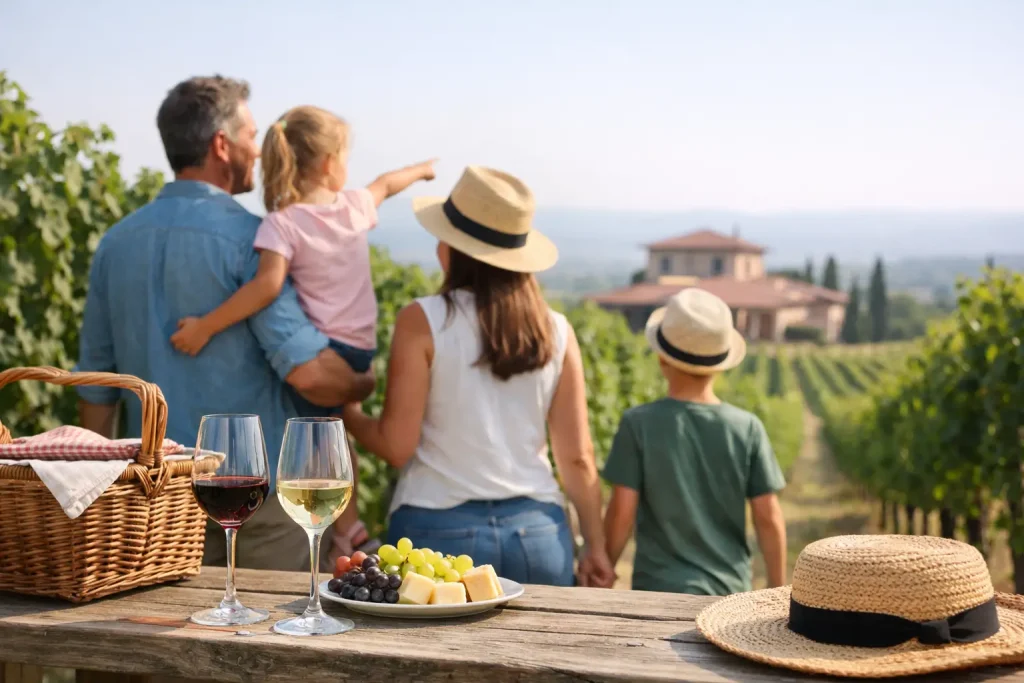
For adults traveling without children, a tightly scheduled tasting circuit can be appealing. With family in tow, less is usually more. One or two well-chosen winery visits often create a better day than packing in four rushed stops.
Estate tours with broad grounds tend to work better than standing tastings in compact cellar doors. Vineyard walks can be excellent for older children who like seeing where grapes grow, especially if the guide keeps the language vivid and place-based rather than overly technical. Food-led visits also translate well. A winery with a casual lunch terrace, wood-fired pizza, or picnic setup offers a natural rhythm that suits mixed-age groups.
Private tours can be worth the extra cost if flexibility matters. They allow for earlier departures, slower lunches, stroller logistics, and the occasional unplanned pause. Public group tours may be more economical, but they often run on stricter timelines and are not always ideal for very young children.
Choosing the right wine region for a family trip
Some wine destinations naturally lend themselves to multigenerational travel. Others are better saved for adults-only escapes. The difference is not quality. It is atmosphere, travel time, and how estates receive visitors.
In California, Napa Valley and Sonoma can both work well, but Sonoma often feels more relaxed for families, with a broader spread of casual properties and easier access to open-air settings. In Italy, Tuscany offers a strong mix of vineyard landscapes, agriturismo culture, and long lunches that make family travel feel graceful rather than forced. South Africa’s Cape Winelands can be especially rewarding because many estates combine dramatic scenery with restaurants, gardens, and spacious grounds.
It depends on your children’s ages and your travel style. If your ideal day includes a scenic drive, a leisurely lunch, and one exceptional tasting, many classic regions can work beautifully. If you want several estates in one day with minimal transit, choose a compact area where distances are short and the pace is gentler.
Timing changes everything
The same winery can feel magical at 11 a.m. and difficult by 3 p.m. Families usually benefit from earlier reservations, when children are fresher and the day still feels open. Late-morning visits also pair well with lunch, which gives everyone a natural reset before deciding whether to continue or head back.
Duration matters just as much. Ninety minutes is often a sweet spot for a winery visit with children. Much longer, and even the most charming setting can lose its appeal for younger travelers. If you are planning a full wine-country day, build in downtime between stops. A scenic village, bakery pause, garden walk, or relaxed drive can preserve the mood far better than a packed itinerary.
Season is another factor people underestimate. Harvest can be thrilling because vineyards feel alive, but it can also be busier, louder, and less flexible. Spring and early summer often bring the best balance of beauty and ease, especially for outdoor family visits.
Questions worth asking before you book
Polished photography does not always tell you how family-ready a winery really is. A few practical questions can save the day.
Ask whether children are welcome in all areas or only certain spaces. Check if the tasting is seated or standing, indoors or outdoors, and whether food is available on site. If you are traveling with toddlers, ask about stroller access, high chairs, and restrooms. For older children, it helps to know whether there is a garden, farm space, or anything visual to engage them during the visit.
Also clarify pace. Some estates present a formal educational tasting, while others lean into a relaxed hospitality style. Neither is inherently better, but one may suit your family far more than the other. This is where a curated discovery platform can be genuinely useful. Wine Tour Searcher, for example, helps travelers compare experiences across regions and styles, which makes it easier to spot visits that feel welcoming rather than merely available.
How to enjoy the tasting without turning it into a juggling act
Parents do not need to choose between wine culture and family comfort, but the day works best when expectations are calibrated. Think quality over quantity. One memorable estate with a strong sense of place, a good lunch, and enough room to linger usually beats a more ambitious agenda.
Sharing responsibilities helps. If two adults are traveling together, alternating who is fully engaged in each part of the tasting can make the experience smoother. One person might focus on the guided pour while the other takes a short walk with a restless child, then switch during lunch or the vineyard segment.
It also helps to choose wineries that offer something to look at beyond the glass. Children respond well to visual environments – rows of vines, old cellars, gardens, working farms, scenic terraces. Even if they are not interested in wine, they can still connect with the setting, and that changes the energy of the visit.
When family friendly winery tours are not the right call
There are trade-offs, and it is better to be honest about them. If your goal is a highly focused tasting of rare vintages, an intimate vertical flight, or a deep technical conversation with a winemaker, family travel may limit the format that works best. That does not diminish the trip. It simply means choosing the right experiences for this chapter of travel.
For some families, the answer is spacing out winery visits across a broader vacation instead of making wine country the entire trip. A single vineyard lunch in Tuscany, one afternoon estate visit in Sonoma, or a scenic cellar stop in the Cape Winelands can be more rewarding than trying to build every day around tastings.
There is also nothing wrong with planning one adults-only winery experience during a longer family stay if childcare is available and trustworthy. In many destinations, that approach creates the best of both worlds.
The details that elevate the day
Small comforts shape the experience more than travelers expect. Shade on a warm afternoon, a table instead of a bar, a children’s snack brought out quickly, and staff who greet younger guests warmly all create ease. These details signal hospitality at its best.
The most memorable family winery visits often feel generous in spirit. They invite adults into a story of terroir and craftsmanship while making children feel included in the landscape, the food, and the rhythm of the estate. That is a more sophisticated standard than simply saying yes to kids.
Wine travel does not have to pause when family life enters the picture. It simply becomes more selective, more place-driven, and often more beautiful in its own way. Choose estates with room to breathe, book with realistic timing, and let the day unfold at a pace that leaves everyone wanting one more stop another time.