
Table of Contents
Pinot Noir The Elegant, Ethereal Red of Complexity
Pinot Noir: The delicate, light-to-medium-bodied red famous for its translucent color, high-toned red fruit, silky texture, high acidity, and unmatched ability to express terroir.
Pinot Noir is widely regarded as one of the world’s most noble and elusive grapes. It is the signature variety of Burgundy, France, where it produces some of the most complex, long-lived, and expensive red wines on earth. Known for its demanding nature in the vineyard (it is often called the “heartbreak grape”), Pinot Noir is defined by its transparency—it shows every nuance of its soil, climate, and vintage with exacting detail. It is the definitive ‘delicate red,’ admired for its elegant balance of silky tannins, bright acidity, and complex savory notes that evolve beautifully with age.
Origin: An Ancient Cultivar and a Burgundian Dynasty French roots
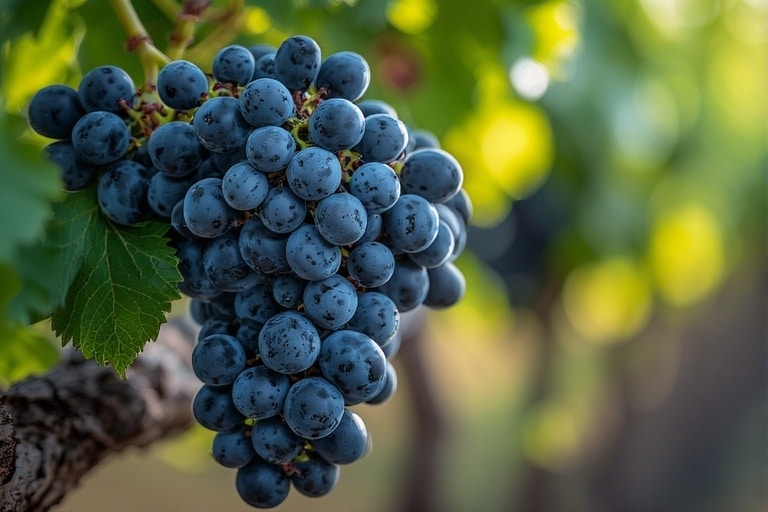
French Roots and Early History Pinot Noir is one of the oldest domesticated Vitis vinifera varieties. It has been cultivated in Burgundy for centuries, possibly dating back to Roman times. Its name derives from the French words pin (pine) and noir (black), referencing the grape cluster’s tight, conical shape, which resembles a pinecone.
The Prolific Family Pinot Noir is genetically unstable and prone to mutation, resulting in a large number of natural variations, or clones. This instability is why it has several close genetic cousins, including the white grape Pinot Blanc and the pink-skinned Pinot Gris. It is also one of the parent grapes of both Chardonnay and Gamay.
The Burgundian Icon While grown successfully in numerous cool-climate regions globally, its spiritual home remains the Côte d’Or in Burgundy (Côte de Beaune and côte de Nuits). Here, it is meticulously separated into hundreds of tiny Climats (vineyard plots) that showcase the subtle, precise differences in soil and aspect, giving rise to its legendary status.
Characteristics of Pinot Noir Thin Skin, Tight Clusters, and Cool-Climate Preference
Vigor and Ripeness
Pinot Noir is an early-budding and early-ripening variety, making it highly susceptible to spring frosts. It thrives exclusively in cool, temperate climates, as excessive heat rapidly diminishes its delicate aromatics and essential high acidity. Its thin skin also makes it highly vulnerable to rot and disease in the vineyard, necessitating extreme care.
Thin Skin and Low Color/Tannin
The Pinot Noir berry has a very thin skin, which results in wines that are notably pale or translucent in color, a characteristic sign of its varietal purity. This thin skin also contributes to naturally low levels of tannin, giving the wine a soft, silky, and elegant mouthfeel.
Acidity and Soil Preference
Pinot Noir naturally retains a vibrant, high acidity, providing the essential structure for balance and ageability. In Burgundy, it famously thrives on the calcareous clay and limestone soils of the Côte d’Or. These poor, well-drained soils limit the vine’s vigor and promote the concentration of complex, high-quality fruit.
Flavory profile of Pinot Noir High-Toned Fruit, Silky Texture, and Savory Depth
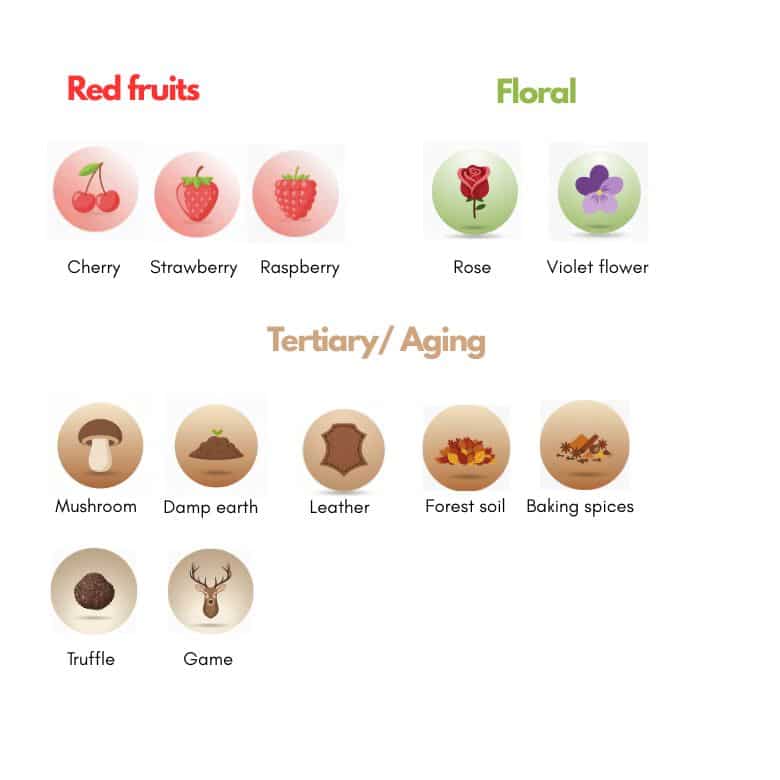
Pinot Noir is prized for its high-toned aromatics and its unique combination of fruit, earth, and savory elements.
Primary Flavors (High-Toned):
Red Fruits:
Distinctive notes of bright red cherry, strawberry, raspberry, and cranberry.
Floral:
Often displays high-toned aromas of violet and rose petals.
Tertiary Flavors (Evolved/Aged):
Earthy/Savory:
When young, often displays notes of mushroom, damp earth, forest floor, and baking spice. With age, this evolves into complex notes of leather, truffle, game, and sous-bois (undergrowth).
Structure:
Body:
Light to Medium-Bodied, characterized by its ethereal, delicate, and silky mouthfeel.
Acidity:
High (Vibrant), providing freshness and lift.
Tannins:
Low to Medium-Low, fine-grained, and silky, contributing to its smooth finish.
Aging Potential:
High-quality Burgundy and top examples from Oregon and California possess the structure (acidity) and concentration to age gracefully for 5 to 15+ years, developing complex secondary and tertiary characteristics.
The Impact of Winemaking on Pinot Noir Style
Pinot Noir winemaking focuses primarily on extraction techniques and the use of whole clusters to manage its delicate flavor and low natural color.
Whole Cluster Fermentation: Winemakers often include a percentage of the grape stems (whole clusters) during fermentation. This technique adds structural elements—more tannins and a savory, often herbaceous or “forest floor” complexity—to wines that are otherwise naturally light-bodied and low in tannin.
Oak Treatment (A Delicate Touch): While some oak is used (primarily French), it must be handled with care. New oak is used sparingly, often in used or larger barrels, because too much oak will easily overwhelm Pinot Noir’s delicate, red-fruited aromatics. Oak contributes subtle notes of vanilla, clove, and toast, enhancing the wine’s texture and aging capacity.
Extraction Management: Given its thin skin, winemakers must be gentle during fermentation. Over-extraction can lead to bitter, harsh tannins. Techniques like pigeage (punching down the cap) must be done delicately to maintain the wine’s characteristic soft texture.
Regions for Pinot Noir The World's Great Cool-Climate Zones
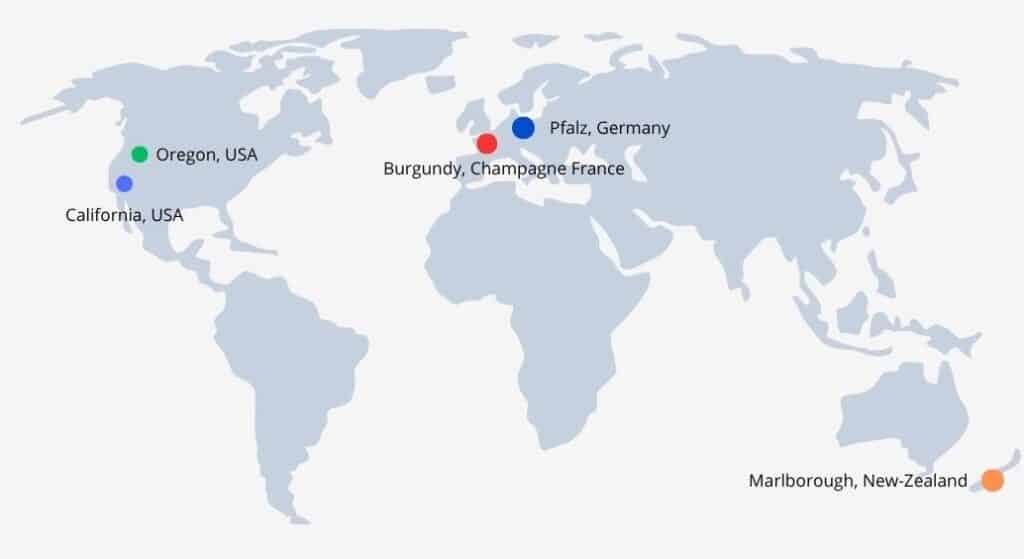
France (Burgundy – Côte d’Or): The Pinnacle
Côte de Nuits & Côte de Beaune:
The heartland, producing wines of unparalleled complexity, showing precision, minerality, and incredible aging potential (e.g., Gevrey-Chambertin, Vosne-Romanée).
USA (Oregon – Willamette Valley): The New World Success
A cool, coastal climate producing elegant, often slightly earthier and firmer Pinot Noir that mirrors the structure of classic Burgundy.
Other Notable Regions:
USA (California – Sonoma Coast/Russian River Valley):
Cool, fog-influenced regions producing richer, fruit-forward, but still elegant wines.
New Zealand (Central Otago, Marlborough):
Produces powerful, concentrated, and vividly fruit-driven examples.
Germany (Pfalz, Baden – Spätburgunder):
Produces high-quality, often savory, and structured examples that are gaining global recognition.
Champagne (France):
Essential component of the world’s finest sparkling wines, providing body, structure, and finesse (especially in the ‘Blanc de Noirs’ style).
Food pairing and service
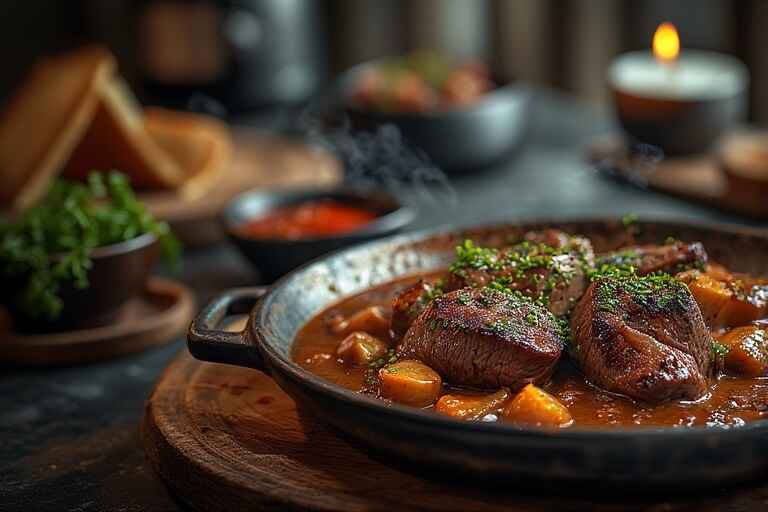
“What grows together goes together”. That’s true for beef bourguignon and Pinot noir
Pinot Noir’s high acidity, low tannin, and delicate structure make it arguably the most food-friendly red wine in the cellar, pairing well with a vast array of cuisines.
Ideal Food Pairings: Pinot Noir is famous for its versatility. It is excellent with roasted poultry (chicken, duck, and Thanksgiving turkey), game birds, medium-rich fish (salmon, tuna), mushroom-based dishes, and complex French cuisine (like Beef Bourguignon). Its earthiness complements savory spices, while its acidity cuts through richness.
Avoid: Extremely heavy, rare red meat dishes that require massive tannin to break down (e.g., a well-marbled ribeye steak). Also, very spicy foods can overwhelm its delicacy.
Service Temperature: Pinot Noir benefits significantly from a slight chill. Serve cool, ideally between 14∘C and 17∘C (57∘F–63∘F), to enhance its freshness, acidity, and delicate aromatics
Challenges and Future Outlooks
Pinot Noir continues to capture the imagination of winemakers and collectors alike, driven by its association with quality and rarity.
The Climate Challenge: As a cool-climate specialist, Pinot Noir faces increasing challenges due to global warming, which can strip the wine of its essential acidity and elegance, leading to overly ripe, ‘jammy’ flavors. Winemakers are constantly seeking cooler sites and higher elevations.
Focus on Specificity: The trend is toward ultra-precise winemaking that highlights the differences between small parcels and clones, reinforcing the concept that terroir is paramount, especially in New World regions.
Rising Global Demand: High demand, combined with the grape’s difficulty to cultivate, keeps prices high, particularly for top Burgundy. This is driving consumer interest toward high-quality, value-driven alternatives from Oregon, Germany, and New Zealand.
Ready to Explore the Elegance of Pinot Noir? Discover Our Tours! Don't just read about Pinot Noir—come and taste the silk!
You’ve learned about Pinot Noir’s delicate structure, its complex red fruit and savory earth notes, and its unique story as the globe’s most sensitive grape. Now, it’s time to experience the most sophisticated red wine in the cellar!
We offer exclusive wine tours focused on the leading Pinot Noir regions, where you can walk the sacred limestone slopes of the Côte d’Or and the volcanic hills of the Willamette Valley. Explore the delicate art of whole-cluster fermentation in the winery, and participate in comparative tastings that reveal how this translucent red transitions from youthful elegance to profound, aged complexity.
Our Pinot Noir-focused tours are designed for those who appreciate subtlety, elegance, and the sublime expression of a grape truly connected to the land. Prepare to fall in love with the heartbreak grape.