

A Guide to Oceania's Wines: The New World Down Under
Oceania’s winemaking is a vibrant story of innovation, unique geography, and a bold, modern approach that has placed it firmly on the global wine map. From the sun-drenched, ancient soils of Australia to the cool, maritime-influenced islands of New Zealand, the continent is home to an incredible array of terroirs and wine styles. Oceania is celebrated for its distinctive fruit-forward wines, pioneering screw-cap closures, and a winemaking spirit that constantly pushes boundaries.
History and Identity of Oceania's Wines
The history of winemaking in Oceania is one of a rapid rise from colonial beginnings to global acclaim. It’s a story defined by a focus on climate, a response to geographical challenges, and a swift embrace of modernity that has shaped its unique identity.
The Colonial Era and Early Foundations (18th–19th Century)
The very first vines in Oceania were planted not for commercial gain, but to support the newly established colonies. In 1788, the first fleet brought grapevines to Australia, with early plantings in Sydney Cove proving challenging due to the hot, humid climate. The first successful commercial vineyard, however, was established by John Macarthur in the early 19th century. Early Australian viticulture was a slow process of trial and error, with settlers experimenting with various European Vitis vinifera varieties to find those best suited to the continent’s harsh, arid conditions. In contrast, New Zealand’s winemaking history began in 1819 with the first vine plantings by Samuel Marsden, but it wasn’t until the 19th century that winemaking efforts began to gain momentum, primarily led by Croatian immigrants and French missionaries. Despite these early efforts, both countries struggled to establish a strong commercial industry, with a focus on fortified wines and bulk production dominating the landscape for over a century.
A Century of Fortified Wines and Challenges (19th–20th Century)
The late 19th and early 20th centuries were a period of stasis for Oceania’s wine industry. In Australia, the focus remained on high-volume production of fortified wines like Sherry and Port to meet local demand. The industry was plagued by challenges, including the phylloxera louse which, while less widespread than in Europe, still devastated key regions like Victoria. World Wars and economic depressions further hindered growth. New Zealand’s industry faced similar struggles, with a lack of viticultural knowledge and a strong preference for beer over wine among the population. For decades, the industry was defined by high-yielding, low-quality hybrid grapes and a focus on producing fortified wines and simple table wines.
The Modern Renaissance (1970s–Present)
The true renaissance of Oceania’s winemaking began in the 1970s, a period marked by a dramatic shift toward quality and a new sense of regional identity. Australia’s pivotal moment came with a renewed focus on single-varietal wines and a move away from fortified styles. Winemakers embraced modern technology, such as stainless steel fermentation and temperature control, and began to champion their unique terroirs. The turning point for New Zealand was the global recognition of its Sauvignon Blanc in the 1980s. The distinct, vibrant style of Marlborough Sauvignon Blanc became an international sensation, putting the country on the world map and inspiring a new generation of winemakers. Today, both Australia and New Zealand are global leaders in innovation, with a focus on sustainable winemaking, unique expressions of classic varieties, and a fearless approach to style.
Climate and Soil: The Influence on Oceania's Wines
The unique character of Oceania’s wines is a direct result of its diverse and often extreme geography and climate. From the ancient, heat-retaining soils of Australia to the cool, volcanic terrain of New Zealand, each region offers a distinct set of conditions that directly shape its wine styles.
Climate: A Tale of Two Islands
Oceania’s climate is a study in contrasts, from the vast, arid interior of Australia to the temperate, maritime-influenced islands of New Zealand. These climatic variations are the single most important factor in determining the style of wine produced.
The Pacific Ocean and Maritime Influence:
New Zealand’s climate is heavily influenced by the Pacific Ocean. The cool, maritime climate provides a long, slow ripening period, which is ideal for cool-climate grapes like Pinot Noir and Sauvignon Blanc. The high amount of rainfall, cool evenings, and long sunlight hours allow grapes to develop vibrant acidity and intense aromatics. In regions like Marlborough, the combination of cool temperatures and intense sunlight creates the signature pungent, zesty character of its Sauvignon Blanc.
Continental and Diurnal Shift:
Australia’s climate is dominated by its vast landmass, with many key wine regions experiencing a continental climate with hot, dry summers. The most successful regions, however, are often moderated by elevation or proximity to the coast, which provides a crucial diurnal temperature shift—the difference between hot daytime and cool nighttime temperatures. This shift is vital for preserving the grapes’ natural acidity and achieving a balance between ripe fruit flavors and freshness. Regions like the Barossa Valley and McLaren Vale benefit from this shift, allowing them to produce bold, fruit-forward wines like Shiraz without losing their structure.
Oceania Soils: A Mosaic of Geological History
Oceania’s geology is incredibly diverse, with a wide range of soil types that contribute to the unique character of its wines.
Ancient and Alluvial Soils:
Australia’s most famous regions, like the Barossa Valley, are home to some of the world’s most ancient soils. These pre-Cambrian soils, often a mix of red clay, ironstone, and sandy loam, are low in nutrients, forcing the vines to struggle and resulting in low yields of highly concentrated grapes. This is a key factor in the powerful, concentrated character of Barossa Shiraz. In regions like the Clare Valley, the mix of ancient slate and limestone soils imparts a distinct mineral character to its Riesling.
Glacial and Volcanic Soils:
New Zealand’s soils are a mix of ancient and relatively young geological formations. The soils in Central Otago, on the South Island, are a mix of glacial soils (schist) and alluvial deposits, which are incredibly well-drained and low in nutrients. This forces the vines to struggle, resulting in low yields of highly concentrated grapes. The schist soils impart a distinct mineral and earthy character to the region’s famous Pinot Noir. In contrast, regions like Hawke’s Bay on the North Island have ancient river gravels and volcanic soils, which are ideal for producing a wide range of red and white varieties.
Understanding Oceania's Wine Hierarchy and Appellations
While less rigid than European systems, Australia and New Zealand have established their own frameworks for defining and regulating wine production, focusing on geographical origin and quality.
Australia: Geographical Indications (GIs)
Australia operates on the Geographical Indications (GIs) system, which is the cornerstone of its wine hierarchy. A GI is a legally defined grape-growing region that is distinguished by unique geographical features such as climate, soil, and elevation. Unlike European systems, GIs primarily classify the place of origin, not the quality or style of the wine. This gives winemakers significant creative freedom.
To use a GI on a wine label, at least 85% of the grapes must be grown within that GI’s boundaries. Australia’s GIs are organized in a three-tiered hierarchy:
Zones:
Large, multi-regional areas (e.g., South Australia).
Regions:
Smaller, more specific areas within a zone (e.g., Barossa Valley).
Sub-regions:
The smallest, most specific areas within a region, highlighting a distinct terroir (e.g., Eden Valley).
This nested system allows for a progressively more precise representation of a wine’s origin, from broad regional blends to single-vineyard bottlings.
New Zealand: Geographical Indications (GIs)
New Zealand also operates on a Geographical Indications system, which defines and protects the names of its wine regions. The system is designed to give consumers confidence in the origin and authenticity of the wine. New Zealand’s GIs are legally defined by geographical boundaries and are based on the principle of a “sense of place.” To use a GI on a wine label, 85% of the grapes must be from that area. The system does not dictate which grapes must be grown or how the wine must be made.
The GIs are broken down into a hierarchy of broad regions (e.g., Marlborough) and smaller sub-regions (e.g., the Wairau Valley within Marlborough), which are distinguished by their unique microclimates and soil types. This system has been crucial for helping consumers understand and appreciate the diverse range of wines produced across the country.
Oceania's Most Important Grape Varieties
Oceania’s winemaking is a blend of international varieties and its own unique expressions, each with a distinct style shaped by the continent’s diverse terroirs.
Oceania's Most Important White Grape Varieties
Sauvignon Blanc
The flagship grape of New Zealand. The style from Marlborough is world-famous for its vibrant, pungent character, with flavors of passionfruit, gooseberry, and a distinct herbal, grassy note. In Australia, regions like the Adelaide Hills produce a more citrus-driven, elegant style.
Chardonnay
A key white grape in both Australia and New Zealand. Australian Chardonnay from regions like the Yarra Valley and Margaret River is known for its elegant, balanced style, with flavors of citrus, stone fruit, and a subtle creamy texture. New Zealand’s Chardonnay is often more mineral-driven and refined, with crisp acidity and a focus on purity of fruit.
Pinot Gris
A rising star in New Zealand, where it produces a range of styles. The wines are often light-bodied and refreshing, with flavors of pear, apple, and a hint of spice. It’s an excellent food wine and a great alternative to Sauvignon Blanc.
Riesling
A signature grape in Australia, particularly in the Clare Valley and Eden Valley. Australian Riesling is known for its bone-dry, searingly acidic style in its youth, which develops beautiful notes of citrus, toast, and honey with age. The wines are incredibly age-worthy and are a testament to the unique terroir of the region.
Oceania's Most Important Red Grape Varieties
Syrah (Shiraz)
The most important red grape in Australia, where it has found its true home. Australian Shiraz is known for its bold, powerful, and fruit-forward style, with notes of blackberry, plum, and a hint of black pepper and chocolate. The Barossa Valley is the spiritual home of Australian Shiraz, producing some of the world’s most concentrated and age-worthy examples.
Pinot Noir
A flagship grape in New Zealand, particularly in the regions of Central Otago and Marlborough. New Zealand Pinot Noir is celebrated for its elegance, complexity, and bright acidity, with flavors of red cherry, raspberry, and a distinct earthy, savory character. It is often compared to the best examples from Burgundy. In Australia, the Yarra Valley produces a more delicate and nuanced style.
Cabernet Sauvignon
A key red grape in Australia, particularly in regions like Coonawarra and Margaret River. Australian Cabernet Sauvignon is known for its powerful structure, fine-grained tannins, and classic flavors of blackcurrant, mint, and a hint of cedar and spice. It is often blended with Merlot to create Bordeaux-style blends.
Grenache
A rising star in Australia, particularly in the Barossa Valley and McLaren Vale. Australian Grenache is known for its bright red fruit, spicy notes, and elegant structure. It is a key component of the classic GSM blend (Grenache, Shiraz, Mourvèdre), where it adds a layer of perfume and freshness.
Oceania's Wine Countries
The Oceania wine industry is dominated by two key countries: Australia and New Zealand. Each has its own unique history, climate, and viticultural focus, which has led to the production of a diverse array of world-class wines.
Australia: A Land of Diverse Terroirs
Australia is a global powerhouse, producing a staggering volume of wine from regions that range from cool, coastal havens to hot, arid inland areas. It is the world’s fifth-largest wine producer, with vineyards in every state. The industry is defined by its ability to master a wide range of climates and its pioneering spirit, particularly with its signature grape, Shiraz. The Australian wine hierarchy, based on Geographical Indications (GIs), helps consumers navigate the country’s vast and diverse wine regions.
South Australia:
The beating heart of the Australian wine industry, home to some of the country’s oldest vines and most iconic regions. The Barossa Valley is a sun-drenched valley with ancient soils that produce some of the world’s most powerful and concentrated Shiraz. Here, old-vine Shiraz is a national treasure, with some vineyards dating back to the 19th century. Just to the north, the Clare Valley is a cooler, high-altitude region famous for its bone-dry, age-worthy Riesling. In the south, McLaren Vale is a hotbed of innovation, renowned for its old-vine Grenache and powerful, yet elegant, Shiraz.
Western Australia:
Though it accounts for a smaller portion of the country’s total production, Western Australia is a leader in quality. The Margaret River region, a beautiful coastal area, has a consistent maritime climate that is ideal for producing a wide range of elegant and age-worthy wines. It is world-renowned for its exceptional Cabernet Sauvignon, which is often compared to the best from Bordeaux, and its complex, textural Chardonnay.
Victoria:
A diverse state with a mosaic of wine regions, from the cool, rolling hills of the Yarra Valley to the hot, expansive Riverland. The Yarra Valley is a premier cool-climate region, celebrated for its elegant Pinot Noir and world-class Chardonnay and sparkling wines. The region’s unique climate, with its cool nights and moderate temperatures, allows for the slow ripening of grapes, which in turn helps to retain crucial acidity and develop complex flavors.
New Zealand: The Sensation of Cool Climate Viticulture
New Zealand’s wine industry is a modern success story, having risen from obscurity in the 1980s to global fame. Its reputation is built on its unique cool, maritime climate, which allows for the production of vibrant, high-acidity wines that are full of character and flavor. New Zealand has a strong focus on quality over quantity and is a world leader in sustainable viticulture.
Marlborough:
Located on the South Island, this is the country’s largest and most famous wine region. It’s the undisputed home of New Zealand Sauvignon Blanc, which has become a global phenomenon. The region’s unique combination of cool climate, intense sunlight, and well-drained alluvial soils creates the signature vibrant, pungent style of its Sauvignon Blanc, with its tell-tale notes of passionfruit and gooseberry.
Central Otago:
The world’s most southerly wine region, located on the South Island. It has a continental climate with a significant diurnal temperature shift, which is ideal for ripening Pinot Noir. The region’s Pinot Noir is celebrated for its elegant, earthy, and complex character, with bright acidity and flavors of red cherry and raspberry. The unique schist soils and high altitude contribute to the wine’s distinct minerality and structure.
Hawke’s Bay:
Located on the North Island, this is one of New Zealand’s warmest and driest regions. It is well-known for producing high-quality Bordeaux-style blends (Cabernet Sauvignon and Merlot) and Syrah. The region’s ancient river gravels and volcanic soils, along with its long, warm growing season, are perfect for ripening these red varieties, resulting in wines with excellent structure and flavor concentration.
The Art of Pairing: Oceania's Wine and Gastronomy
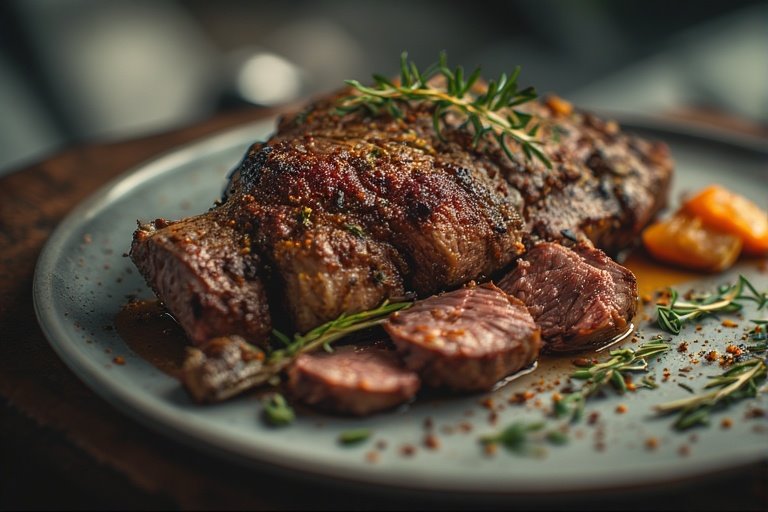
Czntral Otago Oinot Noir and rostaed lamb: perfect match
Oceania’s cuisine is a vibrant tapestry of fresh seafood, local produce, and diverse international influences. This culinary diversity provides a wide range of pairing opportunities for the continent’s equally diverse wines. The guiding principle for pairing is to match the bold flavors of the food with the expressive character of the wine, creating a harmonious and balanced experience.
Pairing with White Wines: The Crisp and the Refreshing
Sauvignon Blanc and New Zealand Oysters:
The quintessential New Zealand pairing. The zesty acidity and vibrant citrus notes of a Marlborough Sauvignon Blanc are a perfect match for the briny, fresh flavors of a freshly shucked oyster.
Riesling and Spicy Asian Dishes:
The crisp acidity and off-dry character of an Australian Riesling are a great choice for spicy dishes. The wine’s notes of lime and green apple complement the flavors of spicy Asian cuisine, while its touch of sweetness provides a soothing counterpoint to the heat.
Chardonnay and Grilled Fish:
The elegant, refined character of a Margaret River Chardonnay is a perfect match for a simply grilled white fish. The wine’s crisp acidity and subtle stone fruit notes complement the delicate flavors of the fish without overpowering it.
Pairing with Red Wines: The Hearty and the Bold
Shiraz and Australian Barbecue:
The bold, spicy, and fruit-forward character of a Barossa Valley Shiraz is an excellent partner for barbecue. The wine’s notes of black pepper, blackberry, and cinnamon stand up to the smoky, savory flavors of grilled meats.
Pinot Noir and Lamb:
The elegant, earthy, and red fruit-driven character of a Central Otago Pinot Noir is a classic pairing for roasted lamb. The wine’s bright acidity and delicate structure cut through the richness of the meat, creating a balanced and harmonious pairing.
Cabernet Sauvignon and Grilled Steak:
The powerful, structured, and age-worthy character of a Coonawarra Cabernet Sauvignon is a perfect match for a juicy, grilled steak. The wine’s firm tannins cut through the fat of the steak, while its blackcurrant and mint notes complement the savory char.