

Nort America Wine: A Comprehensive Guide of the New World
North America’s winemaking landscape is a story of incredible diversity, spanning three countries and countless microclimates. From the sun-drenched valleys of California and Mexico to the cool, oceanic vineyards of the Pacific Northwest and the cold-weather regions of Canada, the continent is home to a vast array of terroirs and wine styles. North American wine is celebrated for its boldness, innovation, and ability to produce world-class wines from both international and indigenous grape varieties.
History and Identity of North American Wine
The history of North American winemaking is one of resilience, a struggle to overcome environmental challenges, and a modern renaissance that has placed the continent at the forefront of the global wine industry. It’s a story told in three distinct chapters: the early struggles of the colonial era, a century of challenges that nearly wiped out the industry, and a modern rebirth that put North American wine on the world stage.
The Colonial Era and Early Foundations (16th–18th Century)
The very first seeds of North American viticulture were not planted by English settlers on the East Coast, but by Spanish conquistadors in what is now Mexico. In the mid-16th century, they brought European Vitis vinifera vines with them, establishing the first wineries in the Americas. However, the first successful vineyards in the modern United States were planted by Franciscan missionaries in California in the late 18th century, with the Mission grape (a high-yielding, resilient variety) being the most common. These early efforts were primarily for religious ceremonies and local consumption.
On the other hand, English and French colonists in the eastern United States and Canada faced an entirely different set of challenges. The climate was harsh, with brutally cold winters and humid, disease-ridden summers that proved hostile to the delicate European Vitis vinifera vines. The vines were also susceptible to phylloxera, a native North American root louse that devastated European vineyards later in the 19th century. In response to these challenges, settlers turned to native North American grape species, such as Vitis labrusca (which gave us Concord and Catawba grapes) and Vitis rotundifolia (Muscadine). These native grapes were naturally resistant to pests and diseases and were better suited to the environment. While the wines produced from these grapes were often rustic and “foxy” in flavor, they were the backbone of the nascent North American wine industry for centuries.
A Century of Challenges (19th–20th Century)
he 19th century was a period of both progress and profound difficulty for the North American wine industry. A wave of European immigration, with German, Italian, and French winemakers bringing their viticultural knowledge and a diverse array of Vitis vinifera varieties, helped establish California as a major winemaking center. Vineyards flourished, and the industry began to gain momentum. However, this progress was nearly wiped out twice.
First, by the phylloxera louse. This insidious insect, which had plagued eastern American vines for centuries, began to wreak havoc on the un-grafted European rootstocks of California’s vineyards in the 1880s. The louse spread rapidly, and by the turn of the century, it had decimated vineyards across the continent. Winemakers were forced to undertake the long and arduous process of replanting on disease-resistant American rootstocks, a technique that had been developed in Europe.
Second, the onset of Prohibition in the United States in 1920 brought the commercial wine industry to a near halt. Wineries were shut down, vineyards were ripped out, and winemaking knowledge was lost. For 13 years, the only wine produced was for home consumption or religious purposes. It was not until the repeal of Prohibition in 1933 that the industry could begin its slow and arduous recovery. In Canada and Mexico, the wine industry faced its own struggles during this period, with a focus on high-volume bulk production and a lack of investment in quality.
he Modern Renaissance (1970s–Present)
The true renaissance of North American wine began in the 1970s, a period of renewed focus on quality and a growing sense of regional identity. A pivotal moment was the Judgment of Paris in 1976, a blind tasting where Californian Cabernet Sauvignon and Chardonnay beat their prestigious French counterparts. This event shattered the myth that world-class wines could only be produced in Europe and brought a new level of confidence and investment to North American winemakers. It inspired a new generation of winemakers to explore the unique terroirs of the continent.
This modern era saw a dramatic shift towards quality. Wineries embraced modern technology, such as stainless steel fermentation tanks and temperature control, and began to focus on sustainable viticulture. The United States, particularly California, became a global powerhouse, while Canada and Mexico began to gain recognition for their unique and high-quality wines. Today, North America is a global leader, with a focus on innovation, terroir exploration, and sustainable winemaking practices. From the bold, fruit-forward wines of California to the elegant, cool-climate wines of Oregon and Canada, the continent is a living testament to the resilience and innovation of its winemakers.
Climate and Soil: The Influence on North American Wines
The diversity of North American wines is a direct result of the continent’s varied and dramatic geology and climate. From the ancient volcanic soils of Oregon to the coastal fog of California and the icy winters of Canada, each region provides a unique set of conditions that directly shape the style and character of its wines.
Climate: A Tale of Extremes
North America’s climate is one of extremes, from the hot, arid deserts of Mexico and the American Southwest to the frigid winters of Canada. These climatic variations are the single most important factor in determining what grapes can be grown and what style of wine they produce.
Coastal and Maritime Influence:
The Pacific Ocean is a dominant climatic influence for vineyards in California, Oregon, and British Columbia. The cold California Current off the coast of California creates a blanket of cool, morning fog that moderates the hot, inland temperatures, particularly in regions like Napa Valley and Sonoma County. The fog acts as a natural air conditioner, slowing down the ripening process, allowing grapes to develop complex flavors and aromas while retaining crucial acidity. In Oregon and British Columbia, the proximity to the Pacific Ocean provides a cool, maritime climate with a high amount of rainfall, which is ideal for cool-climate grapes like Pinot Noir and Chardonnay. The cool, wet winters and warm, dry summers with long daylight hours allow for a long, slow ripening period, which contributes to the elegance and finesse of the wines.
Continental and Diurnal Shift:
Inland regions, such as Washington State and Ontario, have a continental climate with hot, dry summers and cold, snowy winters. Here, the key to quality wine is the significant diurnal temperature shift—the difference between hot daytime and cool nighttime temperatures. During the day, the intense sunlight allows grapes to develop sugar and ripe fruit flavors. At night, the cold temperatures slow down respiration, preserving the grapes’ natural acidity, which is vital for balance, structure, and a fresh character in the finished wine. This is particularly important for bold, fruit-forward grapes like Cabernet Sauvignon and Syrah in Washington State.
High Altitude and Desert Influence:
In Mexico and parts of the American Southwest, the climate is hot and dry, but winemaking is possible due to the influence of high altitude. Vineyards are planted at elevations of 3,000 to 7,000 feet, where the cooler temperatures and intense sunlight provide ideal conditions for viticulture. The high altitude allows for a significant diurnal temperature shift, which is crucial for preserving the acidity and freshness of the grapes. The arid, desert-like conditions also reduce the risk of fungal diseases, allowing for a more natural approach to winemaking.
North America Soils: A Mosaic of Geological History
North America’s geology is incredibly diverse, with a wide range of soil types that contribute to the unique character of its wines.
Volcanic and Alluvial Soils:
The soils of Napa Valley are a mix of ancient volcanic and alluvial soils, which are a result of the region’s dramatic geological history. The volcanic soils are low in nutrients and well-drained, forcing the vines to struggle, resulting in low yields of highly concentrated grapes. The alluvial soils, a product of ancient riverbeds, are rich in minerals and provide a crucial source of nutrients for the vines. This combination of soils gives Napa Cabernet Sauvignon its powerful structure and rich, concentrated flavor. In Oregon, the soils are a mix of ancient volcanic soils (Jory) and sedimentary soils (Willakenzie), which are a result of the region’s volcanic past. The Jory soils are a key component of the Willamette Valley’s Pinot Noir, imparting a distinct earthiness and a fine-grained tannin structure.
Glacial and Sedimentary Soils:
In Washington State, the vineyards are planted on a mix of glacial and sedimentary soils, which are a result of the massive Missoula Floods that occurred at the end of the last ice age. The soils are a mix of sand, silt, and loam, and they are incredibly well-drained, forcing the vines to struggle. The low nutrient content of the soils results in low yields of highly concentrated grapes, which is a key factor in the powerful, concentrated character of Washington’s wines. The soils also impart a distinct mineral character to the wines, particularly the Riesling and Syrah.
Limestone and Clay Soils:
In Mexico‘s wine regions, the soils are a mix of limestone and clay, which are a result of the region’s ancient geological history. The limestone soils are a key factor in the elegant and refined character of the wines, particularly the Cabernet Sauvignon and Chardonnay. The soils are also well-drained, which is important in the warm, dry climate of the region.
Understanding North America wine hierarchy and Appellations
While not as rigidly defined as the European appellation systems, North America’s wine hierarchy is built on a foundation of geographical designation, with each country employing its own set of regulations to ensure quality and origin. The focus is more on consumer information and freedom for winemakers rather than strict rules about grape varieties and winemaking methods.
United States: American Viticultural Areas (AVAs)
The United States operates on the American Viticultural Area (AVA) system, which is the cornerstone of its wine hierarchy. An AVA is a federally-recognized, delimited grape-growing region distinguished by unique geographical features, such as climate, soil, and elevation. Unlike European systems like France’s AOC (Appellation d’Origine Contrôlée), the AVA system is a classification of place, not of quality or style. It doesn’t dictate which grapes must be grown or how the wine must be made. This gives producers immense creative freedom.
To use an AVA on a wine label, at least 85% of the grapes must be grown within that AVA’s boundaries. This rule allows for a “sense of place” to be communicated to consumers without constraining the winemaker. AVAs can range in size from vast multi-state regions like the Columbia Valley AVA (spanning Washington and Oregon) to tiny, single-vineyard areas. Many of the most famous AVAs are nested within larger ones. For example, the Rutherford AVA and Oakville AVA are both sub-appellations of the larger Napa Valley AVA, which itself is a sub-appellation of the North Coast AVA. This nesting of AVAs allows for a progressively more specific and precise representation of a wine’s origin.
Canada: Vintners Quality Alliance (VQA)
Canada’s wine hierarchy is primarily governed by the Vintners Quality Alliance (VQA) system, which operates in the key wine-producing provinces of Ontario and British Columbia. The VQA system is more prescriptive than the American AVA system. It’s a regulatory body that guarantees the origin, authenticity, and quality of Canadian wines.
For a wine to be VQA-certified, it must meet a series of strict standards. These include being made from 100% Canadian-grown grapes from a specific designated area, adhering to regulated grape varieties and sugar levels at harvest, and passing a sensory evaluation by a tasting panel. The VQA system also establishes a tiered structure of appellations, with broad provincial or regional designations at the top, and smaller, more specific sub-appellations below. This structure helps consumers understand the geographical origin and expected style of the wine. A key aspect of VQA is its regulation of icewine, a specialty of Canada, with strict rules governing how it’s made to ensure its quality and authenticity.
Mexico: An Emerging Landscape
Mexico’s wine industry, with a history dating back to the Spanish conquest, is undergoing a modern renaissance. Unlike the United States and Canada, Mexico does not currently have a formal, country-wide appellation system or a similar hierarchical structure. The focus is more on regional identity and producer-specific quality.
The country’s winemaking is concentrated in a few key regions, most notably Baja California, often referred to as “the Napa Valley of Mexico.” Other important regions include Coahuila, home to North America’s oldest winery, and Querétaro. Wineries in these regions highlight their wines’ origin by labeling them with the regional name, such as “Valle de Guadalupe” or “Valle de Parras,” relying on the reputation of the region and the individual producer to convey quality. While there is no formal government-mandated hierarchy, the informal reputation of these regions and their top wineries serves as a de facto quality classification for consumers.
North America's Most Important Grape Varieties
North American winemaking is a blend of international varieties and its own unique contributions, each with a distinct style shaped by the continent’s diverse terroirs.
North America's Most Important white Grape Varieties
Chardonnay
The most planted white grape in North America. Californian Chardonnay is famously known for its rich, buttery, and oaked style, with flavors of ripe pear, pineapple, and a creamy, buttery texture from malolactic fermentation. The cool, coastal regions of Oregon and Canada, however, produce a completely different style: a lean, mineral-driven, and unoaked wine with bright acidity and flavors of green apple, citrus, and a subtle stone-fruit character.
Sauvignon Blanc
A key grape in the cool, coastal regions of California and Canada. North American Sauvignon Blanc is known for its crisp acidity and vibrant flavors of grapefruit, passionfruit, and grassy notes. The wines from California’s cooler regions, like the Russian River Valley, are often a bit richer and more textural, while the wines from Canada’s Okanagan Valley and Niagara Peninsula are lean, crisp, and refreshing.
Riesling
A versatile grape that is particularly successful in the cool, cold-weather regions of Washington and New York. North American Riesling ranges from bone dry and mineral-driven to intensely sweet and complex. The wines from Washington’s Columbia Valley are often bone dry and have a distinct mineral and stone-fruit character, while the wines from New York’s Finger Lakes region are known for their bright acidity, flavors of green apple and lime, and a beautiful purity.
Pinot Gris
A key grape in the cool, coastal regions of Oregon and British Columbia. North American Pinot Gris is known for its crisp acidity, and flavors of pear, apple, and a hint of spice. The wines are often light-bodied and refreshing, making them a perfect food wine.
North America's Most Important red Grape Varieties
Pinot Noir
A key grape in the cool, coastal regions of Oregon, California, and Canada. North American Pinot Noir is known for its expressive fruit, earthy notes, and elegance. The Oregon version is celebrated for its elegance and complexity, with bright acidity and flavors of red cherry, raspberry, and a distinct earthy, forest-floor character. California’s Pinot Noir from the cooler regions, like the Russian River Valley, is often richer and more fruit-forward, with flavors of black cherry and plum, and a hint of cola and spice. Canadian Pinot Noir, particularly from the Niagara Peninsula, is light-bodied and delicate, with a focus on red fruit and a mineral backbone.
Merlot
A widely planted red grape that produces a range of styles across North America. Washington State’s Merlot is a powerhouse, known for its powerful, structured, and age-worthy character, with notes of blackberry, plum, and a touch of chocolate and coffee. Californian Merlot is often softer, more approachable, and fruit-driven, with flavors of plum and red berry. It is a key blending grape in Bordeaux-style blends, where it adds a layer of softness and fruit to the more structured Cabernet Sauvignon.
Zinfandel
A grape with a long history in California, where it has found its true home. Zinfandel is known for its bold, spicy, and jammy character, with high alcohol and a wide range of styles. The wines are often full-bodied, with notes of black pepper, blackberry, cinnamon, and a hint of chocolate. It is an ideal food wine, with its rustic, spicy character standing up to a wide range of bold, savory dishes.
Syrah
A rising star in North America, with a diverse range of styles. Washington State’s Syrah is a powerhouse, known for its powerful, concentrated, and savory character, with notes of dark fruit, olive, and a distinct smoky, meaty undertone. Californian Syrah, particularly from the Central Coast, is often more fruit-forward and approachable, with flavors of blackberry and plum, and a hint of spice. It is a key component of many modern Rhône-style blends, where it adds a layer of spice and complexity.
Bordeaux and Rhône blends
North American winemakers are increasingly focusing on producing high-quality blends, with a focus on Bordeaux-style blends (Cabernet Sauvignon, Merlot, etc.) and Rhône-style blends (Syrah, Grenache, Mourvèdre). These blends are a testament to the winemakers’ ability to master the art of blending, creating complex and harmonious wines that showcase the unique terroir of their regions.
North America Wine countries
The North American wine industry is dominated by three key countries: the United States, Canada, and Mexico. Each country has its own unique history, climate, and viticultural focus.
United States: The Global Powerhouse
The United States is the fourth-largest wine producer in the world, with winemaking in all 50 states. However, the industry is dominated by three key states: California, Oregon, and Washington. The American Viticultural Area (AVA) system is a key part of American wine law, defining geographically distinct wine regions.
California:
The heart of the American wine industry, producing over 85% of the country’s wine. Its diverse climate, from the cool, foggy coast to the hot, dry inland valleys, allows for a vast array of wine styles. The state is home to some of the world’s most famous wine regions. Napa Valley, a narrow valley known for its volcanic soils and ideal climate, is world-famous for its premium Cabernet Sauvignon. Just west of Napa, Sonoma County offers a wider range of microclimates, from the cool, foggy Russian River Valley, perfect for elegant Pinot Noir and Chardonnay, to the warmer inland areas that produce powerful Zinfandel and Cabernet Sauvignon. The Central Coast is a large and diverse region that stretches for hundreds of miles along the Pacific Coast, known for its cool-climate vineyards and as a powerhouse for Chardonnay and Pinot Noir. It is also home to the Paso Robles AVA, which is famous for its powerful Cabernet Sauvignon and Rhône-style blends.
Washington:
The second-largest wine producer in the United States. Unlike California, Washington’s vineyards are located east of the Cascade Mountains, where the climate is hot and dry, with a significant diurnal temperature shift. The state’s flagship red grapes are Cabernet Sauvignon, Merlot, and Syrah, which are known for their concentrated fruit and firm structure. The state’s dry, desert-like conditions make it ideal for growing powerful reds and aromatic white wines like Riesling.
Oregon:
A leader in cool-climate viticulture, with a strong focus on Pinot Noir. The Willamette Valley is the state’s most famous AVA, known for its elegant, earthy, and complex Pinot Noir. The cool climate, influenced by the Pacific Ocean, allows for the slow ripening of grapes, which in turn helps to retain crucial acidity and develop complex flavors. Oregon also produces high-quality Pinot Gris and Chardonnay.
Canada
Canada has a small but rapidly growing wine industry, with vineyards concentrated in three key regions. The country is known for its cold-weather viticulture and its signature Icewine. The cool climate and unique geography of Canada’s wine regions provide an opportunity to produce world-class wines that are full of elegance and finesse.
British Columbia:
The Okanagan Valley is the country’s most famous wine region, known for its hot, dry summers and a focus on premium wines. The region’s long, sunny days and cool nights create a perfect environment for ripening a wide range of grapes, including excellent Merlot, Cabernet Sauvignon, and Syrah, as well as high-quality Chardonnay and Pinot Gris. The unique terroir of the Okanagan, with its glacial soils and lake-moderated climate, provides a distinct sense of place in the wines.
Ontario:
The Niagara Peninsula is the country’s largest wine region, located on the shores of Lake Ontario. The lake provides a crucial moderating influence, which allows for a long, cool ripening season and protects the vines from harsh winter temperatures. The region is famous for its high-quality Riesling, Chardonnay, and Pinot Noir, which are often compared to their European counterparts. It is also the country’s leading producer of Icewine, a sweet dessert wine made from grapes that are frozen on the vine.
Quebec:
A small but growing wine region, known for its cold-weather viticulture. The region focuses on hybrid grapes and is famous for its ice cider and red wines made from Frontenac and Marquette grapes, which are bred to withstand the harsh Canadian winters.
Mexico
Mexico is the oldest winemaking nation in North America, with a history dating back to the 16th century. The industry is currently experiencing a modern renaissance, with a focus on quality and a diverse range of styles.
Valle de Guadalupe:
The country’s most famous wine region, located in Baja California. The climate is warm and dry, with a cooling influence from the Pacific Ocean, which creates a fog that moderates temperatures and allows for slow ripening. The region is known for its high-quality Cabernet Sauvignon, Merlot, and Syrah, as well as its unique expressions of Italian and Spanish varieties. The region’s innovative winemakers are pushing the boundaries of what is possible in a warm climate.
Parras Valley:
The oldest wine region in the Americas, with a history dating back to the 16th century. Located in the state of Coahuila, the region is known for its high-altitude vineyards and its production of Cabernet Sauvignon, Merlot, and Shiraz. The high altitude provides a crucial cooling influence, which helps to preserve acidity and create balanced wines.
Querétaro:
A high-altitude wine region located north of Mexico City. The region has a cool, dry climate and is gaining a reputation for its sparkling wines. The high altitude provides a crucial cooling influence, which helps to preserve acidity and create crisp, elegant sparkling wines.
The Art of Pairing: North American Wine and Gastronomy
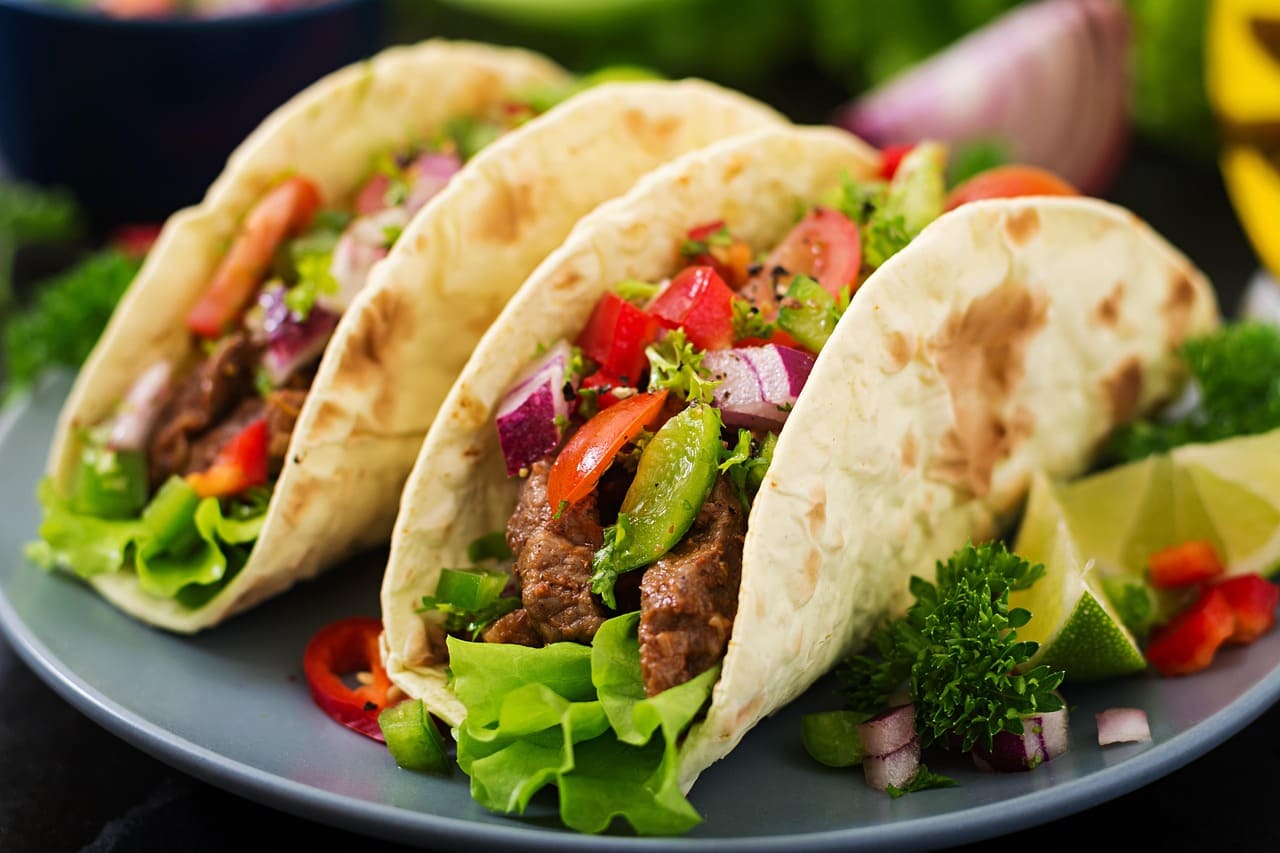
Mexican tacos and crisp Sauvignon blanc aae natural food and wine pairing partners
North American cuisine is as diverse as the continent itself, a vibrant fusion of regional specialties, classic immigrant dishes, and a modern farm-to-table movement. This culinary diversity provides a wide range of pairing opportunities for the continent’s equally diverse wines. The guiding principle for pairing is to match the bold flavors of the food with the expressive character of the wine, creating a harmonious and balanced experience.
Pairing with Red Wines: The Hearty and the Bold
North American red wines, particularly the Cabernet Sauvignon and Syrah from the warmer inland regions, are often full-bodied and fruit-forward, making them ideal partners for the continent’s meat-centric cuisine.
Cabernet Sauvignon and Grilled Steak:
The quintessential North American pairing. The bold, concentrated, and structured character of a Napa Valley Cabernet Sauvignon is a perfect match for a juicy, grilled steak. The wine’s firm tannins cut through the fat of the steak, while its blackcurrant and blackberry notes complement the savory char.
Pinot Noir and Grilled Salmon:
The elegant, earthy, and red fruit-driven character of an Oregon Pinot Noir is a classic pairing for grilled salmon. The wine’s bright acidity and delicate structure complement the rich, oily flavors of the fish without overpowering it.
Zinfandel and Barbecue:
The bold, spicy, and jammy character of a Californian Zinfandel is an excellent partner for barbecue. The wine’s notes of black pepper, blackberry, and cinnamon stand up to the smoky, savory, and often sweet flavors of barbecue ribs or pulled pork.
Merlot and Burgers:
The soft, approachable, and fruit-driven character of a Washington State Merlot is a great pairing for a classic burger. The wine’s flavors of plum and red berry complement the savory beef, while its smooth tannins don’t clash with the condiments.
Pairing with White Wines: The Crisp and the Refreshing
Given its long coastline and diverse agriculture, North America’s cuisine is full of fresh seafood and vibrant vegetables. The continent’s crisp, cool-climate white wines are a natural match for these dishes.
Chardonnay and Lobster:
The rich, buttery, and oaked character of a classic Californian Chardonnay is a perfect match for a buttery lobster roll. The wine’s creamy texture and notes of ripe pear and pineapple stand up to the richness of the dish, creating a luxurious pairing. For a lighter pairing, a lean, unoaked Chardonnay from a cool-climate region is an excellent partner for steamed crab.
Sauvignon Blanc and Tacos al Pastor:
The vibrant acidity and citrus notes of a Mexican Sauvignon Blanc are a natural partner for the spicy and savory flavors of tacos al pastor. The wine’s zesty acidity cuts through the richness of the pork, while its flavors of grapefruit and passionfruit complement the tangy pineapple and spicy chili.
Riesling and Spicy Dishes:
The crisp acidity and off-dry character of a New York Riesling make it a great choice for spicy dishes. The wine’s notes of citrus and apple complement the flavors of spicy Asian or Mexican cuisine, while its touch of sweetness provides a soothing counterpoint to the heat.
Pinot Gris and Fish Tacos:
The crisp acidity and flavors of pear and apple of an Oregon Pinot Gris are an excellent partner for fish tacos. The wine’s refreshing character cuts through the richness of the fried fish, while its fruit notes complement the fresh salsa and guacamole.